Saturday, April 04, 2026

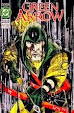
Why I hope Green Lantern's run in Action Comics Weekly isn't reprinted in the same DC Finest volume as the last few issues of the 1960-88 solo series

I recently thought of doing some more research on Jim Owsley (Christopher Priest)'s bottom of the barrel run on GL in Action Comics Weekly, and while I was at it, I found this superficial item on Biff Bam Pop:
Green Lantern, written by comic book hall-of-famer James Owsley and drawn by the legendary Gil Kane, picked up right where the character’s series had ended, only now, in the first chapter of the serial, the exploits of DC’s favourite science fiction space-cop was narrated by his ex-lover, now turned adversary, Carol Ferris, the Star Sapphire. The story traveled from deep space to planet Earth, the first chapter ending with the mutilation and murder of ex-Green Lantern Corps member, Katma, who also happened to be Green Lantern John Stewart’s wife, at the hands of the evil narrator. Quite the cliff-hanger.
Oh for crying out loud. Pathetic posts like these are exactly what enabled DC to get away with that in the long run. And unless DC made a serious effort of recent, then as noted before, they've never taken any steps to reverse the horrific damage left by where they put Katma Tui.

What's most devastating about the starting storyline is that it was illustrated by none other than Hal Jordan, Carol Ferris and Katma Tui's own original artist, Kane. And the atrocity was compounded when, in issue 603, GL smacks/punches Carol in the face/head. If you have a strong stomach, the horror can be seen here and here, in some panels from the issue, which are chilling even for their time in how they emphasize depicting a man hitting a woman. They're so horrific I decided not to post the images directly, so view at your own risk. It's angering because no doubt, the editors and publishers exploited Kane's willingness to participate as a shield for the loathsome storyline that resulted. Though Kane may have realized he was contributing to a terrible direction, and quit after issue 605, the damage was done. This was at least 15 years before Identity Crisis did something almost similar, when Brad Meltzer wrote Jean Loring inviting the Atom to hit her, and miraculously, we were spared the sight of a man hitting a woman in that abomination. But the whole notion a woman would be depicted inviting a man to assault her is still equally offensive, and one could argue that Owsley's story played a part in leading to the later situation. It certainly did not reflect well on whatever talents he had in writing.

I also noticed this troubling thread on Reddit about what Guy Gardner was written doing indirectly. That is, when Hal called him about the terrible news, Guy laughed. As though the writing couldn't have been worse. Even if Guy was written as a jerk at the time, that's still no excuse. It makes no difference whether it was editorially mandated; that Owsley would take the job to start with was abominable, as was Kane's willingness to illustrate it. One respondent said:
That run in Action comics was so bad it ranks as probably the worst I've ever read. Hal's old friends turn on him, Katma dies unnecessarily, everyone is out of character and the art is the only saving grace.
No, the art is wasted on something heinous, and one of the oddest things about the run is that it didn't seem verbatim to continuity in other flagship comics DC published at the time. Stunningly, this was edited by Denny O'Neil, around the same time he arranged for a phone poll to determine if Jason Todd, the 2nd Robin, should live or die in Batman. There were plenty of impressive moments in O'Neil's career as a writer, but as an editor, he certainly didn't get off on the right foot. And I don't think he ever expressed serious regret for either mistake. As far as I know, he certainly never commented on the topic of Katma Tui.

Anyway, I recently looked for updates on what the next DC Finest reprint archives would be coming along later in the year, and noticed that one of the volumes is for Green Lantern from around 1987, and it looked like the issues reprinted go up to 219, leaving off just 5 issues before the series' cancellation in 1988. If the final issues are eventually reprinted, what do they intend to add afterwards in the volume to come? If it's the Action Comics Weekly stories and 2 specials also written by Owsley, I would rather not spend money on those like the terrible "quality" of the tales doesn't matter. What I might find acceptable is if they decide to reprint the New Guardians spinoff that lasted 12 issues under the "New Format" imprint, along with possibly the Millenium miniseries that served as a hub for the crossover (which had some connections with GL), even though the former was very weak, though nowhere as horrific as the ACW stories. If they want to reprint the ACW stories, so be it; I just hope they don't intend to reprint them in virtually the same volume as the last 5 issues of the 1960-88 GL series.

But I have a bad feeling that, unfortunately, DC has already made their decision on what'll be archived alongside what else when it comes to GL, and if so, that'll be another humiliation for GL fans who recognize that what came after the 2nd stand-alone GL volume ended was largely awful, and then will have to hope a separate, alternate compilation of the last issues will be printed they can buy instead. On which note, I recently had the fortune of buying something similar with Hawkeye from 2012, reprinting a 1994 miniseries written by Chuck Dixon along with some stories from Marvel Comics Presents, because the 4th Epic Collection starring Clint Barton also contains stories written up to 2008, including a series that I once was unlucky to read in the early 2000s that was awful. I so did not want to buy an archive for what I consider worthy stories starring Hawkeye with "strings attached", which is what the 4th Epic Collection unfortunately does, and thankfully I won't have to now. But what about GL? If DC avoids reprinting the remaining issues in Finest archives alongside the ACW abominations, that'll be a relief. But if they do reprint said issues alongside said abominations, they'll be adding another insult to the GL legacy alongside some of the worst that came afterwards, like the awful run of the early 90s. And that'll be a shame, mainly because, who knows if said remaining issues will ever see a separate, independent archive that can serve as an alternative for anyone who'd rather rightfully avoid the ACW atrocities?

Labels: , , , , , , , , , ,

Saturday, August 16, 2025

A very impressively favorable take on the Silver Age Atom, Jean Loring, and what the Silver Age series was built around

I looked at the message board for Collected Editions, which grew out of a Marvel Masterworks fansite, and discovered this favorable thread dedicated to the Silver Age Atom stories that makes interesting points about the characters, and with a logical awareness of whom the responsibility goes for how fictional characters are written/illustrated:
Thoughts: Off the top of my head, The Spectre is the only other superhero I can think of who doesn't make an appearance in costume in his debut story. It worked in More Fun Comics #52 and it works here as well. I credit this to [Gardner] Fox realizing that the thought he's put into scientist, Ray Palmer, his girlfriend lawyer, Jean Loring, and the nature of their relationship deserves room to settle in. Palmer has credible reasons for keeping his fantastic discovery a secret from Jean who has, unwittingly, perhaps instilled an inferiority complex in the brilliant young man who naturally assumes that the high standards she expects of herself would also apply to him. Jean hasn't succeeded in law yet and won't marry Ray until she does; ergo, Ray figures that until he's perfected his studies, he can't rightly expect to marry her. It doesn't stop him from trying, of course, but the realization is there, of course.

Not that this makes Jean Loring pushy or unreasonable - she's simply a realist withholding her hand in marriage to both encourage Ray to drive himself onwards and to push herself to make it in a male dominated profession. You can tell that Fox is striving to present a real relationship here based on the way that rather than focus on some quickly contrived explanation as to how our hero could climb those unscalable walls, he instead centers his attention on why such a sharp and intelligent woman as Jean Loring isn't asking for one. It's great seeing characters with such integrity handled by a writer who has no interest in compromising such virtue.
Well that's definitely an impressive and valid way of looking at things. And above all, it also refutes the repulsive blood libel Identity Crisis was built upon, which along with at least a few other publications at the time, distorted everything that had come before with a noxious retcon that made it sound like Jean was some kind of a gold-digger who'd also been mentally insane for many years. Either way, the whole notion she'd be thrown into the dungeons of Arkham asylum (and sexually assaulted, as a tabloid headline in Animal Man's house told, which he dismissed, in a horrific example of making it sound like all women who claim to be raped are routine liars) without trying to figure out if she'd been set up only compounded the offense.

Also note how the poster's acknowleding a real life writer bears the responsibility for however a fictional character is portrayed, and even an artist (here being Gil Kane) has similar responsibilities. And to think that decades later, some vile ingrates would take apart everything they worked hard to establish in the first place, and all supposedly so they could perform "diversity" pandering, at the white characters' expense. It may have finally been reversed over a decade afterwards, but the damage, moral and otherwise, still remains and we're still shaking off the negative effects it had all these years.

I'm hoping all these Atom stories featuring the Golden/Silver Age protagonists will eventually be reprinted in DC Finest archives, and hopefully, it will be done. For now, items like this should serve as examples everybody should ponder for why even small superheroes and their big worlds are well worth reading about.

Labels: , , , , , , ,

Monday, July 21, 2025

Supposedly, creators at Marvel wanted Superior Spider-Man to end after a few issues for Peter Parker's sake

A writer at Popverse claims that over a decade ago, writers and artists working at Marvel wanted Dan Slott's Superior Spider-Man mishmash to end after just a handful of issues, because they wanted Peter Parker back in his own body instead of Dr. Octopus (but they didn't want Mary Jane Watson back as Pete's wife?). And the article is, predictably and sadly, very sugarcoated:
In recent Spider-Man comics history, it's hard to come up with a more successful gamble than Dan Slott and Ryan Stegman's Superior Spider-Man. The series - which saw Spidey villain Doctor Octopus successfully swap bodies with Peter Parker, only to go on and try and fill the hero's shoes - was a giant swing in terms of typical comic book storytelling. And now, the writer is revealing that it was just as controversial internally at Marvel Comics as it was among the fanbase.

Dan Slott spoke about the legendary 2013 saga at WonderCon 2025, a panel reported on by Comic Book Club. During the discussion, Slott revealed he caught some (presumably friendly) flack from other marvel creators at the time who wanted to use the OG webhead in their stories. "I had a lot of guys who did not want Doc Ock as Spider-Man," Slott said, "They all wanted their Spider-Man that they grew up with in their books."
Well in that case, they've explained perfectly why they made a terrible mistake even working at Marvel by the time Quesada and Alonso became editors. The main problem, of course, is that the Spidey books were under a severe editorial mandate at the time that continues till this day. And unless the assigned writers meet the PC standards of the upper echelons, creative freedom is effectively denied by at Marvel. Also, how fascinating no sales figures are cited to justify Slott's awful, grating storyline, though either way, it's clear the puff piece's writer couldn't care less about the dire state of Marvel, and Mary Jane Watson.

Also, from the Comic Book Club entry they highlighted, which is actually from around last March, Slott even brought up the following towards the end:
Asked about other characters, Slott said that he can’t write Thor, and he can’t write real scientists. He can write Hank Pym, who can do fake science — but not DC’s The Atom, who talks about real science.
Oh, this is the dumbest claim I've ever seen. Even the Golden/Silver Age Atoms dealt with pseudo-science, as did Ant-Man. The real reason it would be better to avoid Slott's writing at any company is because he's long been a very mediocre to bad writer. I've read a few of his early stories from the 90s, and they were nothing to write home about, and his scriptwriting only became worse post-2000. If he does write any Atom now that he's working for DC, it'll be something to dread, and it wouldn't be shocking if he exploits such comics to inject woke narratives into. Nor would it be shocking if he followed the narrative set after Identity Crisis. This repeated employment of mediocre writers has gone on far too long, and now DC's also making a joke of their employment practices by recruiting a former Marvel contributor to do stuff for their stables as well, which in the end only serves to do more harm than good. Yet Slott's right he can't write Thor, let alone "real" scientists. Mainly because he can't write anything with talent, as his Marvel work as a whole proved in the past decade.

Labels: , , , , , , , , ,

Sunday, June 22, 2025

If DC's best characters are the less popular ones, this article doesn't do a good job highlighting them

A writer at ComicBook supposedly draws attention to characters in the DCU who could be the most overlooked, but leaves out quite a few that could've made more convincing choices. For now, here's what they talk about:
First and foremost, let’s acknowledge the elephant in the room: ranking heroes as A, B, C, etc. is highly subjective. It’s also a great way to start a fight when people disagree on where their favorite heroes rank on various lists. That may be part of the problem here, as while people are busy fighting about the middle ground of heroes, the “established” top dogs keep getting the limelight. People generally classify A-list heroes as those getting top-billing status, like Batman. They consistently steal the show, get the highest-paid writers, and regularly obtain solo series. Meanwhile, B-list is one step down from that, they’ll still sometimes get a standalone series, but they’re not as widely known as A-listers. C-listers are a step down from that, with an even smaller chance of getting a solo series, and so on.
And this itself obscures the vital point I've made that writing and art merit are what matter, because that's how you make a character/series most enjoyable for reading pastime. Indeed, that's one of the biggest problems with this pretentious piece, though there are other troubling issues up ahead. And what a surprise that Batman's cited as the A-lister to get top billing, not Superman. Yup, they've done it again, and acted as absurd favortists, based on the storytelling angle. Oddly enough, in the following paragraph, talented writing is alluded to, but not very persuasively:
Buried inside the B and C lister stories are some true gems. Those who know how to look for it will strike gold because it’s not that well hidden. Creators want these stories to be found, while showcasing some of the best storytelling the franchise has to offer, taking bold risks with character origin stories, new arcs, and development.
While the above makes sense, the problem, as you'll soon see, is that again, the writer doesn't follow through convincingly on what he says.
Black Canary is an excellent example of this. Dinah has done everything from falling in love with a fan-favorite hero to leading an all-female team of heroes. Her story is simultaneously compelling and complicated, showcasing the messier side of superhero life. Her story may be full of retcons and changes, but one could argue that this happens because her creative team is allowed to make these executive decisions. Dinah’s story lets her shine brightly, standing out as a moral center of her small community of heroes, as she is a born leader and perpetual survivor.

On the opposite side of the spectrum is Booster Gold. He’s a total goofball, but his fans love him. He’s got a wild sense of humor with one of the brightest smiles around. Yet his stories sometimes come out of left field, surprising even his die-hard fans with their emotional depth. One needs only look at Booster’s trials with time travel (including multiple attempts to save a dear friend) to understand where this part of his story comes from.
Oh sure, BC and BG are both great examples for citation. But what about civilian co-stars? That's what doesn't seem to get attention here. No Jimmy Olsen, Sapphire Stagg-Mason, Lois Lane, Jean Loring, Sue Dibny, Doiby Dickles, Lynn Stewart-Pierce, Iris West Allen, Terry Long or Abigail Arcane. Nor for that matter do heroes like the Atom and Metamorpho, or even Hawkman. What sadly does is the work of at least 2 overrated scribes:
Every now and then, DC Comics will shock fans with a story that is out of this world. Most of the time, people attribute these stories to A-list heroes, but it’s safe to say that many belong to other heroes of the universe. For example, Animal Man (Grant Morrison) brought many real topics to the forefront, from animal rights to environmentalism. This is one example in a deep pool of options for readers.

Mister Miracle (Tom King & Mitch Gerads) took a closer look at the hero, bringing his depression and trauma to human levels, contrasting his superhero/domestic life. Doom Patrol famously brought a ragtag group of characters together, letting them tackle everything from mental health to the core of their identities and everything in between. Shade, the Changing Man (Peter Milligan & Chris Bachalo) likewise took a deep dive into the identity of the self, but with a different twist. It also looked at the nature of forgiveness and American culture. Finally, Deadman (Mike Baron & Kelley Jones) explored death, loss, and morality with a unique yet horrifying lens.
It's bad enough Morrison's work been cited as some kind of a classic, but at this point, what's especially telling is when King and Gerads' work does. Promoting their approach to writing has only worsened the situation. On the other hand, it's amazing to see that Baron's writings get attention here, but even so, that Morrison and King do ruins everything. Citing such awful writers years after DC's quality collapsed will not improve a dire situation. Nor will legitimizing King's contrived writing style that doesn't apply issues of trauma organically.

And again, there's plenty of cast members in the DCU, both superhero and civilian co-stars, who receive no mention at all. So what good does it do to make an argument about overlooked cast members when the writer won't find the time to bring them up as well? This is precisely why we've gotten so far down in terms of quality, which the writer seemingly argues over, but then spoils everything by supporting writers whose works aren't genuinely about serious quality at all.

Labels: , , , , , , , ,

Saturday, May 24, 2025

More examples from specialty forums of people who criticize fictional characters instead of how they're written

I decided to look around at what message boards dedicated to discussion of comicdom there are on the web, and of course there are still some, long after sites like Silver Bullet Comics have vanished, and see how people talk about how the old and new are written. And if the following example from Classic Comics Forum is any indication, sadly, there are still only so many misguided souls out there who vehemently refuse to recognize the distinctions between fiction and real life, and don't recognize that a fictional character's not at fault for how he/she has been written, or even illustrated, by the writers/artists. Here, we have a sad example of somebody ragging on Jean Loring from the Silver Age Atom as though she were a real person on January 18, 2025, and the 5th line is particularly laughable as it's pathetic:
Did anyone actually ever like Jean Loring?

Because i didn't.

Even before the whole cheating on him deal…

…in 1983’s Sword of The Atom #1 (and everything that came after), i honestly never cared for the character.

She wasn’t (imo) on the same level as Lois Lane, Sue Dibney, Iris Allen, or even Steve Trevor in terms of supporting the hero, or just being likable, really.

In a time when it was standard operating procedure for the hero to have a love interest, Ray’s relationship w. Jean always seemed forced to me even as a kid.
Ahem. By that logic, virtually every hero's relationship of the times with the fairer sex was forced, even Spider-Man's and Captain America's with their lady fairs. So instead of delivering the criticism to the doorstep of writer Gardner Fox, and artist Gil Kane, whoever began that thread "projected" onto their creations, all without the slightest consideration that there are real life contributors to DC/Marvel who worked overtime to develop all these characters and whatever personality traits they might've had, and their livelihoods practically depended on it. Furthermore, it sounds like the poster is saying that, because Jean "wasn't on the same level" as the other aforementioned ladies like Lois, and was a cast member in what may be considered a "minor" book and star character, that too, alone, literally makes her "inferior". And the poster also obscures that even Lois was portrayed as a jerk during the Silver Age, quite possibly even more, yet it's Jean who takes the brunt because her minor status makes her the easy target. One of the respondents said:
I didn't read enough to have an opinion. But I HATED what they did to her in Identity Crisis.
Thank goodness we're in agreement on the IC topic. And a vital point can be made that, instead of developing an improved personality or anything more palatable for Jean, they went the classically cheap, shoddy route and made a monster of her. When in whatever stories I read where she appeared, she was far from being written as obnoxious or vulgar, and if she was depicted as law abiding and believing in civilized values, isn't that at least a silver lining? Here's another response:
Jean was a self-assured, very competent criminal attorney who, given the cultural and artistic expectations of the time, was almost a feminist. She was dedicated to her profession, but also by the desire to prove herself in what was obviously a man's world. Ray Palmer, meanwhile, wanted desperately to marry Jean and di[d] all he could as the Atom to help her solve crimes, etc. If their relationship seemed forced in the original series, it may have been because to a certain extent Jean and Ray were switching roles.

It was quite the opposite of what a reader might have expected. Jean and Shierra Hall were good friends to and for each other, both bright, brave women who were forced to live within the now ridiculous standards of both the Silver Age and the America in which it took place.

Her cheating on Ray was just not in character. Might it have occurred as it does in "real life"? Well, sure, probably, but not without laying just a tad more groundwork than what happened in "Sword of the Atom." And what happened to her in the abomination that was "Identity Crisis?" Lurid shocks piled on ridiculous characterization piled on disrespect for what had gone before. Jean and Sue Dibny, both bright successful, strong women became just two more girls in refrigerators. Just no refrigerators in the JLA satellite.
I would argue that, while you may not agree with the notion of divorcing Ray and Jean - and a point can be made that the editorial staff involved was making use of easy examples for DCU cast members with which to carry out this direction - they at least provided the characters with some dignity, and in the Sword of the Atom Special where the divorce comes about, biographer Normal Brawler's book contains Jean's voluntary confession she screwed up. Does that not count as a positive detail on the part of the writer, Jan Strnad? Here's another:
She was annoying at times for sure, but so was Lois. I think if Atom was popular a little later in time so she wasn't always the 'girl lawyer' and fighting to be heard she would have been less annoying.

Agree 100% they did her wrong in Identity Crisis.
But again, let's remember it's the writer's fault, not the non-existant character's. This comment does allude, however, to the hypocrisy of implying Jean was "inferior" to Lois simply because Jean was more of a minor character as opposed to Lois being the co-star of a major, much more widely recognized character like Superman. "Recognizability" is not a reason to be so condescending, which the beginning message is guilty of doing. What should matter is the story merit, which the beginning post doesn't focus on. At least the topic starter thanked those who supported Jean. On which note, if she were depicted as an allusion to feminists of the times, the reason today's SJWs would despise her is because Fox depicted her as a woman who did want to have a child, something that's since become taboo among the more Orwellian leftists. Of course, if Jean and Sue were Black/Latina/Asian, the chances IC would've been published as it was would be far less, which only enforces the perception there's a certain segment of society that's always looking for easy targets, and when they see one isn't so easy to go after, they prey on another. As a result, white protagonists were the foremost cast members turned into scapegoats, but no matter the ethnic background of the victims, that's disgusting, and come to think of it, if the writers thought they could get away with it, even Black Lightning's ex-wife, Lynn Pierce, would've been subject to exactly the same horrific results as Sue and Jean were. Why, even Sapphire Stagg from Metamorpho's stories would've. Next, here's an earlier post from April 27, 2015, where Gambit is brought up:
I'm still reading The Age of Apocalypse: The Complete Epic, Volume Three. It's OK at times. I find Generation Next to be by far the best series. There was one chapter (not Generation Next) that had two of the worst "accent" characters talking with each other and I just about skipped those pages.

I'm also reading Showcase Presents: Wonder Woman, Volume Three, and I'm loving the Andru/Esposito art. And the Mouse Man appearances. I wish there were more of those! What I'm not loving are the "Wonder Family" Impossible Tales. There are too many of these.

The big question I'm dealing with now is: Who do I hate more? Gambit or Wonder Tot?

I'm going with Gambit. One of the worst characters ever.
No, it's the writing that's loathsome, not the character. If this poster said that was Gambit was "the worst written character ever", that would've made more sense logically. If anything is to be disliked, it's the scriptwriting by scribes like Scott Lobdell, if to name a notable example. How strange he doesn't come up in discussion in the above messages, if anywhere. Oh, and how did the characters get their accents, by the way? Don't they know the scriptwriter's at fault for that? Pathetic. And, here's a post from a thread on December 12, 2024, another where Gambit is spoken about:
I can cure you, folks. (£50 via PayPal)

I used to want complete runs of, say, Iron Man (one of my favourite Marvel characters growing up), but as I got older, I realised, do you really need EVERY issue? I don’t like Gambit, so if one issue was to feature an Iron Man/Gambit crossover, I could quite easily let that one slip by.

The completist mentality still exists in some form for me. I had to read every Peter David Hulk story (which I did, a mixture of Marvel Unlimited and physical copies) because I like how David handled the character, one arc aside. I’d like to read the complete runs of DC Comics’ Star Trek and Star Trek: TNG as I have enjoyed what I did read. But I’m trying not to be completist about everything. I used to be very, very pedantic about it.
Tsk tsk tsk. Again, even a fictional character like Gambit, supposed to be a reformed thief, is not at fault for what mistakes Scott Lobdell and maybe even Fabian Nicieza made over 30 years ago. It would be the fault of whoever would be writing even an Iron Man issue guest starring the Ragin' Cajun, and even the fault of the editors, if they wouldn't allow the writer to develop a personality more palatable for Remy LeBeau. Oh yes, even Wonder Tot from WW's Silver Age stories, is just a work of fiction, and if the whole approach doesn't appeal to you, that's one thing, but to say an infant-like character is the guilty party is just another shoddy substitute for logic and objectivity. Why, even science fiction animals like Krypto the Superdog aren't at fault, if it matters. Now, here's another thread about the Flash from February 24, 2025, and the victim of illogic this time, perhaps unsurprisingly, is Barry Allen:
My brother read The Flash in the mid- to late 1970s. I mostly read Marvel, but I read my brother’s comics just because they were in the house. I’ve never collected Flash comics, mostly because I think Barry Allen is kind of dull, but I have long had a certain affection for the rogues gallery.

My brother was not reading comics anymore by 1981, but I was, and I remember seeing the ads for the Trial of the Flash, and I probably flipped through a few issues at the drugstore. I seem to remember buying an issue from around #315 where Grodd was the villain. I can’t resist Grodd.

I’ve read a little bit about this era online, and I have long been kind of curious about how they sustained the storyline for such a long time. But not curious enough to actually seek out these comics or look to see if there’s ever been a reprint collection.
Well waddaya know, here's somebody else who fell into one of the worst traps of illogic in readership history, and instead of arguing he thought Cary Bates' writing was dull, he claims a fictional character is. And makes matters worse by implying villains are more worth celebrating. Even if the Flash's rogues were written more with a sense of honor than some other villains may have been, that's still no excuse. Most sickening is that what the person is saying there could also have been said about Spider-Man's rogues' gallery, and entirely possible Peter Parker could've been belittled too. That's right, let's not think it impossible. However, here, amazingly enough, is a message where the writer/artist do come up:
As I said elsewhere, Flash was a sporadic book for me, through the 70s. I generally liked the character and read the Bates/Novick stuff and Bates stories with other collaborators, up through the death of Iris and the apparent death of Prof Zoom (both recovered). It was a nice book to visit, now and again, but I never amassed a sustained run, apart from digital files of everything, in more recent years.

I had issue #300, my last pre-Crisis issue, which was marred by printing issues, in the copies I had (my original and a later replacement). Later Infantino, I find, depends greatly on his inker. I've seen bits and pieces that I liked, but a lot more I didn't. I liked the bulk of his Marvel output, especially when inked by Steve Leialoha. I had work that he did for Archiie/Red Circle (The Comet), Eclipse (The Heap back-up story, in Airboy) and Pied Piper/Innovation (Power Factor) and the results were not good. However, I thought he and Frank McLaughlin did a bang up job on the Danger Trail mini, from 1993, with a King Faraday adventure (one of Carmine's previous books). I suspect deadline and enthusiasm had a lot to do with how his later stuff worked, in conjunction with the inker and any health factors at play.
Here, the poster will earn points for acknowledging the existence of writers/artists like Cary Bates and Irv Novick, and the first issue of the Flash I read (230) was from around the Bronze Age, at the time the latter was the artist, much as the former was the writer. And a valid/reasonable argument could be made that likability depends on how the writer handles everything too. It sure is funny though, how Golden Age characters all but escape these kind of shoddy "my hero is better than yours" quarrels on these message boards. Just because by the Silver Age, they were no longer considered most relevant compared to their successors of the times, the message boarders will give the Golden Agers a pass up to a point, but not the Silver Agers? Weird, but lest we forget that, if so-called readers let the illogic of attacking fictional characters get the better of them, they can't be surprised if the end result of modern comics is bottom of the barrel in terms of story quality.

Someday, I may need to go post on boards like Classic Comics Forum in order to bring my arguments about why fictional characters aren't guilty of "boredom" directly to the people espousing the illogical rants, which they most likely wrote all for the sake of virtue-signaling. And why it's the writers/artists/editors who have to be recognized as the guilty party in all this mess. But if I do, will they listen? That's the sad question that only time can answer, so someday, we'll see how things turn out. For now, a terrible shame some people still stick with lack of logic in their dubious fandom.

Labels: , , , , , , , , , ,

Tuesday, January 30, 2024

Geoff Johns wrote his last insult to DC fans on his way out

I'd long come to view Johns as one of the worst omens to befall comicdom, ever since he got his foot in the door in 1998, and just recently, I discovered this review page on ComicBook from a few months ago of a Justice Society volume he wrote, which tells the following about the 7th issue, where he regurgitated allusions to one of the worst moments in the past 20 years of the DCU, and a story which, even if he didn't write it himself, he certainly gave it backing in more ways than one:
Even seven issues into its run, Justice Society of America remains primarily focused on introducing new characters and assembling its team, which would be sufficient drag without the lackadaisical pacing evident in issue #7. Many characters appear for a single sequence and hardly establish anything new before disappearing again; the choice to include the briefest of interrogations with Jean Loring, former host of Eclipso (a piece of, fortunately, largely forgotten DC lore) does so little in these pages that it's questionable whether readers will remember it at all next month. An excessive number of splashes, including some truly underwhelming uses of space, like the depiction of Icicle in a jail cell, suggest a story being stretched too thin despite possessing dozens of characters. Defining exactly what Justice Society of America is about or who its central characters are is difficult and with single issues stretched as thin as this one, it's becoming increasingly difficult to care.
Well, Johns certainly has gone to quite some cynical lengths to recanonize one of the most repulsive results from Identity Crisis, one of the worst titles along with Avengers: Disassembled that got me into blogging to deal with abominations like those. I suppose he made sure to keep the claim Jean murdered Sue Dibny intact, at least in this rag of an issue? I don't know where this story's been going, if it still is, but I do know that the whole notion Johns would continue to troll the audience that cares about the casts from the Golden/Silver/Bronze Ages is truly disgusting. And if Johns tries to stuff as many cameos as possible into a story, it's nothing new. What matters is that it never added anything to an already flaccid story.

Here's also a Multiversity review, which is regrettably more favorable in contrast to ComicBook's, which is suitably negative, but does admit:
The scope of the current “Justice Society of America” series is baffling on so many levels. On one hand, the book appears to be somewhat siloed, with its events not really effecting much outside of its own title and the ancillary titles that spun out of it (“Stargirl: The Lost Children,” “Jay Garrick: The Flash”). On the other hand, this one issue references the 31st century, the first Geoff Johns run on “JSA,” the most reviled DC story of the 21st century (“Identity Crisis”), and continues the introduction of the lost sidekicks into ‘main’ continuity. This must be the single most ambitious, yet dammed off book in years.
I'll give them this - they do acknowledge IC was one of the most despised comics of its time, 2 decades ago. But that's exactly why it's appalling they proceed to grant this tale an otherwise favorable review despite that. Mainly because, if they're supporting this comic, they end up giving their backing to a most reviled story, even if they didn't intend to.

DC Comics News also gushingly reviewed this story even worse than the above, and they note that it might even be going so far as to retcon away characters created by writers far better than Johns will ever be:
Certainly, one of the intriguing things about the Justice Society of America and The New Golden Age is the new characters. Justice Society of America #7 finally gives the reader something more on The Harlequin’s Son. With Alan Scott’s history suffering a severe retcon in Alan Scott: The Green Lantern, his erstwhile wife, Molly Mayne- The Golden Age Harlequin– gets a parallel treatment with the introduction of a son, Michael Mayne. With the changes wrought on Alan Scott’s past, it’s unclear of how much of his history from the Bronze Age up until The New 52 in 2011, especially his history with Molly, is still in play. However, this issue begins exploring where The Harlequin’s Son is right now.

Having Helena go after Solomon Grundy as an ally (she’s already done it in the future) plays on a couple of details from past comics. The Huntress faced off against Solomon Grundy in a solo story from Wonder Woman #273, and in the ’80’s in Infinity, Inc., Alan Scott’s daughter, Jade was close with Grundy. In Justice Society of America #7, Helena calls Grundy her friend. While things don’t go as planned, the fact that the Solomon Grundy nursery rhyme is used to add some understanding is not only fun, but cleaver. Taken these elements with Grundy and the Harlequin’s son, it makes one wonder if Obsidian and Jade, Alan’s children with Rose Canton (Golden Age Thorn) are being replaced by Michael Mayne and Helena Wayne in some sense. Or perhaps, it is not Helena who is replacing Jade, but rather, Ruby Sokov. We haven’t seen much of Ruby Sokov, yet, but, not only is Ruby a precious stone that is also a color like Jade, what we do know about Ruby describes her power functioning like Jade’s as well as turning her skin red.
The subject of Jade & Obsidian's potential omission from today's DCU - and it won't be shocking if that's the case - was also discussed over here, with the author concluding in an otherwise defeatist position, by which I mean it looks like he considers it all fait accompli, and won't call for a boycott of DC, explaining perfectly why his gushy review of the 7th issue of the 2022 Justice Society volume. It sounds like, not only is Johns unwilling to reverse the damage to Obsidian first inflicted by the disgraced Gerard Jones in 1995, he apparently believes erasing both Rice and Jenny-Lynn Hayden from canon altogether is the sole answer to anything. An utter disgrace, doing a terrible disfavor to Roy Thomas once again. And all the while, Johns' erstwhile parter in writing, James Robinson, has never apologized for the retcon he did to Alan Scott.

I also looked at Geekdad's review, also regrettably gushy, which says:
Due to the launch of Ghost Machine in the coming months, we now know this will be one of the last DC works of Geoff Johns—putting an end to a DC career that dates back to the 1990s with no real interruptions. Given that, it’s a little odd that this final chapter comes off as so vignette-esque—or maybe not. Johns is telling a story here that’s so spread out and creates countless new narratives for future writers to jump off. [...]
At least they get one thing right - this kind of story makes a perfect jumping off point, if not for the fact that DC's turned only so much that warrants staying away for years already. If this is to be Johns' last writing for them now, and he's shifting to Image instead, he won't be missed, but he'll still be despised as one of the worst writers to ever litter the DCU since the turn of the century. Christopher Priest wrote a story in Justice League 7 years ago where he appeared to be at least undoing much of the damaging status quo of Identity Crisis, and now, Johns tries to undo even that much? Truly abominable. Even if this take on Justice Society exists within its own "continuity", it's still no excuse. After all the harm Johns caused to the DCU, including political, that's why I won't even buy his Ghost Machine comic at Image. One of the best things about creator-owned products is that it's far easier to make a judgement whether to finance their works, based on specific deeds of theirs.

Labels: , , , , , , , ,

Saturday, September 09, 2023

Actor from Ant-Man movie says they copied from the Atom

Fandom Wire addressed recent statements by actor Paul Rudd, who starred in the unsuccessful Ant-Man sequel, and said in recent interviews that the film copied quite a bit from DC's Silver Age Atom, except that they screwed up with the name of the exact protagonist:
Not only was the movie underwhelmed at the box office, failing to even cross the $500m mark, but it also invited allegations of copying. In Ant-Man 3 we see Scott Lang shrink and explore the Quantum Realm – a fictional microscopic subatomic dimension. However, the concept of shrinking isn’t new in the superhero landscape. DC has its own shrinking savior, known as Atom. Al Pratt, the first hero to become the Atom, was featured in DC comics (Oct 1960) four months before Ant-Man
We seem to have here a classic case of somebody who's not a true historian writing this up, or he'd know Pratt was the Golden Age Atom who originally debuted in 1940 in All-American Comics, same anthology where the Golden Age Green Lantern, Alan Scott, first appeared, and was simply a short-sized combatant. Ray Palmer was the 2nd Atom who debuted around 1961, and he was the actual shrinker courtesy of a size-weight control belt he developed. The point's made that shrinking into subatomic worlds goes back as early as the 1960s, but Fandom Wire's clearly not up to the task of accuracy.
In 2021, Rudd appeared on Howard Stern‘s The Howard Stern Show and the duo talked about the copying allegations. Stern said: “I was so deep into it that Marvel and DC had this rivalry. DC had the Atom. The Atom would shrink down to a tiny little size. Ant-Man would [also] shrink down to little [size], and Atom came first. So I remember reading and thinking ‘They are f*cking ripping off the Atom.'”

However, Stern then pointed out the difference between the two, adding he quickly realized that Ant-Man was communicating with Ants and the Atom couldn’t talk to anybody “when he was small.” The 54-year-old actor nodded, suggesting he agreed with Stern’s assessment.
But the Golden Age Hawkman (and Hawkgirl) could talk to birds, since the early stories published in Flash Comics did make use of this premise for at least a few years, almost similar to how Aquaman could talk with sea life. But, if they're implying Palmer couldn't speak even to humans, that's a lie, and just plain muddled.
Rudd pointed out how Atom’s inability to communicate was his big downfall “because Ant-Man could just bring in all the ants” to take on Atom. “And bury him with ants,” Stern added.
I'm not amused by this either. Mainly because at one point during the Silver Age tales, Ray Palmer once employed a mynah bird named "Major Mynah", which could talk like a parakeet or a parrot can. Okay, so Ray may have only used said ornothological protagonist to ride on, but there you have it, he was once depicted making use of an animal of some sort as a sidekick. But to say lack of communication with animals or insects was a downfall for the Atom is pointless, because what if that could provide him with obstacles to overcome, unlike Ant-Man? Simultaneously, interesting how Rudd must be oblivious to all the horrific abuse the Silver Age Atom wound up going through when Dan DiDio became DC's editor in the early 2000s, ditto his ex-wife Jean Loring. I guess only the movies matter to Rudd? In that case, maybe there's not much use in his complaining about the Ant-Man movie's resorting to ideas seen in the DCU either, if he doesn't care enough about the source material to lament what kind of atrocities wound up victimizing practically all their stable of characters since the turn of the century.

Anyway, even if I was more interested in adaptations to live action than I currently am, I'd still not care for an Atom adaptation at this point, because if Zack Snyder was only willing to use the PC replacement named Ryan Choi in his abortive Justice League movie, and not Ray, we can guess who the choice for a star in such a film would be if there's plans in the works for an Atom film. It's the same woke mentality the recently and equally unsuccessful Blue Beetle movie was built upon, all at the expense of the original white protagonists. If that's what would serve as the driving force behind an Atom film, there's no point making one at all. Though it sure is interesting to note that, in the past several years, the Choi version of the Atom has largely vanished along with Palmer himself from view in the DCU. Which just proves the social justice pandering isn't working out, though simultaneously, DC's clearly intent on shunning the original white protagonists as well, out of the very PC mindset they're sadly going by now. And Rudd doesn't seem the least bit concerned, putting his fandom under a question mark.

Labels: , , , , , ,

Sunday, January 22, 2023

Eric Nguyen creates comic where a "white savior" is belittled

Next Shark interviewed artist Nguyen, who's created a comic titled "White Savior", which is said to be a satire about white heroes saving societies of different races, but seems more like an insult to the very notion of a white hero saving the day. They begin with the story's premise:
NextShark spoke with comic book artist Eric Nguyen, co-creator of Dark Horse’s newest comic “White Savior,” about the Hollywood tropes the story satirizes, the prevalence of Asian stereotypes in new media and the state of Asian representation in comics today.

Written by Nguyen and Scott Burman, “White Savior” follows Todd Parker, an Asian American film history teacher who is suddenly sent back in time to feudal Japan. Upon his arrival, he quickly realizes that the local villagers have put their faith in an incompetent “white savior” who will surely lead them to their doom unless Todd can stop him.

Before “White Savior,” Nguyen notably worked with Marvel and DC on “Old Man Logan,” “The Immortal Hulk” and “Batman: Arkham Unhinged.”
So he worked on Al Ewing's politicized atrocity in the Hulk too, huh? That aside, this is awfully cheap to pen a "satire" of stories where white adventurers save Asian communities, instead of reversing the roles, which could even include, say, an Asian hero romancing a white lady. What's so hard about that? If you know where to look in multimedia from Japan, there are examples of Asian characters acting as saviors to any and all of humanity, and even romancing non-Asian women. Yet Nguyen seems like the kind of person disinterested in foreign storytelling as a wellspring, and as a result, his argument doesn't go over well. It continues:
What inspired the story’s concept?

It all started when that movie “The Great Wall” with Matt Damon came out, and Constance Wu famously talked about how Asians didn’t need a white guy to swoop in and save us. And Scott and I were joking around and said, “What if the white guy in this movie was an idiot who actually made things worse for the people he was trying to save?” We started laughing about it, and literally, that’s where the idea came from.

I wish it was a more inspiring story of us thinking about what we could do to promote representation, but honestly, the idea came from a simple aside, and as we started writing, we realized very early on how important the subject matter was. And I think what makes our book stand out is that we put just as much emphasis on the story being funny and action-packed as we do on the important message we’re trying to convey.
On this note, do Nguyen's ideas of what counts as "representation" include creating characters with Armenian ancestry like Mannix? And, what's so wrong with the idea of a white savior coming to the aid of Asians in distress? By that logic, it would be wrong for an Asian savior to do the same by helping whites in distress.
Was the plot/humor inspired by any other comics you’ve read or worked on?

I don’t know if it was inspired by what I worked on as much as it’s inspired by what’s out there. The white savior trope has been around forever. Heroes like Iron Fist, the only white guy in a land of Asians who, of course, is a better martial artist than all the other Asians. Or any samurai movie where a white outsider rescues an Asian village. So we wanted to bring light to the problematic nature of these stories, but do it in a way where humor and satire were at the forefront. And that’s the ultimate goal of our comic — to bring people together and laugh at the insanity and ignorance of the past, while still recognizing the progress that needs to be made in the future.
Oh, please. Is that meant to suggest Shang Chi wasn't portrayed as good a martial artist in his own way? Or that they couldn't possibly create an Asian man who's just as formidable? Maybe the most dismaying part of the above is how it implies Nguyen's the kind of guy who can't look beyond Marvel/DC, and acts as though all this only matters when applied to the Big Two. What a farce indeed.
Why a time travel story?

Good question. We never thought about that. I think it’s because we wanted somebody who can essentially comment on the ridiculous nature of “white savior” stories from an outsider’s perspective. So if Todd, our main character, is from the present and travels back to feudal Japan, he already knows what’s going to happen; he knows for a fact that the “white savior” is not the hero the villagers believe he is.

And we realized a lot of the comedy in our story is from Todd knowing the truth but nobody believing him because the characters themselves are actual relics of the past. They, like society at the time, still believe in that “white savior” myth. So it’s literally the future coming to terms with the past. And the main character is essentially a modern man continuously shaking his head at the misconceived notions of the past.
What's annoying is how the tale sounds like it implies that, because the savior in question is white, that makes him incompetent. And that's very damaging. As a result, it's supremely insulting to sell this under the guise of "satire". After all, for every good satire, there's also a bad one. And this is beginning to sound like the latter.
As “White Savior” deals with Asian stereotypes, do you feel these stereotypes are present in the comic book industry?

Well, the comics industry is a massive industry. And [it’s] only getting bigger with every comic now being made into a movie. But you’ve got a lot of great Asian talent working in comics — Jim Lee is in charge of DC, Cliff Chiang, Marjorie Liu, Stan Sakai, Greg Pak, Frank Cho, there’s a ton. And the last couple years have brought us first-class Asian stories like George Takei’s ‘They Called Us Enemy’ or ‘The Good Asian,’ written by my old friend Pornsak Pichetshote. So you’ve got a lot of comic companies, especially Marvel, DC and Dark Horse, championing diversity with both their talent and characters.

That being said, some of these characters are legacy characters who have been around for ages. And when they were created, they did enforce those stereotypes. So the question is, do you expand on these well-known characters and give them more dimension, or do you create new characters and hope they resonate with audiences?
More to the point, you do your best to write with merit, and apply said merit to the new characters you're creating. All that aside, Takei's become such a far-leftist ideologue in the past decade, that whatever he's had written doesn't resonate. And Lee? He's such a far-left ideologue himself, that to bring him up is such a snoozer.
What’s your opinion on comic book characters being rewritten or reintroduced as Asian?

This is a tricky one, because creating a new character fans can get behind is incredibly difficult, regardless of their race. Same with creating a new story. So sometimes, we see new Asian characters — and I’m not just going to say Asian, I’m going to include all under-represented groups in this — you see new minority characters being introduced, and the stories, for one reason or another, don’t click with the audiences. That being said, you’ve got creators like Brian Bendis, who created Miles Morales. A Black/Puerto Rican Spider-Man. Upon first hearing it, it sounds gimmicky, but in the hands of a master like Bendis, Miles became a centerpiece Marvel character, based on an old one, that will last for generations to come.

Ms. Marvel is another prime example of a new character that fans can’t help but fall in love with
. Gene Luen Yang, one of the best writers in comics today, created an Asian Superman — and some fans responded with, “They’re trying to replace OUR Superman, why don’t they create a new character?” But the fact of the matter is, all the fans saying “Why don’t you create a new character?” are the same kind of fans who never read stories with new characters.
Ah, what's this, is he alluding to the Muslim Ms. Marvel, who was practically developed by a committee as a propaganda tool? This too says all you need to know something's wrong with the guy's way of thinking. Same goes for his laughable citation of Bendis, the same overrated writer who wronged Scarlet Witch in Avengers: Disassembled. As for not reading stories with new characters, there's strong suggestions he's alluding to - what else? - the Big Two's approach, which would mean he's got no qualms with how established white characters were harmed before being replaced by characters of different race in the costumes. As for creating new characters who resonate with an audience, the problem is poor marketing and lack of interest by the marketers themselves. Hasn't that ever occurred to Mr. Nguyen? And then, when asked what his favorite characters are, he says:
But back to the character question — I think my favorite Asian characters are those whose personalities don’t rely on those tropes we were talking about before. A prime example is Jimmy Woo — in the comics, he was one of the first Asian heroes. And he’s just this super cool, cunning secret agent. In the MCU, he’s played by Randall Park, and how can you not love Randall Park? But the fact that Jimmy Woo is a secret agent first and Asian guy second, I think that appeals to me. Another favorite is Ms. Marvel, who I mentioned earlier — probably one of the best new characters in the last 10 years. Amadeus Cho, Jubilee, Katana, Armor, Silver Samurai. So many more, but also, not anywhere close to enough.
If memory serves, Amadeus Cho was the Asian Hulk from several years ago, who was even written exclaiming "totally awesome Hulk", as though stereotypical dialogue weren't absurd? And those stories sure didn't draw interest from many people. Maybe if you'd created a variation on the Hulk as part of a creator-owned product, it could be getting somewhere, but this has long become too much, because the racial background is all it's about. And then look what Nguyen brings up towards the end:
What would you like to see more of in comics?

Asian characters whose personalities aren’t based entirely on them being Asian. Additionally, Scott and I want to champion characters who we feel never got their due. One of our dream projects is to update and revamp a fairly unknown DC superhero called the Heckler, who we think has a lot of mainstream potential.
Well in that case, here's 2 things to consider: one, some of the Asian characters introduced in the past 2 decades, like Ryan Choi, the Asian Atom at DC, were marketed based entirely on their racial background, not story merit. And two, if you believe there's characters who never got their due, what about characters who were originally white, like Ray Palmer and Jean Loring? Why, what about the Golden Age Hawkman and Hawkgirl? If Nguyen's got no interest in building them up, in contrast to characters of Asian/Black/Latino background, I'm not sure what his point is. One can only wonder what their plans are for this minor DC character called the Heckler. If that's going to be built on wokery, rather than genuine merit, we're getting nowhere fast.

It's very lazy to craft a story that's more about depicting a "white savior" as a bungler than about an Asian/Black/Latino hero who saves a white community from evil entities instead. To see Mr. Nguyen go for such a cheap path is disappointing, as are his ideological perspectives.

Labels: , , , , , , , , , , , , ,

Friday, November 25, 2022

SJW who once embraced Identity Crisis changed her mind 15 years later

Here's an article on Book Riot from December 2019, by one of their otherwise most pretentious liberal writers, who actually admitted she originally thought the repulsive Identity Crisis miniseries was great when it first debuted, precipitating the collapse of DC's products artistically, and only years later did she suddenly reevaluate:
In 2004 I was working part time at Borders (RIP) and just getting into comics. My manager at the time was also a big comics fan, and one day in the break room he lent me the first issue of DC’s big new event, Identity Crisis.

I read it. I loved it. I walked over to the comic book store on the other side of the mall from the Borders and bought all the issues that were out at that point, and continued to buy them every month until the series ended.

I now believe that Identity Crisis is one of the worst things that ever happened to the comic book industry, and we’re still shaking off its effects. But what made it so captivating—and so bad—and what were those effects?
Now that's a great question there alright. I do recall, when looking through those early message boards at the time, there were people who only admitted after reading the last part that they were disappointed, even though there were quite a few moments before that which were atrocious and offensive, not the least being Sue Dibny's rape at the hands of an out-of-character Dr. Light, who'd never been depicted stooping to sexual violence before in the time leading up to the year 2000. Why, up to that point, did the ostensibly dismayed readers have no issue with the poor taste plaguing the story? Why weren't they willing to admit it was perverse, right down to the left-wing metaphors for September 11, which were very sick too? Making matters worse, I even recall reading a message board or two, where at least a few users who gushed over the miniseries not only embraced it till the very end, they even justified its rancid existence by indicating it represented what they'd like to do to girlfriends who'd rejected them. In other words, for some of the most perverse, seeing the headline in a paper telling Jean Loring had been sexually assaulted in prison represented a rape fantasy they harbored. That was some of the sickest drivel I've ever seen on the internet, and made clear one of the biggest problems with Identity Crisis is that it was appealing to perverts, since nobody at the time was willing to question whether the structure was demeaning to women, nor whether it was a leftist metaphor for Blame America propaganda.

So again, one can only wonder why anybody would want to lionize a story that was attracting people with lenient views on sexual violence? Why did they not take any time back in the day to consider that, and ask whether it's a good idea to go miles out of their way in favor of a story that's offensive to victims of rape and pedophilia? Well unfortunately, this was the liberal norm back in the day, at a time when certain PC advocates were so selfish and entitled, they refused to consider the poor influence of the tale, and villified/shunned anybody who tried to point out how poor the tale actually was, and on far more than just failure to retain a consistent characterization for the cast. If it hadn't been for the Harvey Weinstein scandal, chances are they'd still be lauding this grimy comic even now. And sadly, there still are quite a few moonbats out there fully willing to defend it no matter what. The following description, however, has some parts that are sloppy:
In the first issue, Sue Dibny, the wife of beloved comic relief hero Ralph Dibny, aka the Elongated Man, is murdered. The surviving members of the “Satellite Era” of the Justice League, i.e. the ’70s run—Green Arrow, Black Canary, Zatanna, the Atom, and Hawkman—assume Dr. Light is the killer and try to bring him in. When two younger heroes, Kyle Rayner (Green Lantern) and Wally West (the Flash) question why the JLA is targeting a villain widely perceived to be a hapless joke, the Satellite Era Leaguers reluctantly explain that back in the day, they occasionally used Zatanna’s magic to erase the memories of any villain who discovered their secret identities. One day, Dr. Light managed to sneak aboard the satellite, where he found Sue on monitor duty and raped her. When the League returned, they decided that wiping Light’s memory wouldn’t be enough, and voted to magically lobotomize him, making him incompetent ever since. Also, Batman, who wasn’t part of the initial vote, caught them at it and tried to stop them…so they wiped his mind, too.
If memory serves from the material I'd checked years ago, it told - through GA's narrative - that Sue teleported up to the station because "she was bored." Which was one of the stupidest excuses for setting up the offensive catalyst of the story. It could be the columnist doesn't remember clearly, but all the same, I don't get why she had to be so awkward in giving a synopsis. It continues:
The League fails to apprehend Light, who regains his memory and…full capacity of his brain? Unclear. Meanwhile, an anonymous figure attacks Jean Loring, the Atom’s ex-wife; sends a threatening note to Lois Lane; and hires the villain Captain Boomerang to kill Jack Drake, the father of then-Robin Tim Drake. Boomerang and Jack kill each other, leaving their sons orphaned. Elsewhere, the hero Firestorm is killed while questioning other suspects in Sue’s murder.

An autopsy reveals that Sue died of an aneurysm, and close examination reveals tiny footprints on her brain. Simultaneously, the Atom, who has gotten back together with Jean after rescuing her from her mysterious attacker, realizes she knows more than she should about the various attacks…meaning that she must be the killer. She tearfully confesses that she borrowed his equipment but insists that she only meant to scare Sue, hoping that threats to various Leaguers’ loved ones would send her own Leaguer straight back to her arms. The Atom has her committed to Arkham Asylum, then wanders off to be tiny and sad for a while. Meanwhile, Batman starts to suspect (correctly) that the rest of the League has been playing with his memory, causing an erosion of his trust in them that cause a domino effect of negative consequences in future stories.
Umm, I don't think Jean was depicted confessing "tearfully", so much as she was depicted hatefully, with a nasty look on her face, even going so far as to invite Ray to hit her (curious that's not mentioned here. Although such an act isn't actually shown on-panel, isn't it obscene how the story minimizes the seriousness of a man hitting a woman?). In any case, that any apologist who read the book at the time would actually think the reasoning for Jean causing all that trouble over peanuts, and making her out to be mentally insane in a way that's inconsistent with 2 older stories where she was brainwashed (in the last issue of the Silver Age Atom, it was by an alien race called Jimberen, and the story was completed a few months later in Justice League of America. The other story was in Super-Team Family around 1977) wasn't colossally stupid, clearly was predisposed to liking it no matter how offensive it was to start with. And that's a serious problem with the reception the book had at the time.
There are a lot of minor issues with this story. Like most Crises, it slaughters a number of tangential characters to show you that it means business—like, I don’t care about Firestorm, and he’s back now anyway, but he deserved better than that. Most of the cast is written fairly out of character, and the bulk of the story is narrated by Green Arrow, a baffling choice for a story about secret identities when he hadn’t had one in 20 years. And the pacing is a mess: with the murder in #1, the backstory in #2, and the reveal in #7, that’s four whole issues in the middle of treading water with the heroes coming no closer to the solution while a bunch of people die.

But of course that all pales beside the major issue, which is that this story revolves around a female character being raped and killed.

And it’s a red herring
.

The things that happen to Sue in this story—her assault, her death, the mutilation of her corpse—don’t happen because of who she is. They happen because DC wanted to be cool and dark and edgy, like Marvel but better, and the way to do that was to put a rape front and center in a high profile comic.
And this is exactly why it fails: because all involved clearly lacked confidence in their ability to tell a story without resorting to shock value and gross-out ingredients. And is the columnist saying she doesn't care about Firestorm? Well that's exactly the problem here. A whole culture was built up wherein the audience is indoctrinated to believe it's perfectly fine to just turn every two-bit character into a victim of murder/rape, and nobody's interested in a far better alternative like keeping the characters alive for character drama, growth, development and focus. Which only confirms how nobody's really reading these abominations for merit. From what I recall reading across various websites at the time by people who upheld the miniseries, what was most telling was that none of them seemed to care about Sue. They didn't seem even the least disappointed she'd been reduced to a sick laboratory experiment, and never showed any remorse for minimizing serious issues along the way. And these scum had the gall to call themselves fans?

The article also brings up a most eyebrow raising issue that former DC employee Valerie d'Orazio had with one of their editors at the time:
It’s perhaps worth noting at this point that D’Orazio has also discussed her history of being sexually harassed by the editor on Identity Crisis (and many other books), Mike Carlin.

Given how much editorial wanted the rape plot line in there, and given how insensitive their in-house discussion of a sensitive subject was, it’s not surprising that the end product uses rape only for shock value and misdirection. It’s not a book about rape in any meaningful sense, because it’s not a book about Sue, or even about Ralph or Dr. Light. It’s a book that has a rape in it, as envisioned by grown men who think putting rape in your work is something that makes you cool and grown up, even as you giggle over it like naughty children.
Now this is definitely telling quite a bit. If the staff involved see nothing wrong with trivializing sexual assault, you can't be shocked if they run the gauntlet of doing something even remotely similar in real life. One more reason the comic's aged horribly.
And it’s a book that offers up female characters for the slaughter in service of that prurient rubbernecking: not just Sue, but Jean, who had existed for 43 years prior to this book, whose villainous turn is motivated by nothing but out-of-nowhere, unhinged clinginess, and who was permanently ruined as a character for a book that, once again, isn’t actually about her or her actions.

So what is Identity Crisis actually about? It’s about the impossibility of trusting anyone: your wife, your friends, your heroes to do the right thing. It’s about how what you thought was something beautiful and innocent—those Satellite Era comics you loved as a kid, the Dibnys’ sweet and playful marriage—is actually tainted. (Please note that I am describing the comic’s themes here and not suggesting that real rape survivors or their relationships are “tainted” by their experiences.)
If memory serves, the scene where Jean was almost hung indicated somebody else behind her wearing shoes had grabbed her and tied her in a noose, so it's stunning how the finale abandons all logic for the sake of another example in misogyny, leaving something else entirely unexplained. And the apologists didn't give a damn. Amazing how the woman who wrote this acknowledges some of the most disturbing themes its built upon, including the message that nobody's trustworthy, not even your wife/girlfriend, and a claim the Bronze Age JLA was literally a quagmire of darkness, as though this were real life. On which note, there were only so many apologists back in the day who pretended, deliberately or otherwise, that all characters involved were real people, not fictional ones. And they owe an apology they'll surely never offer.

And it's amazing the columnist was willing to acknowledge another alarming issue the book suffers from:
But there’s also historical context for Identity Crisis. In “Terrified Protectors: The Early Twenty-First Century Fear Narrative in Comic Book Superhero Stories,” Jeffrey K. Johnson situates it as a post-9/11 story, heavily influenced by the culture of fear and suspicion that developed in the United States after the 9/11 attacks: [...]

As Johnson points out, Marvel had its own share of dark and cynical post-9/11 stories, like House of M and Civil War. DC and Marvel have been locked in a sort of arms race since the ’60s, after all, of “That worked for the other guys so let’s do it ourselves but even harder.” The spiraling downwards into violence and suspicion happened across the industry, to the detriment of everyone, and not just at DC. And it can’t just be blamed on one comic, given the political context.

But DC’s choice to base their own jumping-off point for this new wave of storytelling on a rape not only spoke to their disdain for women and rape victims, it meant that every subsequent plot development in their greater universe hinged on a throwaway rape plot point. When Batman’s suspicion of his fellow Leaguers caused him to build a spy satellite to surveil them, readers were reminded that this was the point of Identity Crisis, and not Sue Dibny’s rape, murder, and mutilation. What happened to her didn’t matter; how Batman felt about a tangential issue did.

It also made rape more speakable as a plot point and a threat, especially since Dr. Light was restored to the pantheon of competent villains. In an issue of Green Arrow that came out shortly after Identity Crisis, Dr. Light gleefully beats up the other Dr. Light—a heroic Japanese woman—then informs Green Arrow that it was almost as good as raping her would have been. The callous salaciousness of “the rape pages are in!” permeated far beyond that one moment in the DC offices.
It's amazing she's willing to cite this information, since not many leftists are willing to admit the book was built on atrocious political metaphors. However, a drawback here is that she fails to clearly acknowledge the story builds on victim-blaming propaganda, which makes it all the more noxious.

The following, however, is where the columnist begins to falter:
Don’t get me wrong: sexual violence has been a part of comics since the beginning, going back to all those pinup-y covers of tied-up women menaced by sinister figures that EC and Fox Comics did such a brisk trade in. It was a truism before Identity Crisis that it was harder to find a female character who hadn’t been sexually assaulted in some way than one who had. But Identity Crisis’s aggressive handling of such sensitive subject matter paved the way for DC to continue to shout about it, over and over until its efficacy as shock value had completely dried up. (Then they moved on to dismemberment. It was a gruesome decade.)
Oh for heaven's sake. While I realize there were bound to be examples of sexual violence decades before, to put pinup covers themselves in exactly the same boat is going a bit far. It may not be in the best of taste to depict a girl tied up, but back in those days, most mainstream comics with such covers usually never crossed the line into genuine sexual assault inside. If and when a girl was tied up in those days, villains were portrayed doing it for the purpose of ransom, or even threatening to execute the lady if she got in the way of their criminal plans. So as a result, those covers with women tied up and gagged were usually just that, and it was not the intent of all the artists to go overboard. It certainly can't be proven they desired to do so. There was a comic strip in the late 1940s called Sweet Gwendoline by a cartoonist named John Willie in Wink magazine that's certainly controversial by today's standards, since it depicted its leading lady being tied up often. But if it never wallowed in sensationalized depictions of rape, you can't say it's offensive in the same way an actual depiction of rape is. That's why it annoys me when a PC advocate begins likening everything to sexual violence in the literal sense, because it risks making the description meaningless. And doesn't it also run the gauntlet of doing something similar to what the columnist mentioned earlier, making all those older stories out to be darker than they actually are? How didn't that occur to her?

Towards the end, she says:
Some of DC’s “dark and edgy” comics have been so influential that they’ve changed the medium permanently, with books like The Dark Knight Returns and The Killing Joke leading that list. Others cause an immediate trend, but in retrospect turn out to be more of a flash in the pan than a tectonic shift. Looking back at Identity Crisis 15 years later, now that we’re finally out of its blast radius, I think—I hope—that we can safely say it’s the latter. DC has more female creators and staff now than they did back then. They are going back to the sexual assault well far less frequently. They’re letting creators tell the stories they want instead of dictating plot lines to them. Hopefully, these are all trends that will continue.
Well here's the bad news. Employing more female writers doesn't automatically equal talented storytelling. Judging by how poorly a lot of DC/Marvel's books are selling now, there's obviously more out there who can attest to that. And despite what she's saying, creative freedom these days is selective only. Those who have it at the majors only do if their politics align with those of the publishers, who lean left. Let's also consider that conservative-leaning women are blacklisted in today's industry just as much as men, and these SJWs make no effort to question whether that's healthy practice. There's also quite a bit of LGBT propaganda going about in these modern comics that's hurtful to women, and in many cases, no distinctions are made between healthy depictions of sexuality and sexual violence. Also consider where Disney's wound up. So what good does it do to suggest today's output is any better than 2 decades ago?

There's an author named Megan Fox who works at Pajamas Media who told Bounding into Comics that conservatives throughly surrendered Hollywood without a fight, and the issue's obviously not limited to movies. If right-wingers hadn't, maybe they could've seen to it that comicdom wouldn't fall victim to the embarrassments it has over the years. Yet even now, it's clear there's only so many right-wingers who don't give a damn about the Big Two's stable of creations, and won't do anything to improve an already dire situation.

It may be a good thing the columnist at Book Riot was willing to reevaluate Identity Crisis and had Buyer's Remorse, and it's probably better late than never. But questions still remain how anybody could be that naive and ignorant at the time, enabling the book to make an impact for as long as it did, and all the while, they never made any call for the people responsible to resign from positions they weren't qualified for, nor did they urge the audience to save their money and not put it into the profiteers' pockets. No wonder the comics medium is so messed up today.

Labels: , , , , , , , , , , , ,

Saturday, April 30, 2022

A contributor to Comics Beat perpetuates the position Hal Jordan's a real person for the sake of more illogical ragging-upon

So-called readers who act as though fictional characters are real people they've met on the street are still around, and now, Joe Grunenwald, a managing editor for the awful Comics Beat, is tearing down on 2nd Green Lantern Hal Jordan along those very lines in yet another textbook example of the wrong approach, one that completely obscures entertainment value and creator responsibility for the sake of an unrealistic argument that risks blanket smearing much of the audience, no matter their own personalities. It begins with one of the most classically stupid insults:
A few weeks ago, DC Comics released a cover image for an upcoming issue of Batman & Superman: World’s Finest. The art by Dan Mora features Superman and Batman in the foreground and Green Lantern Hal Jordan in the background. Mora is a great artist, and I joked with my fellow DC Comics reviewer pals that I was “Mad at Dan Mora for making me think Hal Jordan looks cool.” And truly, we should all be mad about that.

Because Hal Jordan is the worst Green Lantern
.

Okay, let me back up, that might not be fair.

Hal Jordan is the worst Green Lantern compared to all the other Green Lanterns.
And why? Because he didn't have a personality any more than most other fictional superheroes created up to the late 1950s? This is so poorly written, and tragically not a joke, it demonstrates perfectly why Comics Beat is so irrelevant. But it also obscures the vital question of how good the overall entertainment merit is in the classic GL stories published until say, mid-1988. An era which Mr. Grunenwald apparently never bothered to read in any format, as he strongly suggests in what follows:
I know there are a lot of people who really like Hal Jordan. Some of those people even famously banded together to harass DC Comics writers and editors back in the ‘90s. I expect that some of those people might pop up here in the comments to tell me how wrong I am.

Welcome, H.E.A.T.ers! Please explain yourselves to me! Why do you like Hal Jordan so much that you would send someone death threats over how they’re treated in a comic? What about the character is compelling to you?

I am a thirty-nine-year-old man who grew up reading comics in the ‘90s. Maybe I met Hal Jordan when he was on his downswing? Hal with his graying temples and a bunch of more interesting characters around him. Guy Gardner has a personality. John Stewart has a personality. Hal Jordan has never struck me as Mr. Personality. He works for a bunch of little blue guys and they tell him what to do and, for the most part, he does it. It also may not have helped that Hal’s adventures were being written by someone who would turn out to be a literal monster.
Now it goes without saying Gerard Jones, based on his illegal activities for which he's still currently residing in prison, is a most abominable person. But the problem with Grunenwald's discussion is he seems to be implying Jones' crimes are the only reason why the 1990-93 material is sour, not because it was badly written, and filled with political allusions so tasteless, they made even the most questionable moments in Denny O'Neil's early 70s stories look like pure masterpieces. Even if Jones hadn't committed criminal offenses with child pornography, that still wouldn't make the material he wrote palatable. Certainly, it's possible not everyone would've reevaluated and concluded as much if Jones hadn't been caught and imprisoned. But having taken the time since to reevaluate his resume, I for one feel Jones was one of the worst omens that could've befallen the medium, seeing as he was an early example of a SJW who drained entertainment value for the sake of poorly written political metaphors, some of which were very startlingly contrived, like the part where the corrupted Appa Ali Apsa transports tons of heavy cityscapes to planet Oa to combine in a patchwork quilt for a leftist's PC-laced idea of racial strife and co-existence. Why doesn't Jones' lack of talent count? People like Grunenwald are the reason Jones was able to get away with his horrible hack writing for so many years, because they believe fictional characters are the ones deserving punishment, not the real life writers/artists/editors in charge of the storytelling.
You know when Hal Jordan became interesting to me?

Emerald Twilight. When he became Parallax
.

For as long as I’ve been reading comics, Hal Jordan has been hailed as ‘the greatest Green Lantern’. He’s the Green Lantern who can do no wrong, to the point that when he does do something wrong it gets retconned away that he was actually possessed by a yellow fear demon.

The greatest Green Lantern becoming a villain? Completely rewriting the rules of what it means to be a Green Lantern? But still believing in his heart of hearts that he can fix things if he’s just given the chance? That is interesting. That’s a compelling hook for a character.

Hal Jordan was never more interesting to me than when he was either Parallax – a villain who thinks he’s just a misunderstood hero – or The Spectre – a hero trying to atone for the sins of his past.
And here, our dreadful pseudo-fan turns to the classic insult to the intellect that the only way to make a fictional character they alone decide is "boring and bland" interesting is to change them from hero to villain, which is far worse than killing them off through grisly circumstances. This is practically the kind of twisted logic even civilian co-stars like Jean Loring from the Silver Age Atom fell victim to. So too in fact did Stephanie Brown/Spoiler in the Batbooks. Even Marvel, if you know where to look, has some characters who were sacrificed under this kind of sick logic with a most notable example of recent being the Scarlet Witch, during Avengers: Disassembled. All because of phony fans who likely never read the books in question, and never wanted any improvement in characterization and overall story merit. Suggesting that, if they did read specific books, it was out of spite, not because they sought escapism, let alone thought-provoking tales with educational value. That's certainly the impression I got from a would-be reader on a message board years ago, who seemed to take out his anger against Hal entirely because he'd read the 1989-90 Emerald Dawn, one of the worst "updates" to a character's origin, and decided based solely on that, that Hal Jordan should be damned for eternity, and he allegedly read the Kyle Rayner run in GL's 3rd volume out of spite for an imaginary character who was not responsible for any blandness that resulted from his characterization - or lack thereof - in said miniseries. It's also the same mentality that, for better or worse, led to Jason Todd's elimination in the Batbooks, though the difference there is that Jason at least died a hero, while Hal was changed into a murderous villain, which again, is much worse.
I don’t really have a favorite Green Lantern, but if I did it would probably be Kyle Rayner, an everyman who came into possession of the most powerful weapon in the universe and made it his own. He’s a character with trackable development over a number of years, both in the pages of his own series by Ron Marz and Darryl Banks and also in writer Grant Morrison’s greatest Green Lantern run, JLA.

Hal Jordan was a test pilot who was gifted a power ring because he was the best. He was already Green Lantern before he ever got the ring. Kyle Rayner had to earn it. He had to overcome his fear and his doubt, and there was a steep learning curve to get there, including a company-wide event that thrust him into a starring role mere months after his introduction.
Once again, writers/artists and their talents - including John Broome and Gil Kane - are ignored in favor of the pretend-they're-real cliche applied to the fictional characters. Does this mean aviation pilots are totally wrong for these roles because they have to muster considerable courage for the job they're in? Do FBI officers and Marines also not qualify for similar reasons? And who says Hal didn't earn or qualify for the role ahead, when here, Abin Sur scanned around, and found Hal's personality to be sufficiently good for working as his successor? Worst, there seems to be some kind of contempt for the notion of having characters with admirable careers star in these tales. I'm sure if Clark Kent were Green Lantern instead of Superman, he'd immediately be subject to the same mentality.
I should be clear: I want to like Hal Jordan. I read Green Lantern: Rebirth and the first dozen or so issues of the 2005 Green Lantern ongoing series hoping that things might be different. Maybe now that he had more of an interesting past, Geoff Johns (the writer who had made Hal The Spectre in 1999’s Day of Judgment) could do something meaningful with the character. I wanted to read about a hero trying to earn back the trust of everyone around him.

Aside from his interactions with Batman, who famously at the time trusted no one anyway, there was none of that. Hal was back and he was back to being the best, no questions asked. Parallax was just a fluke. His time as The Spectre was ignored. The gray in his temples was even gone, that’s how perfect he was/is.

When’s someone going to do something good with this character? Is the core conceit of the character flawed? Or am I just missing the inherent thing that makes him great?

I implore you, dear reader, please explain it to me.

Or maybe Mark Waid, Dan Mora, Tamra Bonvillain, and Aditya Bidikar will be able to finally show me in that upcoming issue of World’s Finest. That cover almost made me a believer, after all. Still a little salty about that.
Now, I don't like Johns' writing style. I felt his work alternated between being too violent and crude, recalling there were moments alluding to sexual assault in his stories that left a bad aftertaste. And let's remember Johns later turned to social justice propaganda a decade ago when he introduced yet another Earth-based GL whose defining background was that he was a Muslim. But if Grunenwald's saying there was literally nothing wrong with turning Hal into a mass murderer, even though this is a most offensive direction to take with a character I thought we were supposed to be rooting for, created by folks in the Silver Age with far more decent intentions than today's far-leftists in charge, and that this should remain rock solid in place...that's truly repellent.

Some of the commentors to the post replied with some valid points, such as:
Aw come on Joe, a person can like Kyle AND Hal. I think of the two I do prefer Kyle, but I was reading about Hal for years before Kyle came along and he wasn’t a perfect, boring hero. You say yourself, you’ve not read any Hal as GL before the Nineties; why not go back and read some Silver Age stuff, see his ingenuity? Or the Bronze Age Marv Wolfman and Len Wein runs, when he was very human? This modern received wisdom that Hal is a bore and always was is kinda lazy.
Absolutely. But it's also lazy to punish a fictional character instead of the writers guilty of bringing things down to such abysmal depths. Another said:
You don’t read the comics.

Typical activist.

First off let me be clear….Kyle Rayner is a great character. In fact he’s the only GOOD Lantern other than Hal. His importance within the mythos may not be as great/the same but he. Is. Still. Important. You can like him AND Hal In fact a lot of FANS do. But let me repeat FANS of the character who aren’t racially motivated.

Do you know what is the problem with Green Lantern right now? It isn’t Hal. It’s the fact that over the years this character has become a dump for “diversity” and a thin veilled attempt at inclusion. Why do we have so many Earth Lanterns at the expense of the lore? Because giving minorities a ring is easier than making them original characters like Black Lightning or Vixen.

Now moving into Hal specifically. He’s naturally the heart and soul of the mythos. He is the original just as much as Johnny Blaze is to Ghost Rider. 99.9% of the villains are his except for the few that are Kyle’s. The problem people like YOU have though is that he doesn’t check off a box. He’s just a “generic white dude” as so many of you chuckleheads like to point out. I mean seriously you think John is better? His personality is so bland. Right now he’s trying to Replace Hal as the face of the franchise and, guess what, the current run SUCKS.

Lastly let’s talk about Emerald Twilight. That whole storyline was character assassination and, yes, it gave way to Kyle but it also drastically nuked the character. That’s why we got H.E.A.T. (Something that btw is in the past). How else do you think pissing off a fandom is gonna go? They could do it to any other popular character and it’d be the same. And eventually sales dropped and they NEEDED Hal to come back and it brought about one of the most successful runs in GL history while fixing the character assassination that was dealt to Hal by, yes, coming up with the very ingenious way to also explain why the hell GL was always weak to the color yellow

So all in all pick up a comic, stop being a bigot, and either say something good about Hal or just shut up.

And you know what the funny part is? You bitch about Hal being perfect but he isn’t. It’s his struggles he had Before the ring that make him so compelling and makes you want to root for him. Secret Origin does this very well. So it’s opposite. Hal Jordan is NOT perfect. He’s been called a screw up multiple times in fact lol. He actually more of the every man more than Kyle (which isn’t a dig at him btw) but it’s true. So really that line, “He was a Green Lantern before he got the ring” is more misinformation. He had to earn it just like Kyle.
It would be a blessing if these awful columnists would just stop talking about these characters they believe are real people altogether. The commentor has a flaw though, that he too risks approaching Hal as though he were real, considering he doesn't stress the scriptwriters' accountability any more than Mr. Grunenwald does. I must seriously object to way he's alluding to John Stewart; it's not John's fault for a bland personality, but whoever's writing him now. This reminds me, nobody's ever complained how embarrassingly bad the storyline from Cosmic Odyssey was, where John accidentally enables the slaughter of an alien population, as though the X-Men's Phoenix saga weren't questionable enough in a similar vein. Oh, and while the commentor still didn't improve much on his approach to references of John, he did go on to say:
I’m editing previous comment.

It’s funny you bitch about Hal being perfect but he isn’t. It’s his struggles he had Before the ring that make him so compelling and makes you want to root for him. Secret Origin does this very well. So it’s opposite. Hal Jordan is NOT perfect. He’s been called a screw up multiple times in fact lol. He actually more of the every man more than Kyle (which isn’t a dig at him btw) but it’s true. Your really no different from any other activist I’ve met and it’s pathetic. You know absolutely nothing about the character but, given you don’t read, it is not a surprise. I just hope you have this same energy for Sinestro or else your victory will be showing:)
Ah, now here's something to ponder. Over a decade ago, Sinestro was turned into something more like a good guy prior to Geoff Johns' departure, yet Grunenwald doesn't complain about that? What, does a villain suddenly become more interesting when he becomes a goodie, in contrast to the hero becoming a villain? Wow...not only is that hypocritical, it's one of the most bizarre two-sides-of-same-coin tactic I've ever known. But at least it tells what's wrong with these journalism school flunkers. They root for the villains way too much! And there's a valid point to find in this statement that the only reason these days anybody like the Comics Beat writers would rag on Hal is because he's white. Would they do the same with John? Nope. Nowadays, whites are an easy target in an era jammed with political correctness.

Since I'd mentioned the lady lawyer who'd been a leading co-star in the Silver Age Atom's stories, I also thought of commenting on this pretentious commentary from Women Write About Comics, supposedly panning Heroes in Crisis, but then botching it badly in a way that ignores Mark Gruenwald's important point, "every character is somebody else's favorite. You shouldn't kill them off lightly, or worse, ruin their appearances in retrospect", and even puts the site's "feminist" credentials seriously in doubt:
Wally is the murderer. He eschewed the help offered to him at Sanctuary and instead lost control and “accidentally” murdered everyone who was there. Totally believable for the man who had just proven himself to be the best Flash (in Josh Williamson’s The Flash) to completely lose control of his powers and accidentally kill a dozen people, including one of his best friends. But to make it worse, what came next is a complete betrayal of Wally West’s character as a whole. You see, back in 2004, DC had another Crisis comic that focused on the trauma of being a superhero.

In 2004, Brad Meltzer and Rags Morales told the story that serves as a thematic prequel for this book, Identity Crisis. Much like Heroes In Crisis, it was a blatant excuse on monetizing trauma, and revolved around murder in the superhero community. Also, much like this book, it was a mystery at heart. I’ll say Meltzer was better about not telegraphing who was actually behind the murders. The biggest difference is that I don’t really care that Jean Loring was a murderer, and I do care that Wally West suddenly became one. [...]
Well well well, this is definitely telling. Considering Jean was meant to be an example of a woman who thought/stood up for herself, and was trying to establish a career in law just like Mary Jane Watson was a modeling/acting career a few years later in Spider-Man, it's bizarre some so-called feminist, as I assume the writer is, would take such a repellent stance and say she's perfectly okay with turning Jean into an evil, repellent criminal. I guess the reasons for this are that Gardner Fox and Gil Kane's characterization for Jean doesn't meet the selfish modern standards of the charlatan who penned this shoddy insult to writers and artists past? When they created her in the early 60s, she was depicted as favorable to marriage, but was only willing to do it after she'd built up her law career, and expected Ray Palmer to prove himself in his own career as a scientist. I guess openness to heterosexual marriage is the big no-no for these regrettably leftist PC types at sites like WWAC, huh? Very sad. And I honestly find it hard to buy this woman's a fan of Wally either as a result, because what if he were a minor character, and turned into such an awful mess simply because he's a straight white guy? Don't be shocked if these phonies would turn their backs on him as well.

It should be noted that, if Mary Jane had been a minor cast member of the DCU instead of Marvel, and Ray's girlfriend instead of Peter Parker's, many of the people with lenient views on turning Jean into a murderous horrormeister would've been perfectly fine with that too, and I can hardly wait to hear them shooting off at the mouth denying it. Point: it would make no difference how the characters were written today; the people who turned their backs on the characters years before still wouldn't read the books they appear in, and that's why it's truly awful DC/Marvel pandered to their twisted viewpoints. Lest we forget, Carol Ferris could've fallen victim to this too, and come to think of it, she did back in 1988, when, instead of reversing the Star Sapphire status, despite how the door was left open for it to be done, the editors made everything worse by shoving her in an atrocious GL story in Action Comics Weekly #601 where she was depicted murdering Katma Tui, who, last time I looked, was still in the afterlife. (And even Johns never seemed to reverse that. Some "respect" he's got for Katma, huh?) Adding insult to injury was when, during the story, Hal started punching Carol at one point while they were fighting. It was absolutely insufferable. Christopher Priest may have admitted he regretted writing the tale years later. I certainly hope so. What really stunned me though, was that Kane was willing to illustrate such a monstrosity, though if memory serves, he bailed before the last part of the first storyline in ACW. I sure hope he too regretted his role in that horror later on.

It's a terrible shame we still have an alarming problem with so-called experts in comicdom who take unrealistic views of fictional characters, and add insult to injury by punishing the characters instead of the worst writers. Even some of the audience responding to them are at fault for not pointing out the flaw in the columnists' logic. And that's why it's exceedingly difficult to make the vital improvements needed. Hal Jordan's not the only one, but as a fictional character, he has been one of the worst victims of this whole mentality nobody on the left's apologizing for. And it's very sad. Sometimes, I also find it infuriarating Warner Brothers botched the GL movie from 2011, where Geoff Johns served as one of the producers. Because of that, no more sequels were to be seen so far, and now, with all the wokeness abound, it may never be possible to do a GL movie with a white Hal Jordan again...unless the protagonist is retconned to gay, just like Golden Age GL Alan Scott was in one of the TV productions that may have been produced in recent years. Which just demonstrates how badly the wokeness has gotten out of hand.

But, if those 90s GL stories are really so important to the Comics Beat editor who won't see the forest for the trees, then let me just say in fairness that I'd be perfectly fine with letting many of those stories enter public domain, seeing how awful they were to begin with, along with the ACW material. Then, Mr. Grunenwald, if he worked at a publishing company, could have the pleasure of working on reprinting them at his leisure, and marketing them to whomever he thinks would lap them up. Someday, public domain is the destination a lot of mainstream superhero tales are headed for anyway, no matter their quality.

Labels: , , , , , , , , ,

Flag Counter


track people
webpage logs
Flag Counter