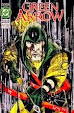
Saturday, November 30, 2019

Tom Lyle, RIP

I'd almost missed this news, but Tom Lyle, a notable artist who'd worked with Chuck Dixon on the Robin solo series, passed away a week and a half ago at 66. Very sad he's gone.

Labels: , , , ,

Friday, November 29, 2019

French comics writer works with Filipino artists to envision a future Manila

Here's an article in the Manila Business Mirror telling of French comics author Benoit Peeters, who traveled to the Philippines to work with local artists to develop a futuristic vision of Manila in their artwork.

Labels: ,

Thursday, November 28, 2019

DC removes Batman coverscan from social media pages after China gets angry

Here's an example on Variety of DC - and owner Time Warner - caving to the Chinese commie censors who don't want support for the Hong Kong pro-democracy protests:
DC Comics has yanked a poster for a new Batman title from its social media accounts after the image drew criticism from Chinese commenters who said it appeared to support the ongoing pro-democracy protests in Hong Kong.

The artwork depicts Batman throwing a Molotov cocktail against a backdrop of hot-pink words spelling out the new comic book’s tagline, “the future is young.” It was posted on DC Comics’ Twitter and Instagram accounts; both platforms are blocked in mainland China. The poster was meant to promote a forthcoming DC Black Label comic called “Dark Knight Returns: The Golden Child,” due to hit shelves Dec. 11. DC Black Label is an imprint that seeks to appeal to an older-skewing readership through reprints and original limited series.

But the poster came under fire from Chinese internet users who contended that it contained coded messages in support of Hong Kong’s pro-democracy protests. They said that the Molotov cocktail alluded to young Hong Kong protesters’ more violent tactics, that the “dark knight’s” choice of black attire referred to the black-clad Hong Kong protesters, and that the “golden child” of the book’s title was a veiled reference to the color yellow, which was taken up by previous pro-democracy protesters in Hong Kong five years ago.
Honestly, the only bewildering thing about this poster they speak of is that Batman would throw a molotov cocktail, which isn't that far removed from using guns, which he's rarely depicted using since the first few Golden Age stories. In any event, of course it's regrettable DC/TW caved to a form of censorship so as not to offend a potential market they covet:
China is a critical market for Warner Bros., which owns DC Entertainment and DC Comics, its publishing subsidiary. “Aquaman” broke Chinese box office records last December to take in a cumulative $292 million, while “Shazam!” made $43.8 million in April.

With the “Batman” image, the company joins the ranks of Western entities like the NBA and Disney that have been thrown onto the minefield of Chinese politics, with Chinese nationalists threatening to boycott on the one hand and others lobbing criticism for seeming to sacrifice freedom of speech for profit on the other.
See, here we go again, with politics trumping any kind of educational statement, ruining art, and making a mockery out of any anti-totalitarian statements that came before. If anything, this proves TW, as the DC owner, is no more immune to politically-motivated censorship than Disney is as the owner of Marvel. Don't be shocked if they alter the coverscan on the official Black Label release, assuming it hasn't be sent to press yet. If they won't promote it on their social media accounts, chances are it won't be published any different in print when the Batbook comes out.

Update: I believe I've found a Twitter post showing the cover in question:

And here on Newsweek is the most eyebrow raising part of all:
The poster is being used to promote the December 11 release of DC Black Label comic book Dark Knight Returns: The Golden Child, written by popular comic scribe Frank Miller. Black Label is a DC Comics imprint featuring titles for more mature audiences.
It sounds like Miller's been thrown under the bus again by a publisher who refused to accept his Holy Terror story as the basis for a Batman tale, resulting in his publishing it as a separate story nearly a decade ago. What's happening now may not be new, but it sure does say a lot about the rotten apples running DC today.

Labels: , , , , ,

An Indian comic about a crusader against rape and sex-trafficking

The BBC ran a report about Priya, a comic from India by Dipti Mehta, about a girl motivated to fight against misogynists:
Comic crusader Priya, a gang-rape survivor who earlier campaigned against rape and acid attack, is back in a new avatar. This time she is fighting the trafficking of girls and women for sex.

The "modern-day female superhero" was first launched in December 2014, exactly two years after the horrific gang rape of a young woman on a bus in Delhi, to focus attention on the problem of gender and sexual violence in India.

In the first edition, Priya Shakti, the tiger-riding heroine challenges the stigma surrounding rape while in Priya's Mirror, the second edition, she returns to fight acid attacks.

In the latest edition - Priya and the Lost Girls - she takes on the powerful sex-trafficker Rahu, the evil demon who runs an underworld brothel city where he has entrapped many women, including Priya's sister Lakshmi.

Indian-American actor and writer Dipti Mehta, who wrote the script of the comic, draws on ancient Indian mythology to create larger-than-life fantastical characters and delivers a powerful feminist statement.
In this case, I take it this is a feminism that's anything but similar to the kind advocated by leftists in the USA, which makes no proper distinctions between innocuous sexuality and repellent sensationalist violence. However, the writer herself says:
But Priya and the other girls stand up to confront patriarchy, says Ms Mehta, "just as women have broken their silence to talk about MeToo", the campaign against sexual harassment and abuse that started in Hollywood in October 2017 and later spread to many other parts of the world.
You know, reading this, it's honestly ridiculous if she's drawing an analogy to the MeToo movement, since, as noted earlier, it's devolved into a framing/defamation movement (and at least a few in the movement were found to have made false accusations), and really was built on shaky foundations to begin with. And why describe the menace as "patriarchy"? Surely a better description would be "male supremacy" and "anti-female bigotry"?

The following is also eyebrow raising:
Some of their stories, he says, have found their way into the Lost Girls, which will be launched digitally on Monday to coincide with the start of United Nation's 16 Days of Activism Against Gender-based Violence.

According to the United Nations Office on Drugs and Crime, human trafficking is the second largest organised criminal business in the world after the arms trade. It is even ahead of the drugs trade.
Are they aware the UN's got its own rash of sex abuse scandals? Even the SPLC's been accused of similar offenses. Many of the UN's members have supported Iran despite its own evil record, and worst, they've oppressed and blamed rape victims. Why arrange to launch some of the Priya material to coincide with a UN-sponsored event? It'd be better if they published it to go alongside events like International Women's Day. If the UN's got its own record of violations by employees, that's why their reports on sex crimes come with a very dampened impact, because they don't practice as they preach.

I'm sure the Priya writer's intentions and comic are very good, but taking a naive look at the UN will not help the cause of rape victims. Those confronting the issue have to realize political bodies can be some of the worst enablers around, and should try to write about the role of politics in sex offenses as well.

Labels: , , , ,

Wednesday, November 27, 2019

Entertainment Weekly gushes over the decade's most overrated

As could be only expected from such a pretentious showbiz magazine, Entertainment Weekly fawned over some of the worst propaganda of this past decade, proving yet again they're not fit to do comics coverage. For example, this take on Batman:
In this decade, DC gave us two contrasting yet very personal takes on the Dark Knight. During the disappointing New 52 experiment, Scott Snyder and Greg Capullo harvested their fears about life’s dangers and parenthood to deliver a story that focused on Batman’s place in Gotham City. Yes, it’s easy to make fun of how often the series asked, “What is Gotham?” but that question fueled the entire run and introduced new and daring concepts to Batman’s mythos. On the flip side, certified wife guy Tom King, working with a killer roster of artists (including Mikel Janin, Joëlle Jones, Clay Mann, and more), used his marriage as inspiration for a poignant tale that looked inward at Bruce and explored how the mere idea of happiness could challenge him. There were some rough patches in the run to be sure, but the highs (“Rooftops,” “War of Jokes and Riddles,” “Double Date,” Batman Annual #2) are so heartbreakingly beautiful that they make it easy to ignore the lows. Batman is an 80-year-old character, and yet both teams managed to make him their own. In conclusion: Kite Man, hell yeah! —Chancellor Agard
Predictably, they gloss over the negative reaction to the quick scuttling of any marriage between Bat and Cat. It really was a lazy direction, made worse of recent when King jettisoned Alfred Pennyworth, and another writer, Peter Tomasi, previously did the same with Leslie Thompkins. They don't even dwell on just how downbeat King's vision is, following the DiDio formula that superheroes shouldn't have happy lives. If the couples in question aren't going to get married at all, there's little point to bothering about such a plot in the first place, and they certainly shouldn't be promoting it like there's a real deal in store. At worst, it reflects the entertainment industry's aversion to marriage, something that's almost become a staple in past decades.

That's pretty surprising they admit New 52 was a failure, though. But I highly doubt they would've admitted it 8 years ago, when it was originally set up.

Let's also look at what they say about a Fantastic Four story on the list here:
The biggest movies of the 2010s looked like the comic books of 30 years ago, clashing infinite crossovers into the darkest of nights. Which, if I’m doing the math correctly, means the mainstream pop culture of 2040s will resemble the comic books of right now. And something about this short-lived Fantastic Four spin-off, relaunched for a 16-issue run amid the Marvel Now! initiative, still feels like the future. This is the spinniest of spin-offs, colliding multiple strands of Four lore into a tie-in team featuring familiar icons (She-Hulk! Ant-Man!) and minor characters renewed with personality to spare (Artie, Leech, and the Moloids!). Fraction’s cosmic farce blends self-aware cleverness with goofy-sweet humanity, and Allred’s trademark art-pop illustrations set the stage for his spaced-out work on the acclaimed Silver Surfer. —Darren Franich
More like the movies of now will resemble the comics of the past several years. I've figured the turn to social justice themes Marvel's movie division are planning hinged on Stan Lee's no longer being around, even though he was unlikely to disagree publicly with what they have in store. I'll have to admit though, it's amazing they were able to keep the movie machine going as successfully as they did, because early signs of political correctness turned up in the Thor movie with Heimdall changed, to name but one example.

There's also the take on Jonathan Hickman's X-Men:
Screw recency bias. Jonathan Hickman’s return to superhero comics with these parallel X-Men books took the industry by storm. It’s hard to remember the last time it felt like everyone on social media was feverishly reading the same comic every Wednesday and on pins and needles waiting for the next issue. Beyond their zeitgeist-seizing power, these two books — which chronicled mutantkind’s proactive attempts to insure their survival in a world that was literally trying to extinguish them — also revitalized Marvel’s X-Men line, infusing it with thrilling and powerful ideas (those data pages!) that will surely (or hopefully) generate fantastic stories for years to come. —C.A.
Interesting they talk about bias. Because I suspect that plays into much of the positive reception by "critics", and the books, their top ranking on the charts notwithstanding, still sell laughably. Not a word about Moira MacTaggart either.

Here's also their comment on a comic called Lumberjanes:
Friendship to the max! As good as it is to have art that looks unflinchingly at the dark sides of human existence, it’s also important to enjoy warm, fuzzy stories that show you things you never even knew you needed. Lumberjanes was originally only supposed to be a four-issue series from writers Grace Ellis, Noelle Stevenson, and Shannon Watters and artist Brooklyn Allen. But the adventures of Jo, April, Mal, Molly, and Ripley (the titular Lumberjanes, a.k.a Girl Scouts who punch monsters and solve ancient mysteries) proved so addictive that the comic has now published more than 60 issues. Here, feminist icons were name-dropped like legendary heroes (“Holy Mae Jemison!”) and same-sex love was portrayed with an easy warmth that would carry over into both Ellis’ subsequent comic Moonstruck and Stevenson’s She-Ra and the Princesses of Power reboot. There were mysteries to solve (why are there so many monsters around this summer camp, anyway?), but at the end of the day nothing was more important than reveling in the beautiful friendship of these bright young characters. —C.H.
Well that's certainly a clue to how the indie scene can be rife with political correctness, and sadly is. It's already been apparent what the remake of She-Ra was intended for, and this apparently serves the same agenda. "Friendship" indeed!

There's also - surprise, surprise - their sugary comment on King's Mr. Miracle mini:
With this 12-issue limited series, writer Tom King and artist Mitch Gerads grounded and found intimacy in the cosmic and bombastic mythology of Jack Kirby’s New Gods by funneling the central intergalactic war through Scott Free and Big Barda’s struggles with parenthood. Furthermore, Scott’s inability to distinguish what was real and what wasn’t, confrontation with the absurd and dark nature of the world, and subsequent resolution to persevere anyway made Mister Miracle one of the most relatable comics of the past few bonkers and incomprehensible years. —C.A.
So they think it's great when heroes are depicted as though they're stupid, mentally frail and can't make distinctions? Oh, do tell us about it. Scott Free's become another victim of new generations of writers who can't accept a wholesome hero who, if he/she was written with flaws, aren't depicted with such extremity as King depicts the characters in his stories with. Come to think of it, so too has Big Barda. And the "critics" slobbering all over this new stuff don't sound like genuine fans of Kirby either.

And then, most predictably of all, they gush over the Muslim Ms. Marvel:
Kamala Khan is the best new superhero of the decade. As created by G. Willow Wilson, Sana Amanat, Stephen Wacker, and Adrian Alphona, she is the first Muslim character to headline their own solo Marvel title. But though she carries Carol Danvers’ old mantle, Kamala has already created her own legend. She is an icon not just for Muslims and Pakistani-Americans so often denied pop culture representation, but also for 21st-century kids struggling to balance school responsibilities with their jobs and personal lives, and for people young and old trying to master control of their goofy bodies. Creating a teenage superhero and giving her the ability to make her body parts ridiculously large or hilariously small is, simply put, a creative masterstroke. —C.H.
Umm, didn't Elasti-Girl of the Doom Patrol in the Silver Age and Big Bertha in West Coast Avengers in the Iron Age have somewhat similar powers? And seriously, what's really galling is their inability to distinguish between religion and race. Make a Pakistani character a star of the show, fine. But whitewashing a bad religion rife with evils, and claiming it must be given positive representation far less afforded to other religions like Judeo-Christianity today, is repellent in the extreme; another example of the lugubrious liberal "inclusivity" narrative that makes no distinctions between what's good or bad in ideologies. Would they say Armenians are largely denied representation? I doubt it.

Then, there's their take on Young Avengers, which has a "woke" moment:
The big two superhero publishers spent this decade trying one publishing initiative after another, but only Marvel Now! earned multiple slots on this list. One reason for that is the brilliant synergy of the creative lineups. Case in point: Writer Kieron Gillen and artist Jamie McKelvie were the perfect choices to take the Young Avengers into the 2010s. Kid Loki predated Baby Yoda by several years and successfully synthesized the Machiavellian mastermind Loki of Marvel comics with the angsty heartthrob Loki of the Marvel Cinematic Universe. America Chavez broke the glass ceiling and kicked holes in the walls of the multiverse to prove an all-powerful superhero didn’t have to be a straight white man. Above all, there were Billy and Teddy, the world-breaking wizard and the orphaned prince from outer space, whose love was powerful enough to save us all.

Gillen and McKelvie collaborated on other comics this decade, such as their creator-owned The Wicked + the Divine for Image, and the latter designed the now-famous Captain Marvel costume since worn by Brie Larson, but this was their most tightly told story. Young Avengers successfully illustrated the connective tissue between superheroes and this decade’s youth culture while leaving fans hungry for more. —C.H.
Oh, there's homosexuality agendas here too, eh? Along with the forced diversity pandering represented in Chavez, of course. Note the howler of a line claiming heroes don't have to be "straight white men", even though there have been black/Asian/mixed figures in comicdom before who, with talented writing, could prove just as effective as their white counterparts (Black Panther and Luke Cage, anyone?). It's even been proven in the Milestone line during 1990s. If you know where to look, there could be dozens more examples in independent comics. This attempt to claim white heroes are far too many got tired millions of years ago. One of the reader comments said:
And this is where EW gets it's current reputation for obsessed with woke social justice whatever.

Spoiler alert, EW: Marvel has had characters like that for decades already. Haven't you been paying attention?
More like they're deliberately obscuring them, the recent Black Panther movie notwithstanding. They know there's significant examples in existence, yet omit them at their convenience, no matter how unintentionally comedic they come off sounding, and no matter how insulting it is to Stan Lee, after all the hard work he did. Say, does "all-powerful" mean they're too powerful, to the point the characters in question are written as Mary Sues? That was basically what the Captain Marvel movie with Larson amounted to. And that costume design "famous"? My foot. It's got to be one of the ugliest, dullest I've ever seen.

It's clear EW is way past its prime, since they're not going to be objective about these stories, and won't recommend anything from a conservative-leaning writer either. All concerned would be well advised to save their money and not order a subscription from them. What they fawned over here are some of the most wretched examples of the decade, proving just what went wrong in recent times.

Labels: , , , , , , , , , , , , ,

Tuesday, November 26, 2019

Times-Record fawns over Jonathan Hickman's X-books

The Fort Smith Times-Record turned out a predictably biased column by Andrew Smith about Hickman's X-Men reboots, with nary an objective word on whether Moira MacTaggart's retcon into a mutant is appropriate or not:
Here’s how it began: Back in July, superstar writer Jonathan Hickman launched two related, six-issue miniseries: “House of X,” and “Powers of X.” Despite starring the X-Men, both books were pronounced as if the “X” in each title was the Roman numeral 10.

The reason for this became clear fairly quickly. A human named Moria MacTaggert, who at one point was an inamorata of Professor Xavier, turned out to be a mutant. And her super-power was a wild one: She reincarnates as herself in the womb over and over again, essentially reliving her life in a new timeline where she tries to avoid the mistakes of the previous ones.

As it turns out, the current universe we are all living in is (or appears to be) Moira’s tenth life — hence, the Roman numeral 10.

Without changing a single word of what had gone before, Hickman had changed everything. Especially since Moira revealed herself to the mind-reading Professor Xavier — who discovered from Moira’s memories that in every one of her past lives, mutants were wiped out. Wiped. Out. No matter what steps Moira took.
By stating "a human" he makes it sound like Moira was little more than obscure, flash-in-the-pan cast member. Very insulting to what's come before. And who says this doesn't change anything in past publication? From a story perspective, it makes little sense Xavier wouldn't have known, or that it wouldn't have been written about in older storylines. At best, it's more like a vague variation on Days of Future Past, which didn't really change the future for Rachel Summers, who'd become a recurring character, later appearing in Excalibur for a time.

But the main problem is that Hickman takes a character who was originally meant to serve as a non-superpowered cast member, and turns her into just another mutant. These press propagandists never explain why they believe it's okay to make mockeries out of older creations just to suit a new writer's desperate narrative.
Further, Xavier has created a databank of all mutant minds, and developed a way for various mutants to combine their powers to clone mutant bodies. By combining these techniques, Xavier can, in effect, resurrect any dead mutant with all memories intact up to the point where the databank was last updated.

Death had always been something of a joke to X-fans, because of constant demises and resurrections. Virtually any mutant you can name, from Professor Xavier to Wolverine, has been deceased at some point, and revived. Now death is a joke in-story!
Ah, and is this supposed to imply resurrection is an inherently bad thing? These propagandists have been feeding us that trash for too long, that characters should be killed and remain dead, with no distinctions to be made between what's done in good taste or bad, or an understanding that in science-fiction and fantasy, resurrection's part and parcel of the genre. And why should it just be X-Men where this matters? Death, whether a joke or not, prevails in many comics and entertainment franchises, not just in merely one. But seriously, however it's handled, death to begin with is not a joke. Certainly not if the story where it occurred was awful.
Further, how is it that all of the X-Men are perfectly fine with Xavier inviting all of team’s worst enemies to live on Krakoa — people like Magneto, Apocalypse and Mr. Sinister, who have tried to kill them time and again? And are the more spiritual X-Men — Catholic Nightcrawler, Jewish Kitty Pryde, nature worshipper Storm — OK with Xavier essentially extorting/bribing the world to leave them alone?
While I can probably accept Magneto getting an invitation, due to his once joining the Xavier Institute in the 80s when the New Mutants was in publication, Apocalypse and Mr. Sinister do sound a lot harder to swallow. Especially if any of them committed murder, which makes them no more acceptable company than the Joker. Is Xavier's sudden acceptance because the victims of these villains were...resurrected?
And does nobody remember Genosha? That was the island nation Magneto created in the ’90s, assembling most of the world’s mutants there ... which made them a handy target for a Sentinel attack, which wiped out 16 million of them. Isn’t anyone the least worried about a repeat performance?
That was around the time Grant Morrison was assigned writer for about 3 years, and it was decidedly just another example of the vile, over-the-top stunts the mainstream's been resorting to in order to get rid of whomever and whatever the editors consider worthless. No matter how pretentious Hickman's premise may be, that atrocity from back in 2003 is something I'd rather not see tried again.
On the other hand, Hickman is justly celebrated as a “big concept” writer, which this new arrangement certainly is. Characterization, though, is not his strong suit. It may just be that he shoved these questions under the rug as quickly (and implausibly) as he could so he could get on with telling the rest of his story. Only time will tell.
Interesting Smith's willing to acknowledge Hickman may not be so good at characterization. But then, isn't that why taking away Moira's status as a simple human with no powers is laughable?
Which it will do in the six new X-Men titles to launch from “HoX/PoX.” Now comes “Dawn of X,” as Marvel has dubbed the re-launch, which includes the flagship “X-Men” plus some other titles with familiar names: “Excalibur,” “Fallen Angels,” “Marauders,” “New Mutants” and “X-Force.” All six return with new first issues, the last of which (“Fallen Angels” #1) shipped Nov. 13, along with the second issue of “X-Men.”
See, this has got to be the biggest problem in an era where pamphlets sell so pathetically - too many spinoffs. The Avengers got to that point under Brian Bendis, IIRC. And it doesn't make much difference whether they're self-contained, which they may not be so long as Marvel keeps churning out company wide crossovers, and rebooting with numero uno issues. I also find the following description of X-Force annoying:
“X-Force” has never been a favorite of mine, in any of its many iterations. That’s because it’s usually a sort of black ops book, where various lethal mutants (like Wolverine) sneak around the world murdering threats to mutantdom. That’s not terribly heroic. This book seems to be heading in that direction, and for the first time, I can buy into the premise — as a nation-state, Krakoa has a right to defend itself, up to and including a variation on the CIA, which X-Force is supposed to be. The first issue doesn’t actually establish the premise — it’s early days — but you can see where it’s going, and it will probably star Beast, Black Tom Cassidy, Colossus, Domino, Marvel Girl, Quentin Quire, Sage and Wolverine. If you recognize all those names, you are quite the X-pert — and doubtless have an inkling where the fault lines of this “team” already lie. Frictions exist in any group, but in this one they could be fatal.

Oh, wait — mutants don’t stay dead any more! Or do they? The first issue ends with a shock that may or may not alter the status quo for all six books.
If there's a resurrection of an innocent person in store, at least that itself isn't wrong in a sci-fi world. But what's this about X-Force almost always being a black-ops book? Far as I know, it was only about a decade ago the title applied to a series emphasizing such a premise, at the time the Messiah Complex crossover took place. As for the team allegedly committing murder, it depends: if these were repellent, murderous criminals they took out not unlike what the Punisher's faced, that's hardly the worst thing that could happen. But this reeks of leftism, which can only see a narrow view of how to deal with evil, selectively or otherwise. On that note, what if it turns out Hickman's vision does go by that angle? In that case, the premise of being able to defend the country wouldn't work. There's certainly something fishy how Smith supposedly had a low opinion of the early X-Force iterations (though Rob Liefeld's horrible art is definitely reason enough to avoid the early material), yet in the very present, he embraces it straight off the bat? If this new iteration had been done over 20 years ago, something tells me he'd speak of it as negatively as he does the rest.

And if the cast is being bottled up on an island, that doesn't sound very different from what became an increasing problem in the past 30 years or so - the X-Men being all but depicted as isolated. If that's what this is about, it's not very creative. Again, let's consider Moira's transformation into just another mutant. If there's no "civilian" co-stars, that's a notable problem with some superhero comics for who knows how long.

Labels: , , , , , , ,

Monday, November 25, 2019

Sugarcoated column about Black Canary in Young Adult format

Here's a sugary article in the Fort Smith Times-Record about a new YA graphic novel from DC spotlighting Robert Kanigher and Carmine Infantino's famous lady crimefighter as a 13-year-old:
How do you find your voice?

It’s a question that each of us must answer on our own, usually in adolescence. But when you’re a 13-year-old Dinah Lance, it has a more literal meaning, because her voice is the famous sonic weapon used by the superhero Black Canary. That’s the concept behind the latest outstanding Young Adult graphic novel from DC Comics, “Black Canary: Ignite” ($9.99).

DC Comics has been killing it with their YA line of GNs, from the continuing stories of the Super Sons (male offspring of Batman and Superman) to “Dear Justice League,” a charming collection of questions (from youngsters) and answers (from Superman & Co). “Ignite” arrived on Oct. 29, and joined the A-list immediately — as you’d expect, given its provenance.
Without any objectivity or clear review, I don't see how it can join any positive list at any time.
And clearly, Cabot did a LOT of research. Black Canary has put in a lot of miles since her 1947 debut, joining the Justice Society (of Earth-2), then the Justice League (of Earth-1), then being retroactively turned into the daughter of the original, and therefore the daughter of a police officer instead of the wife of one. And that doesn’t even include her now-erased long romance with, and marriage to, Green Arrow. Or her 2011 “New 52” reboot, where she got a lot younger, much of history evaporated and she became, as the Moody Blues once understated, just a singer in a rock ‘n’ roll band.

None of which matters in “Ignite.” Cabot stripped away what didn’t click, and kept what did.
And just what didn't click? Let's make it whatever came after the early 2000s, such as the time when Deathstroke wrapped a bag over her head and chained her out of nowhwere in the 3rd issue of Identity Crisis. A vile story that definitely was a disfavor to Dinah Lance as a crimefighter. It even ignored the fact that for years, there were plenty of stories where Dinah wasn't scared of wading into dangerous criminals with hand-to-hand combat, putting her sonic scream second as a resort.

But what about the better stories she appeared in, like the early Golden Age tales in Flash Comics, her Justice Society/League runs, solo stories from the Bronze Age and late 80s-early 90s, and Chuck Dixon's Birds of Prey run? Why don't those count or click? In fact, I'm not sure she ever married Green Arrow per se in the late 2000s, recalling a "wedding special" that may have been written by overrated Judd Winick.

But the following are certainly telling of something:
I’ll admit I hadn’t heard of Black Canary before, but once I found her and started researching her, I was totally intrigued,” Cabot said. “The character has such a rich backstory to draw from, thanks to the many talented writers who’ve worked on her character in the past. I felt like in many ways the original seemed the most special, and also the most relatable to today’s audiences — not only because Dinah inherits her superpower from her mother (hello Ancestry and Me) but because I was often told as a child that I was too loud, and I have a brother who is a police sergeant, and his daughters have expressed interest in following in his footsteps ... and just like Dinah’s dad, this makes him nervous. Everything about Dinah’s story — especially the part about not being afraid to use your voice — feels very timely to me, even though it’s nearly 75 years old.”
I've noticed before these hired hands telling they'd never heard of the heroes and heroines before, and obviously never read any of their prior adventures either, and I find it annoying and problematic. There's a clue she didn't do good enough research either, because if she had, she'd know the first story where Dinah Lance as we know her today with the middle name Laurel was actually the daughter of the original, Dinah Drake, and her husband Larry Lance, came in Justice League of America during 1983, in issues #219-#220, where Roy Thomas initially established the sonic scream was the result of the Wizard casting a spell upon the infant Dinah, and her parents hoped Thunderbolt, the hex-bold genie of Johnny Thunder, could cure her, though he put her in suspended animation until the problem could be solved. T-bolt wiped everyone's memory of the incident until much later. It was all reworked several years later, in the last issue of the late 80s Secret Origins anthology, that Dinah Laurel Lance grew up normally, and acquired her Canary Cry as the result of a metagene. The second take on Dinah Jr's background may work better, but that doesn't mean there shouldn't be some clarity.
“It was important for this book for Dinah to have friends, and for those friends to have moms that, like Dinah, they get along with,” Cabot said. “It was important for Dinah to have girlfriends in the book because in writing books for middle-grade readers for so long, I know that the one thing they like better than superhero stories is stories about friendship — particularly fractured friendships or friendship problems. It’s just something readers that age are going through a lot themselves in their own lives, and so something they enjoy reading. I think it’s nice to throw in a little bit of realism and relatability in a book that is otherwise pretty unbelievable!”
Based on the following, that's why realism and unbelievability could be pretty troubling:
“DC sent me the work of several artists who might be available for the project,” Cabot said. “I immediately liked the youthful vibe of Cara’s previous work. We asked Cara to do a preliminary sketch of Dinah as a young girl and she just nailed it. The Dinah you see on the page in the book is the exact Dinah drew as her sample. We really needed a 13-year-old Dinah and that’s exactly what Cara delivered from the start. It was fantastic. Cara was the one who recognized that kids might want to cosplay Dinah, and so she was careful to give Dinah a new Black Canary costume that still looked enough like the old one but that any kid could easily get their hands on (bicycle shorts, cut-offs, combat boots, scruffy black jacket, black mask) and would also be Mom/School Approved, and not the highly sexualized Dinah of the past.”
Well! This is most fascinating. Especially when you consider all the cosplay young girls have done with Wonder Woman costumes that were anything but modest when the 2017 movie with Gal Gadot came out. Cabot comes across sounding much like Marvel editor Steve Wacker, who once said they were changing Carol Danvers' Captain Marvel costume to practical because he wanted something fitting if his daughter were to cosplay. All without considering how WW party costumes never cost DC any buyers or parents.

Now what if it turns out violence, by contrast, isn't kept to a low tone in this graphic novel? Or that "girlfriends" amounts to lesbianism? That'll just compound another example of serious hypocrisy coming from another pretentious scribe who thinks she knows better than even Kanigher and Infantino do. That's enough to avoid what's bound to be a very pretentious take on a classic superheroine. By citing Dinah as "highly sexualized" this Cabot strongly hints she doesn't really like the original material at all.

Labels: , , , , ,

Comics Beat's unintentionally hilarious defense of Tom King's terrible influence

The dreadful Comics Beat wrote a gushy article about the awful Tom King's dismaying influence on comic book storytelling, rife with contradictions:
Tom King caught the eyes of comic book editors with his debut novel, 2013’s This Crowded Sky, telling a story about superheroes stripped of their powers. Not long after its publication, he sells Sheriff of Babylon to Vertigo. Before Sheriff is even published, King is invited to co-write the new DC series Grayson, which began its run in 2014. Just two years later the author takes over Batman, the most important title in comics.
Sounds like somebody's saying Batman's inherently more important than Superman. Explains perfectly what's gone wrong with the medium, when dark is regarded as better than light. Also fascinating how a writer of his stature can acquire certain mainstream gigs so quickly, whether the stars of the show in questions are 1st, 2nd or 3rd tier characters. That his debut spotlighted heroes sans powers is saying quite a bit about his vision too. Vaguely reminiscent of Brian Bendis' early works like Powers.
That’s a remarkable career trajectory, but readers can easily identify why King was met with such immediate success. He offers a unique perspective and pacing to his stories that, while familiar to longtime comic book fans, are largely absent from mainstream comics.
The reason he was such a "success" is because he subscribes to a politically correct vision that's destroyed both independent and mainstream - dark, depressing, pessimistic, and violent. Nothing unique about this perspective, but they're too full of themselves to admit it.
The response to Tom King’s comics has been overwhelming, even encouraging the revival of a certain publishing model. In that sense, his influence is already apparent. In other ways, his impact on the industry and art form may not show itself for years to come. Read a few ways the work of Tom King’s is significant not just on its own merits but to the present and future of comics.
Considering he was taken off of Batman proper before getting around to a storyline he was allegedly planning, you can't say his influence has lasted all that long. Now about those "significant" examples: there's King's supposed influence from Alan Moore:
Even though DC’s Doomsday Clock lifts characters and concepts directly from Watchmen, Alan Moore’s influence has seen a more impactful resurgence in comics written by Tom King.

The majority creators in the ’80s and ’90s took the wrong lessons from Watchmen, believing that the way to follow in its footsteps was to bring the violence and moral turpitude in Watchmen to mainstream superhero comics. Their misguided efforts resulted in a wave of “dark” and “edgy” comics rather than ones inspired by Moore’s actual approach to comic book storytelling.

30 years later, Tom King proves himself to be a far more attentive student of Alan Moore’s work. The spirit of Moore is imbued in every comic King writes. So, ironically, one of the biggest influences Kind has had on mainstream comics is the inspiration he takes from another creator.

Other modern writers have learned from Alan Moore, of course, but King has a particularly deep understanding of his work and borrows more of his sensibilities. Most notably, King is inspired by Moore’s methodic pacing in an era of comics that’s embraced cinematic storytelling. Alan Moore comics are anything but cinematic, an oft-forgotten reason why the Watchmen movie didn’t work and why no direct adaption ever could.

By digging beneath the surface and recognizing the magic of Alan Moore’s contribution to the medium, King writes thoughtful, deliberately paced stories that speak as much to the human condition as they do about the superhero whose logo is plastered on the cover.

King trades comic book storytelling inspired by another medium for a kind of pacing that’s completely unique to comics, the details of which will be discussed in the next section.
Yep, this is as hilarious as you can get, for all the wrong reasons. King's already gained notoriety for killing a number of superheroes and other characters in the now reviled Heroes in Crisis, and setting Wally West up to be the culprit. All because Wally's miserable that his family's been de facto erased from existence, so he even tries to hide the blame and rubs more salt in. King also put Batman's butler in the tomb recently. If the disgrace who wrote this pathetic apologia is saying King's taking influence from Moore's Batman: The Killing Joke, it's interesting to note Moore himself, for all his faults, later said he regretted such tales, even if he showed much more competence and humanity in his writings than hacks like King did in theirs, and the difference is that Barbara Gordon survived the Joker's attack, for better or worse.

And try as the columnist might, his talk of dark/edgy tales is contradicted by letting King off the hook for his. Acting all the time as though darkness is a more effective direction in every way than light. By this logic, it would not be possible to create the Fantastic Four today without making it a most miserable affair. The writer goes on to discuss how the Mr. Miracle miniseries uses 9-panel grids, without explaining what makes it so great to see "Darkseid is" repeatedly plastered along in the process:
Most mainstream comics don’t have repeating panel grids, but I wouldn’t be surprised to see that change following the overwhelmingly positive reception to Tom King’s comics, Mister Miracle in particular. When I interviewed him at New York Comic-Con, I took the opportunity to tell him that his work inspired me to co-create a comic that uses the 9-panel grid. I hope his comics have a similar effect on professional writers. Grids are an often effective technique that’s largely missing from mainstream comics.
Oh, did he also feel "inspired" by the repeating use of "Darkseid is"? I vaguely recall seeing it on the 14th JLA cover in the late 90s at the time Grant Morrison first wrote the 1997-2006 volume, and honestly don't see what's so special about it. If King's vision ends up influencing real pros, it'll be an embarrassment.
One of King’s earliest works for DC is Omega Men with Barnaby Bagenda. Despite low sales, the book left the extraterrestrial heroes with a clearer identity than they’ve had since their inception. His sole project at Marvel is Vision with Gabriel Walta, a maxiseries so impressive that it served as the inspiration for upcoming Disney+ television series WandaVision. Most recently, King reteamed with Mitch Gerads to co-create a Mister Miracle, a series that received wide critical acclaim, winning the team Eisner Awards for Best Writer, Best Artist, and Best Limited Series.
Oh yeah, a clearer ID, I'm sure. King's take on Omega Men was a story where the team was hunted by the Citadel for seemingly murdering Kyle Rayner, and even let other innocents wind up slain. It's obvious the columnist never had much affection for the original Omega Men envisioned by Marv Wolfman and Roger Slifer. As for King's Mr. Miracle mini? Those who "acclaimed" it are pretty much the establishment members, much like Comics Beat themselves, who're far less likely to consider a right-winger's contributions worthy of notice. With a track record like King's, that's reason enough for me to avoid the Disney Plus series reportedly drawing from his Vision work.

From the following, it sounds like King's made sure padded storytelling that began with Brian Bendis continues with him in terms of miniseries, or at least how many issues an ongoing could have slated:
DC has clearly taken to stories told over 12 issues. In addition to his own Adam Strange maxiseries with Mitch Gerads and Evan “Doc” Shaner, the company is releasing Martian Manhunter and Inferior Five maxiseries that attempt to revitalize interest in the properties. Even new Superman Family titles Lois Lane and Jimmy Olsen are slated for 12 issues, a decision made by DC rather than the creators. 3 of the 4 Wonder Comics titles are as well.
If the publisher makes the decision, rather than the writers/artists, that's all you need to know what could go wrong. Editorial mandates are one of the most destroying factors in corporate-owned medium these days, and under Bendis, led to quite a few padded-out tales that wound up being quite a bore.
It’s impossible to deny that Tom King has had a notable impact on comics publishing. His influences, his writing style, and even his preferred publishing format have captured the industry’s attention following their success in his work. In the coming years, I only expect his impact to grow and for his upcoming projects to inspire more changes. It’s pretty amazing to see how one man has played such an important role in comics over a few short years, but I guess that’s the Tom King effect.
If his bad influence does grow, that'll only precipitate the industry's downfall ever further. Notice if you will they say it's the industry whose attention King drew, not the audience's. He's just another example of a "creator" whose work I for one won't buy, due to his contempt for fans of Wally West, the Titans and Roy Harper. And what point was there by the end of Heroes in Crisis, his loathsome little miniseries? Whatever supposed focus on trauma King was allegedly doing, vanished well before the end. None of which matters to the Comics Beat columnist, who shamefully glosses it over. No wonder I've since come to recognize CB as one of the worst news sites on the web, to the point where I'd rather use an archive link to their items instead of a direct one.

Labels: , , , , , , , , , ,

Saturday, November 23, 2019

Variant covers continue to destroy comicdom

A columnist at SyFy Wire is willing to make the case why variant covers have brought down the industry:
Since the dawn of the Comics Age, the cover has been an indispensable tool for reaching an audience. It is the first impression the creative team and their characters make, so you'd best come with your A-game or you might get left on the shelf. I find a great comic book cover irresistible. To this day, I still make the occasional impulse buy based solely on cover art that grabs my attention, provided they followed Stan Lee's instructions on how to create a compelling cover.
I'd like to interrupt a moment to offer the reminder that you can't always judge a book by its cover, and that's certainly been the case these days with the Big Two. Great art on the cover, but sometimes dreadful art and definitely awful stories inside. That's why it's better to just look for a copy on the web you can save to file instead. Now, let's continue:
Having said all that, I will state loudly and proudly that I can't stand variant covers.

I despise them, loathe them, wish a medieval pox on them
.

Not because I don't like the actual artwork depicted on said covers, mind you. The Jen Bartel variant for the upcoming Thor #1 is a thing of beauty. And I certainly don't begrudge artists like J. Scott Campbell who have built a lucrative career on stellar exclusive covers. My problem is that variant covers have become a crutch to support the financially limping comics industry. They also bring out the worst in retailers, publishers, and collectors.

Publishers — not just DC and Marvel but Archie, Image, IDW, and others — use variants as a way to soak the customer and juice sales numbers. It's not a new phenomenon by any means. It's been going on for several years, as the comics industry seems bound and determined to repeat the same mistakes that nearly destroyed it in the 1990s. It's disheartening, as sometimes seems as if the comics business is trying to bury itself.
More than just several years. It's been going on as far back as the mid-80s. I remember towards the end of Justice League of America's 1960-87 run, there were 4 issues with covers published around 1984-85 (#233, #234, #235, and #236) which, while not variants in the way we see today, were designed so you could put them together to form a wide poster, either in 2 or all 4. Marvel made it worse when they published at least 4 different covers for the premiere issue of the 1991 sans-adjective X-Men that formed the same, but it was all for one single issue, not 4 consecutive ones. The problem got worse in the mid-2000s, and has become ghastly ever since.
Retailer variants, store-exclusive variants, and convention exclusives are just some of the variants offered these days. Nearly all of them are meant to squeeze the consumer out of an extra buck while creating an artificial 'collector's item.' DC Comics released 80 different covers for Detective Comics #1000, all gorgeous and about 77 of them completely unnecessary. Marvel did cover variants for its mega-successful House of X/Powers of X limited series, and both of the Big 2 regularly have Cover A and B variants for new books. In fact, Marvel's brand new 2099, Deadpool and Annihilation Scourge titles, dropping in stores November 20, all have multiple covers available. It never ends.
And that's because speculators for starters keep buying this stuff up, no matter how higher priced it is. All these drawings would work far better if they were produced and sold as wall paintings for a gallery instead, and they don't even have to cost that much if the publishers want to make money on art. So why does this futile charade continue? Even the cover artists themselves may have to bear some accountability for plying their trade for the sake of covers without consideration for the harm it does when they could very easily be drawing those same portraits as the basis of pictures to hang on a wall. Just think of what an market could be built around paintings based on comics characters, yet they perpetuate a situation where the drawings for otherwise remain on the covers when they could be seen by a wider audience while hung on the wall of a gallery. This is not helpful at all.

And this is just one more reason why I believe the pamphlet format has to be retired, because it gave way to corruption. It's a situation that can't continue, and has to cease. I do admire some of the artists who're drawing for variant covers, but they too must recognize that their talents can't be limited to just covers alone. If they have talent, they should realize it on pictures in galleries, where they can actually get a wider, more respectable audience.

Labels: , , , ,

Friday, November 22, 2019

The Billy Ireland museum in Ohio is celebrating a century of women's cartooning

You may notice how today, there's a lot of Orwellian SJWs who intentionally obscure the past history of women writing and drawing comics, and act as though those they do take notice of are something entirely new. Well now, the Smithsonian magazine's site announced the Billy Ireland Cartoon Library & Musuem at Ohio's university has an exhibition set up for hosting a century's worth of women in the art of cartooning:
Nina Allender saw herself as a painter. But after women’s rights activist Alice Paul visited her in 1913, she shifted focus, beginning a lengthy tenure as a cartoonist for the Congressional Union for Woman Suffrage’s flagship publication, The Suffragist. The painter-turned-cartoonist’s creations depicted suffragists as stylish young women patiently waiting for their rights—a portrayal starkly contrasted by anti-suffrage cartoons that caricatured activists as frumpy and nagging. Allender’s work was instrumental in building public support for the 19th Amendment, which banned voting discrimination on the basis of sex upon its ratification in August 1920.

To commemorate the centennial of this landmark event, Ohio State University’s Billy Ireland Cartoon Library & Museum is hosting an exhibition titled “Ladies First: A Century of Women’s Innovations in Comics and Cartoon Art.” Per the museum’s website, the show draws on the experiences of the many female artists who have shaped the genre to trace its evolution from political cartoons to newspaper comic strips, underground “comix” and graphic novels.

“Part of our goal was to really look at how women were pushing comics and cartoon art forward, not just the fact that women made comics,” exhibition co-curator Rachel Miller tells Columbus Alive’s Joel Oliphint. “We wanted to think about, ‘What are the different ways in which this medium has benefited from women who are making comics?’
Something today's PC pundits won't take a serious look at, to recognize that there have been women in art, comics and otherwise, for over a century now. Not even how there have been black and Asian contributors, such as:
During the 1940s, Jackie Ormes became the first African-American woman cartoonist to have her work distributed nationally. She even licensed a line of upscale dolls modeled on Patty-Jo, one of the two African-American sisters featured in her “Patty-Jo ‘n’ Ginger” comic strip. [...]
So even women of color specializing in comics and cartooning is nothing new at all. But most certainly is overlooked in a politically correct environment intent on undermining artistic merit. I know that cartoonists like Cathy Guisewite, Tarpe Mills and Lynn Johnston are cited in the exhibit, but I'd also like to know if writers like Laurie Sutton are included, recalling she'd written several Adam Strange tales in 1980-81, published as backups in Green Lantern at the time. IMO, writers of comics and cartoons should be highlighted too, since scripting bears significance just as much as artwork.

For now, this exhibit in Ohio is something PC advocates would do well to take a look at, and realize women working cartooning is nothing new at all, and recognize that the art form shouldn't be monopolized by social justice identity politics.

Labels: , , ,

Thursday, November 21, 2019

Alan Moore thinks superhero influence on culture is embarrassing, but so is at least one comment he makes

I don't know if Alan Moore's truly left comicdom, as he's said he intends to, but a 2017 interview turned up on a blog dedicated to his writings, translated from a Brazilian paper, where, not unlike Martin Scorsese, he takes a dismissive stance on the medium, only in Moore's case, he makes a statement that's extremely galling:
What was the impact of popular heroes comic books in our culture? Why are people fascinated by alternative realities?

I think the impact of superheroes on popular culture is both tremendously embarrassing and not a little worrying. While these characters were originally perfectly suited to stimulating the imaginations of their twelve or thirteen year-old audience, today’s franchised übermenschen, aimed at a supposedly adult audience, seem to be serving some kind of different function, and fulfilling different needs. Primarily, mass-market superhero movies seem to be abetting an audience who do not wish to relinquish their grip on (a) their relatively reassuring childhoods, or (b) the relatively reassuring 20th century. The continuing popularity of these movies to me suggests some kind of deliberate, self-imposed state of emotional arrest, combined with an numbing condition of cultural stasis that can be witnessed in comics, movies, popular music and, indeed, right across the cultural spectrum. The superheroes themselves – largely written and drawn by creators who have never stood up for their own rights against the companies that employ them, much less the rights of a Jack Kirby or Jerry Siegel or Joe Schuster – would seem to be largely employed as cowardice compensators, perhaps a bit like the handgun on the nightstand. I would also remark that save for a smattering of non-white characters (and non-white creators) these books and these iconic characters are still very much white supremacist dreams of the master race. In fact, I think that a good argument can be made for D.W. Griffith’s Birth of a Nation as the first American superhero movie, and the point of origin for all those capes and masks.
Well this is certainly disappointing he's saying something almost like what Fredric Wertham might've said in his since discredited writings on comicdom. All, I presume, because Moore's fed up that he'd been cheated out of too many writings by the company bigwigs? He's not going about it the right way if he takes out his anger upon any component of comicdom and science fiction.

It may be overlooked by some, but early in his career, Moore did write at least a few superhero stories for Marvel's UK affiliate in the early 80s, like Captain Britain's early adventures in a publication called The Daredevils (which also reprinted some Daredevil stories by Frank Miller), and he was also the co-creator of mutant Roma girl Meggan in Mighty World of Marvel #7 in late 1983 with fellow UK native Alan Davis, himself a talented artist with an impressively cartoony style. Chris Claremont, also from the UK, would later make most charming use of Meggan as a cast member of the 1988-98 Excalibur series, where she would marry Captain Britain at the end of the run. I think Moore also has a handful of Night Raven stories to his credits. Does Moore now reject his stories for UK publications along with the rest? Well it's a real pity he's taking it so hard, to the point where he'd say something so alienating, and he makes everything worse by hinting he thinks whites literally comprise too many cast members, much like the social justice advocates in the US.

He's at least half correct about the situation with creators today: unlike in the 70s, when Siegel and Shuster fought for recognition as the co-creators of Superman, I doubt many now would back them up, and Kirby was only half successful in reacquiring the rights to his art drafts during the mid-80s. But Moore's analogy of superheroes to a white supremacist vision is insulting to those past veterans too, because all the aforementioned 3 were white, as were their famous creations like Superman and Captain America. So too was the late Len Wein, co-creator of Swamp Thing, Moore's most notable work in an ongoing series during the mid-80s. And I think a terrible shame Moore went overboard, because, whatever problems he had with any publishers years ago, his work on Marvel UK and the Swamp Thing from the 80s still holds up very well, and now, more than ever, he's forcing everyone to take his past work with a grain of salt.

So if he does retire from comicdom, it'll be for the best, as he's not doing any favors for the medium's reputation if he keeps up that attitude. He has written a few novels, and maybe he'd do well to just stick with that for the future. Though it'd be best of all if he didn't talk about comics again so long as he retains his denigrating positions.

Labels: , , , , , ,

A comic project for food nutrition

An article on Food Tank tells about a new comics project planned for teaching about food and nutrition in African countries like Ethiopia, and Tanzania.

Labels: ,

Tuesday, November 19, 2019

Akron, Ohio declared comics public enemy in 1954

The Akron Beacon Journal wrote about the history of the anti-comics witch hunt that ensued in the wake of people like Fredric Wertham in 1954, and the city's own role in what was to come at the Senate:
In November 1954, comic books were Public Enemy No. 1 in Akron.

“The Impact of Comic Books on Our Children” was the subject of a state conference at the Mayflower Hotel downtown. The keynote speaker was Judge Charles F. Murphy, a former New York magistrate and specialist in juvenile delinquency, who led a national effort to regulate the content of comics.
And this Ohio city served as a leading center for lecturing.
The country was in an uproar over so-called funny books, especially those dedicated to crime stories, horror tales and salacious subjects. With juvenile delinquency on the rise across the nation, some experts blamed comics for leading kids astray.

Werewolves, cannibals, zombies, vampires and murderers leered from the lurid covers of 10-cent books. They were easy targets.

For months, PTA groups and women’s clubs had prodded the Akron City Council to pass an ordinance to impose a six-month jail term and a $100 fine for anyone caught selling “unfit comic books.”

Councilman Howard Walker, a Ward 8 Republican who served as chairman of the public welfare and safety committee, balked at the effort.

“Who is qualified to say which books are good and which are bad?” Walker asked.
Isn't that something? A right-leaning politician tried to help prevent unfair censorship. And how did the industry thank him? By continuing to support leftists' politics. Irony is where you find it.

Arguably, horror thrillers were easy targets at the time, if only because, from what I can tell, heavy, overt sex and porn wasn't very noticeable during the early years of the 30s, 40s and 50s, not even in movies, and even then, IIRC, there were forms of censorship going on, as the US film industry rarely used jarring violence and profanity up to the late 60s.
In November 1954, Ohio Gov. Frank Lausche sent a letter to Leo Molinaro, executive secretary of the Akron Adult Education Foundation, to commend the group for scheduling a state workshop on comic books.

“My belief is that the condition will get worse,” Lausche said. “Publishers of comic books, motion pictures and other media, in their competitive efforts, do no react generally to self-imposed restraints, but usually keep creeping more and more toward publication of pictures appealing to morbidness, emotions and passions.
Since the turn of the century, they certainly have gone overboard, to the point where they're not even suitable for adults. Sane adults, anyway. Why, even in the Golden Age, most comics weren't as overtly political as they are today. And at the time Axel Alonso was Marvel's EIC, the only real "restraint" they made was in dealing with sexuality. It may not have improved much under C.B. Cebulski either.

The article's got a list of what the Comics Code initially decreed (which Murphy supported), that should always be paid attention to, as it can be very relevant in this modern era where leftists brought back censorship:
  • Crimes shall never be presented in such a way as to create sympathy for the criminal, to promote distrust of the forces of law and justice, or to inspire others with a desire to imitate criminals.
  • Policemen, judges, government officials and respected institutions shall never be presented in such a way as to create disrespect for established authority.
  • If crime is depicted it shall be as a sordid and unpleasant activity.
  • In every instance, good shall triumph over evil and the criminal punished for his misdeeds.
  • No comic magazine shall use the word horror or terror in its title.
  • All scenes of horror, excessive bloodshed, gory or gruesome crimes, depravity, lust, sadism and masochism shall not be permitted.
  • All lurid, unsavory, gruesome illustrations shall be eliminated.
  • Scenes dealing with, or instruments associated with, walking dead, torture, vampires and vampirism, ghouls, cannibalism and werewolfism are prohibited.
  • Profanity, obscenity, smut, vulgarity or words or symbols which have acquired undesirable meanings are forbidden.
  • Nudity in any form is prohibited, as is indecent or undue exposure.
  • All characters shall be depicted in dress reasonably acceptable to society.
  • Females shall be drawn realistically without exaggeration of any physical qualities.
  • Illicit sex relations are neither to be hinted at or portrayed.
  • Respect for parents, the moral code, and for honorable behavior shall be fostered.
So we see, there's that CCA rule again, about only depicting females "realistically", which is no more clearly defined than anything else, not "exaggerating" their physics, and it's actually offensive to women in real life who do have heaving breasts and such. Wertham and his ilk were sure doing early anti-sex feminists a favor when they pushed for that kind of insult to the intellect. In the past years when Axel Alonso was Marvel's EIC, the difference is that jarring violence remained otherwise the same, while sex was horrifically censored, recalling the bad job initially done on Rogue of the X-Men in a series spotlighting her and Gambit a few years ago.
Ohio State professor Edgar Dale cautioned the audience that the “comic book problem” was actually a “problem of the mass medium environment” surrounding every child and adult.

“We don’t want movies or TV or comics which are merely harmless,” he said. “Absence of harm does not mean presence of good.

“We want comics to be truthful, amusing, whimsical, fanciful and funny. Sometimes we want them to offer a vision of greatness.”
Something tells me you wouldn't hear a university professor making this case today, if the faculty he/she works at is far-left enough.
Despite the best efforts of comic publishers, juvenile delinquency didn’t end.

Over the decades, the problem was blamed on pinball machines, rock ‘n’ roll, divorce, television shows, drugs, contraceptives, pornography, horror movies, role-playing games, rap music, video games, the internet and cellphones, among other corrupting influences.

And comic books, the former Public Enemy No. 1, couldn’t get arrested today if they tried.
No, but they could be shunned at universities and other such establishments, even if they did meet the standards of the moonbats now in charge there. There's only so many past geniuses, not the least being Stan Lee, who're being thrown under the bus when they're not being exploited by PC advocates to justify their twisted beliefs. Say, and what's this about juvenile delinquency? Maybe they're kidding, but I get the feeling the paper's alluding to the recent propaganda denouncing people who play RPGs as "sexists and racists" without making any distinctions about anything. And they're not really objecting, are they?

Worst, this article doesn't mention modern censorship trends among the left, whether it was the hostility to artists like J. Scott Campbell, negative attitudes towards right-wingers in comicdom like Chuck Dixon, or how censorship advocates worked their way into jobs within an industry they didn't even like and set about wrecking it. If only the distant past can be spotlighted, and not the recent present, then no problems have been solved at all. And who knows if the paper's writers really do think censorship is a bad thing?

Labels: , , ,

TMNT co-creator Kevin Eastman's still got comic projects he does today

The Portland Press-Herald wrote about the career of artist and Maine native Eastman of Teenage Mutant Ninja Turtles fame, who's still at work with other comic projects like a biographical item called Drawing Blood, and he does look back at his past TMNT work. Which, as noted in this paragraph:
By the end of the 1990s, Eastman decided he need a break and wanted to focus on different things. He said, by that point, most of his work was on the merchandising end of things, and he wanted to get back to drawing comics. So, in 2000, he sold his interest in the Turtles to Laird, who later sold it to Viacom, which controls the rights to all things Ninja Turtles now. Eastman began drawing some of the current Ninja Turtles comics about a decade ago, and continues to consult on films and shows. He works mostly form home, where he lives with his wife, Courtney, and his 13-year-old son, Shane. [...]

Eastman says he feels “extremely privileged and lucky” to have had so much commercial success with the Turtles and to still be working on comics. He’s especially happy to be doing a self-published comic again, where he and his collaborators call the shots. He said he had been keeping notes about his experience in the business, and of fellow artists, for about a dozen years, thinking he’d use them at some point. [...]
And I honestly wonder how he feels now that Viacom's set about dumbing down their Turtle creations, along with one comic publisher holding the license for turning out more TMNT comics, IDW, who recently produced one laced with the liberal obsession of blurring the differences between genders, the story where an alleged woman named Jennika was turned into a 5th turtle. Speaking of which, this Jennika, of all characters in IDW's TMNT adaptations, is now getting a 3-part miniseries for a spotlight:
"Jennika has always been a fascinating character, and her story is now moving in directions none of us could have ever anticipated," Revel said in a statement. "I’m very excited about the opportunity to revisit Jenn's past and explore how she's been handling the recent changes in her life, all while being tested by a world that’s changing just as rapidly as she is."

"Brahm has a fantastic knack for revealing character through adversity," editor Bobby Curnow added. "With the Jennika miniseries, he’s digging deep into what makes this fan-favorite character tick, all in a fast-moving and accessible story. I’m also excited for people to see the back-up stories from up-and-coming creators that will be featured in every issue."
I'm still decidedly questioning whether Jennika is a fan-fave, and whether it makes sense to say she's "always been fascinating", rather than speak of story merit. And if Jennika ever resumes life as a simple human, will she again look as masculine as "she" looked in the story where a blood donation by the other Turtles turns her into the same?

I think it's very admirable Eastman's still plying his comic trade in illustrating, but regrettable if he takes the "diplomatic" route and won't say what he thinks of where the TMNT may be going now under their corporate-owned situation. I do wish him well with this new biographical comic he's doing. But IMO, I don't think it helps when creators of a famous franchise won't defend their original visions, which can end up disappointing their fans as a result.

Labels: , ,

Monday, November 18, 2019

A new series of comics supposedly makes the case for democracies

Rob Salkowitz at Forbes brings news of a publisher called First Second who're releasing a series of political comics that may be similar to what was spoken of here earlier, and do seem influenced by the same liberal mindsets despising Donald Trump:
As America gets an extended civics lesson through televised impeachment hearings, one publisher is turning to another medium to illuminate the hidden corners of politics and government. First Second, an award-winning graphic novel press, today announced the debut of a new line called World Citizen Comics, which uses the storytelling power of comics to get people engaged around issues of governance, civil society and the Constitution. Each book is penned by a subject matter expert, paired with a professional cartoonist to render the work in comics format.
But are they left or right-leaning? I can't tell clearly from this article. But the following statement from the company editor gives important clues:
“We’re at a critical point now in our democracy,” says Mark Siegel, editorial and creative director of First Second Books. “These books are not necessarily a response to this particular moment in US history – although they are that – but intended as an offering for a new kind of citizen.”
Yeah? What kind would that be exactly? Liberal or conservative? It's funny how Siegel says what they're developing isn't "necessarily" a response to this Trump-led era, then he basically hints they are.
Siegel says that First Second, which does not usually publish overtly political material, is trying to stay above partisanship and leaning into work that encourages participation and awareness around a range of issues. “Schools don’t really offer a civics education anymore,” he says. “Because comics are so appealing, exciting and accessible, we want to use the power of that medium to equip people with tools to navigate today’s political system.”
But here's the problem - hardly anybody buys comics these days, blockbuster movie adaptations or none. So why should political comics be expected to do any better? And why should we assume this project will avoid partisan standings? I can't tell if any of these projects are conservative-leaning, or if there's any balance between the left and right in their planned output. I do notice at least one liberal journalist whose name I recognize among the list of contributors:
Other editions announced today include What Unites Us: Reflections on Patriotism by former CBS anchor Dan Rather and Elliot Kirschner, with art by Tim Foley; Citizen Journalist by political columnist and author Seth Abramson and Scott McCloud (Understanding Comics); Fault Lines in the Constitution: The Graphic Novel: The Framers, Their Fights, and the Flaws That Affect Us Today by Cynthia Levinson and Sanford Levinson; Re-Constitutions: A World Citizen’s Guide to the Rules of the Game by Beka Feathers, with art by Kasia Babis, and several more that examine the role of media and money on political participation.
Dan Rather?!? The same one who was later booted in disgrace for running phony news during the 2004 election campaign, such as the Killian controversy? And who later lambasted Trump for complaints of "fake news" when Rather himself already engaged in that very performance? Just who is Rather to tell us about patriotism, when there's every chance his vision will turn out the worst? Anybody with that bad a record is unsuited to participate in such a project as First Second's prepared, and is not an expert on the subject matter.

And I think this is telling something about just how reliable this political comics project really is. If they can't hire a reporter who knows to avoid concocting Fake News, they haven't prepared their project well at all. Comics as a medium won't save democracy this way.

Labels: , , ,

Sunday, November 17, 2019

A new history comic about Joan of Arc

Here's an article in the UK Catholic Herald, recommending a graphic novel based on the history of Jeanne d'Arc, which they think is a great idea for comics.

Labels: ,

Saturday, November 16, 2019

Can animation, no matter how sexually explicit, be considered child porn by legal definition?

The Korea Herald reported on the country's supreme court ruling that anime featuring nudity with presumed children was to be considered child porn:
The Supreme Court on Thursday overturned an appellate court’s decision that pornographic animations showing characters in school uniforms could not be considered child porn and ordered a retrial of the case.

Following a similar decision made in a separate case in May, this is the second decision by the top court that recognizes explicit animations featuring characters that appear to be underage as child porn.

A 45-year-old operator of a file-sharing website, identified only by his surname Lim, was earlier arrested and convicted for sharing obscene videos and violating the child protection law by neglecting to delete porn animations shared on his website and taking profit from them between May 2010 and April 2013.
Let me put it this way. I do think "lolicon" anime is disturbing in its own way, and not a very healthy genre at all, any more than the horror genre. And there are some examples out there of anime productions featuring rape jokes that I find repulsive. Even some where sexual assault is depicted negatively can go overboard if they were written as cheap shock value. But can animation actually be classified as child porn the same way live action can, and can or should it be restricted in access as south Korea's been doing with a lot of porn sites? The simple answer is, it can't, and if the same standards aren't applied to violent gore in horror-thrillers, then the hypocrisy is exposed.

I do wonder though, how Korea's courts would've handled the case of Rurouni Kenshin mangaka Nobuhiro Watsuki, who got a lenient sentence from Japan's judicial system? What he did involving live action child porn was far worse than the case of animated porn in Korea, yet they made a serious mistake by not giving him any jail time.

It's too bad when sex in animation is viewed as far worse than real life, physical violence. To be only concerned about shunning sexuality while real life violence - and even gory violence like that in the Mortal Kombat video games - largely gets a pass, just demonstrates how corrupted morality is everywhere and anywhere.

Labels: , , , , ,

Friday, November 15, 2019

CBR's putting down the original Tomb Raider games as "dated" while its own publisher touts propaganda adaptations

It's not often I comment on video games per se, but I thought this recent item on CBR, claiming the original Tomb Raider games "haven't aged well", even as they seemingly admit it's still influential on computer games today, was worth taking a look at, and TR is something that's had a life of its own in comicdom in years past. I thought it was rather fishy, so let's see what they say, and what's eyebrow raising is the disappearance of fanfare:
Flash forward to today, and it's been a year since the release of the last Tomb Raider game, Shadow of the Tomb Raider. Since then, the series has fallen into a bit of limbo with the trilogy of reboot titles finishing and no future plans to continue it. The series' anniversary is now upon us and there are, strangely, no celebration plans, upcoming news or announcement of any description to be had.
Well how about that. The last game of the reboot trilogy, laced as badly as it was with political correctness, was a flop, and even some "critics" who'd advocated the kind of social justice tactics that brought it down turned against it, proving they never admired the franchise to begin with, all leading to the point where it's been shelved as it probably should've been long before, if that's what it took to avoid misuse. The facial design for Lara Croft herself was so surprisingly poor in contrast to the earlier entries, and another big problem is apparently how a storyline is so overtly integral to the game, in contrast to the video games of my youth where it wasn't so complicated, that could explain why it got scuttled too (but CBR won't admit it, will they?). Now, let's see what they say about the original entry:
Let's cut to the chase: If there's one aspect that just screams out at you as having aged poorly, it's the graphics. It may have been groundbreaking at the time and unlike anything people had seen before, but nowadays, it's not pretty to look at. The color palette of the game features very few bright colors, going for a more muted and muddy palette that was meant to convey realism but instead just makes many of the locations look visually repetitive.

In addition to the colors, the textures are extremely low res, which, while being a necessity due to the hardware, just doesn't look good. The game is also an early one in the PlayStation's life and there are a lot of graphical hiccups in the visuals. A lot of cracks in the floors and walls can be seen where the polygons weren't properly connected and sometimes they just flash out of existence. In a lot of ways, the game looks like its time. Revolutionary for games without any clue to what they're doing.
Oh please! This is pretty stupid too. Especially when you consider the most recent game squanders the facial design for Lara so dreadfully, it makes the most mediocre designs in the first game look positively Mona Lisa by comparison. A stark difference is that back in the late 90s, the producers weren't deliberately trying to make the heroine look awful. And what's this about lacking a clue? Smart designers, just like smart comics writers and artists, seek to entertain, not to tool a product to preach to whiners who despise their creations.
Graphics, however, can be overlooked especially when the game is so much fun. Unfortunately, Tomb Raider was developed during a time when people didn't know how to control characters in an open 3D space. As such, Tomb Raider decided to go with a slightly modified version of tank controls. The movement is a bit smoother to control compared to the tank controls of games like Resident Evil, but it still consists of "up" always moving you forward and "left" and "right" turning you in that direction. Luckily, the camera is always behind you (mostly) so the controls don't feel as clunky as others with tank controls but it's tank controls nonetheless.
Oh, tell us about it. The game did win people over, tank controls or not, and proved a success for nearly a decade, so somebody must've gotten the hang of it, much like the cliffs Lara's supposed to climb via the player's controls.

Maybe the most surprising thing about this article is what was noticed by one commenter:
Wow no boobs comment
Yeah, that's pretty amazing they didn't fly off the handle to the point where they'd criticize the character design based on that. They must've realized making what would be a petty issue was bound to draw more trouble than it's worth, yet that's exactly why I'm wondering if this put-down they coughed out was deliberate. If the whole purpose of this CBR item was a stealth assault to shred an iconic character out of disrespect for women, that's very sad. But then, whatever merit CBR once had got lost once they were sold to another company by the original owners (actually, excepting a few contributors in years past, it never had much value to begin with).

Since we're on the subject of a game produced by Crystal Dynamics, there's another certain game they made that is based on comics, their adaptation of the Avengers, which, according to this recent IGN item, features the Islamic "icon" Kamala Khan as its prime protagonist:
“When Marvel brought [Kamala Khan] up as a possibility for us, we were super excited about her,” says Hunt. “Because she's a fan girl like us. She's a fan of the Avengers like the whole world is, so we thought that she would be a super relatable character to be our protagonist.”

“And another advantage of her is that she doesn't have 80 years of history, like Captain America or some of the other other Avengers,” she added. “And that allows us to actually tell more of an original story with her, because her story has just begun, and we can build on that in very interesting ways.”

Kamala Khan was first introduced to the Marvel universe in issue 14 of Captain Marvel, and went on to star as the hero of her own comic starting in 2014. She’s one of the most critically acclaimed new characters in the world of Marvel, with creators G. Willow Wilson and Sana Amanat imbuing her with a sense of excitable enthusiasm for super heroics that’s not really been seen since Spider-Man’s school days. She’s distinctly ‘21st century’, with a love for pop-culture that any modern person can instantly relate to. It’s easy to see why Crystal Dynamics saw her as an ideal protagonist.
I wonder what those "interesting" ways include? Will the Islamic background have any presence in this video game? No mention of Islam is made in the paragraphs, and I'm sure that's deliberate too. After all, can't have realists catching on to the embarrassing propaganda components the Khan character was built on. Their reasoning for selecting Khan as a prime star is unintentionally funny, because fanboys and fangirls aren't saints, nor are Avengers fans, and fictional characters aren't real people. Nor is "fandom" a good substitute in fiction for having a sense of justice, which goes unmentioned by the producers. The character may be only 6 years or so old in creation, but the Islamic component is already well established since, with full intention by Wilson, Amanat, former EIC Axel Alonso and whoever else at Marvel agrees with their atrocious political agenda. By contrast, Kitty Pryde, who could've been characterized as a fangirl herself, doesn't seem a big choice to these phonies.

Gaming Bolt (via One Angry Gamer) made things worse when they said:
Recently, Crystal Dynamics unveiled that Kamala Khan, a.k.a. Ms. Marvel, will be among the primary playable characters in their upcoming Marvel’s Avengers. Not only that, she’s supposedly the protagonist of the whole game. It’s a bold and interesting move, and one that spells exciting things for the story, but what exactly was it that prompted that decision?
Quite possibly because the producers and their staff agree with the whole propaganda tactic behind the creation. The news site says at the end:
I’m inclined to agree with that, personally. Crystal Dynamics’ decision to include Khan in a leading role is an exciting one, and it helps them carve out a unique identity for the game in our currently Marvel-saturated pop culture society. She brings something new to the table, and I can’t wait to see how the game handles her.
Just what does the character bring to the table other than an attempt to shove subtle Islamic propaganda down consumers' throats? This move may not have seemed possible a few years prior, but now, it looks like Marvel, as it stands under Disney or any other corporate owner, is willing to go miles out of their way in ramming a politically developed creation into as many different extended mediums as possible to promote the ideology the character represents.

This pretty much confirms Crystal Dynamics is damaged beyond repair in terms of who's running the store, and is no longer a suitable steward to produce and guide Tomb Raider as a product. I'd strongly suggest anybody who really cherishes TR form their own outfit and try to buy out the property if you think you can one day do justice to what was once a fine electronic creation. For now, I think Crystal Dynamics should be avoided as much as the ostensible Avengers game they're developing, if this is the approach they're going to take. The sad reality we must recognize is that the computer game industry is as chock full of leftists as the movie and comics industry, and agendas and ideologies can wind up stifling creativity and entertainment just as badly.

Labels: , , , , , , ,

Thursday, November 14, 2019

Digital art has pluses, but doesn't always prove effective as some might think

The New York Times ran an article about computer technology all but replacing the old brush and inks, and changing the meaning of lettering and coloring. Artist Yanick Paquette told them:
In Mr. Paquette’s view, readers are wary of digital art; their minds may look for tricks or shortcuts. “When something is too perfect, too crisp, you lose the human sensibility,” he said. To draw an army of Stormtroopers, he could draw one and digitally create a battalion, but he does not. “If I spend all my time drawing all the Stormtroopers, they are humanized and your relationship to the art is different.”
Personally, I don't mind digital artwork, but I understand there are those who don't find it appealing. So long as the most computerized-looking art doesn't take up the bulk of what's produced, and isn't forced upon the mainstream in the mandatory way Marvel earned notoriety for in the early 2000s, I think it's possible to ensure entertaining storytelling with it.

This article also, most unfortunately, just had to make use of statements by Chris Eliopoulos, a letterer who's been working with a certain writer chosen by celebrity status to pen a most disgusting 2004 comic book:
At his peak, Mr. Eliopoulos was hand-lettering 30 comics, each averaging 22 pages, per month. But working digitally is faster and more lucrative, he said. A penciler could make $100 per page, but typically finish only one per day. A letterer could earn less per page, but produce several and make more than an artist.

For the popular “I Am …” series of graphic novel biographies of historical figures, which he illustrates and which are written by Brad Meltzer, and for his own projects, like a forthcoming children’s book, “The Yawns Are Coming,” Mr. Eliopoulos uses a hybrid of freehand digital lettering, eschewing his library of fonts. “It takes more time, but I think anyone you talk to will say, if we could, we’d stick to hand lettering because it’s organic and it’s art.”
Whenever I see the name of the "novelist" who penned a certain repllent DC miniseries that wouldn't go over well in the post-Harvey Weinstein era, it really fills me with distaste. It's bad enough Paquette's worked with Grant Morrison, since he's put out some items in poor taste too, but that Eliopoulos is working with a writer who made light of sexual assault in said miniseries is honestly disturbing. It's certainly irritating the paper just had to mention him. I'm sure there's dozens of other letterers who could've contributed to the article far better than than Eliopoulos does, yet for some reason, they chose him, and naturally, no queries ever raised about Meltzer's abomination. IMO, it takes away from the more positive impact this article could've had.

I think digital tech can have its good advantages for comicdom, so long as the art isn't overly digitized. But papers like the NYT decidedly aren't the best place to bring up the topic. Certainly not if they're going to make sugarcoated, superficial references to writers who don't deserve the mention.

Labels: , , , , , , ,

Flag Counter


track people
webpage logs
Flag Counter