Thursday, September 17, 2026

Batman's Knightfall becomes an animated cartoon

Inverse told some history of what may be one of the better offerings of the 1990s, the time when Batman's Knightfall event introduced Bane, the hefty villain whose main achievement at the time was breaking Batman's back. A story that's now subject of animated films. The writer spoke with the animation producers, but strangely enough, neither Bane's co-creators Chuck Dixon and Graham Nolan, nor any other connected writers and artists of the time are named for their jobs here. For now, let's take a look at the beginning paragraphs:
Without a doubt, the 1990s were a period of extreme transformation and experimentation for the comic book industry. And depending on who you ask, it wasn’t exactly a great one. The era was dominated by gimmicks like foil and glow-in-the-dark covers, murderous edgelord antiheroes with big guns, hundreds of pockets, and odd things strapped to their legs. This was also the era in which both DC and Marvel became increasingly aware of the spectator market of comic book purchases. DC’s 1992 stunt, The Death of Superman, was designed to sell a special edition comic book, just as much as it was designed to shake up internal narrative continuity. Similarly, in 1994, Hal Jordan went mad with grief after the destruction of his entire city and became the villain Parallax, slaughtering most of the Green Lantern Corps in the Emerald Twilight storyline.

And yet neither event was as daring and complex as the most iconic destruction of one hero from that decade: the breaking of the Bat in Knightfall, a trilogy of storylines that played out over the course of 1993 and 1994 and across no less than seven distinct DC titles. Now, 33 years after Knightfall began, and 14 years after the live-action film The Dark Knight Rises adapted aspects of the storyline, an animated DC film trilogy is faithfully bringing Knightfall to life.
If there's any problem with the 2nd paragraph, it's that it has the effect of making you wonder if the writer really does find what's told in the 1st reprehensible. And Emerald Twilight definitely was. Amazing they admit the Death and Return of Superman was a stunt, because not every mainstream news site's willing to clearly admit that. Also disturbing is that it served as a lead-in to Emerald Twilight, based on how the destruction of Coast City took place in a connecting tale.
It’s impossible to understate just how shocking Knightfall was at the time of release and also how much it permeates Batman media. It’s referenced in the Arkham games and, again, is the partial basis for 2012’s The Dark Knight Rises.

Krieg remembers working across the street from New York’s Forbidden Planet Comics, going in so broke that he’d “just read the comics from the stands.” Morales, somebody who “grew up with the story and was a fan as it was happening,” describes his reaction to joining the project as one of “amazement.” Knightfall was a turning point for the industry as much as it was a turning point for the character of Batman himself – it depicted a vision of the character on the verge of extreme burnout and exhaustion, working beyond his limits while ignoring the lingering trauma of Jason Todd’s murder and Superman’s death.
Neither of which examples are very good, because the former was a cheap way of jettisoning a character based on that he supposedly sent a rapist to his death for scaring an innocent woman into committing suicide. And the latter was just a cheap way of getting short range attention for the Man of Steel, in a year long storyline that later saw the Toyman murder Cat Grant's son. We certainly didn't need the latter example put into effect, mainly because it does leave a bad aftertaste.

If there was anything peculiar about the death of Jason Todd, it's that, if he was trying and failed to defuse a bomb left by the Joker, it didn't disintegrate Todd at all. His body, though badly scarred and dripping with blood, was still largely intact, considering that in reality, it could've been blown to smithereens if struck at close range by an explosion. Batman comics can be as surreal as their more science-fantasy emphasizing couterparts, but if "reality" is really a big deal to the higher echelons, they sure didn't follow through with it there. Though it's decidedly fortunate that, when Bane broke the Bat's back in 1993, it wasn't portrayed graphically. Today, in the Geoff Johns-influenced era, that could all turn out much differently. And back to the cartoon adaptations, there's a notable character who's also making an appearance in them:
Even with those concessions, Batman: Knightfall – Part 1 is still extremely accurate and retains a key part of the original storyline overlooked by most adaptations: Jean-Paul Valley, the replacement Batman who gets a high-tech Batsuit as an upgrade but degenerates into a savage, vicious killer in the mantle. The character debuted two years before Knightfall as an unassuming college graduate, unwittingly raised since birth by the mysterious Order of St. Dumas to become the assassin Azrael. While Bane is the villain with all the pop culture recognition, Azrael was always intended to be the storyline’s final antagonist, an ideological battle between Batman’s strict moral code and the amoral ruthlessness of the antiheroes like Spawn and Cable popular in the 90s – and the movie sets up that conflict firmly by making Jean-Paul the saga’s third main character.

Azrael is introduced in a brutal cold open where Batman catches him in the middle of murdering a gang of criminals and offers him psychological help when he realizes his troubles
. According to Morales, that opening “gives you a sense of Azrael and how violent he can be, how he’s not Batman but a darker version that kills. Then it shows you Batman in his peak form before we start to take him down later. I thought it was valuable to establish that this is how good Batman is, and this is how good Azrael is.”
Wow, that's their whole idea of an achievement, huh? Interesting that Azrael's the character who kills more noticeably, and unlike Jason Todd, Valley wasn't bumped off like Todd was, though at the end of the solo series created for Azrael, Valley was put to an end, and his role was later filled by a character named Michael Lane in the mid-2000s. Some could probably wonder if the arguments against killing violent criminals symbolized with Azrael is what led to the leftist hostility against the Punisher years later, even as Wolverine continues to get a free pass on the same acts Frank Castle was depicted performing. It hasn't done mainstream superhero comics any good, of course, and we've seen the effect it's had on readership and sales since.

Much as I think Dixon and Nolan turned out a significant addition to Batman lore of the time, it doesn't sound from this interview like the cartoon producers are truly grateful to the aforementioned twosome, and at this point, what's the use of a cartoon adaptation anyway, in an era where the zygote was ruined by PC and bad management?

Labels: , , , , , , , , , ,

Wednesday, September 16, 2026

Why the late artist Darwyn Cooke took the job drawing Catwoman's 3rd volume

Since the subject of pretentious writer Ed Brubaker recently came up, I found this fluff-coated Popverse article from last May, telling why the late artist Darwyn Cooke accepted the assignment of drawing the Catwoman volume Brubaker wrote in the early 2000s:
Catwoman has nine lives, and one of her most notable lives was her 2001 revamp by Ed Brubaker and Darwyn Cooke. The character’s previous run had mostly portrayed her as a cunning thief in skimpy clothing, but Brubaker and Cooke gave her a new look, a new supporting cast, and a new mission as the protector of Gotham’s East End. According to Darwyn Cooke, who passed away in 2016, this was a dealbreaker for him.

“Going back to Catwoman, when I was asked if I wanted to get involved in that, I said, ‘On one condition. She has to be completely redesigned. And I have to know that the writer believes, as well as I know, that this is a book that should be aimed at women, not at teenage boys,’”
Darwyn Cooke says during a panel at Toronto Fan Expo 2009.

“And I said if that’s the approach we’re going to take, then I’m happy to get involved, because this is a great character, and it gives us an opportunity to build her back up and redeem her as a person and get girls reading comics again and excited about a character that they can relate to. I’ve always felt that this is an important thing that any sort of creator should be trying to consider.”

It’s good to have nine lives, and it’s even better if one of them is penciled by Darwyn Cooke.
I think a challenging query to be raised here is - what's so wrong with writing a story appealing to teen boys? Or, who says the same approach won't appeal to teen girls as well? In hindsight, I'm really not impressed with Cooke as an artist, and IIRC, at the time this took place, DC made efforts to do away with the blue shadings from previous designs for Batman's costume, and make entirely black. Catwoman's costume underwent a similar change, of course. But was her previous outfit really skimpy? I think during the 80s, Selina Kyle had one with cleavage, but I don't recall if what she wore in the 90s drawn by Jim Balent had, so this is another unshockingly sloppy take on history.

That said, did women really flock en masse to Brubaker and Cooke's take on the Feline Fatale? Perhaps the following I found on CBR's forums from 2016 can give a clue:
I did some research on Catwoman's sales from 1994 to 2016 on comichron.com and diamondcomics.com. I've been wondering why Catwoman sales have been so low, especially why they plummeted a few issues ago since they've been the best issues I've read in many years. Now it is assumed the comic is cancelled because it was not mentioned as being included during the Rebirth event.

Catwoman vol 2 (1993-2001) maintained much, much better sales than vol 3 or vol 4. In fact, the final issue of vol 2 in 2001 (the worst selling of the series) sold almost as many copies as vol 3 issue 25 (by Brubaker) in 2003, about 26,000 copies. The 90's Catwoman never ranked below 100 in the monthly Top 100 Comics chart. It only dropped below a rank of 75 around the Fall of 2000. It almost always sold as many issues as Robin, Supergirl, Birds of Pray, often outselling them and usually outsold Wonder Woman consistently.

Volume 3, which ran from 2001-2008, did not sell near as well. Its sales dropped from 49,000 copies of issue #1 to 26,500 copies of issue #12 in only a year. It consistently ranked well under 75 on the Top 100 chart, oftentimes dropping below 100. Its final issue only sold 15,000 copies.

Volume 4, the New 52, sold a little better than vol 3. Issue #1 sold 53,670 copies, but issue #20 was down to 26,900 copies, ranking 85th on the chart and was then one of the 3 worst selling DC titles. Sales from that point on were consistent until issue 42 only sold 22,000 copies. Then issue 47, Frank Tieri's first issue, plummeted to only 15,000 copies, ranking 166 on The Top 200 chart for December 2015.

These sales figures make it pretty obvious that the stories told and the artwork used used in Vol 2 in the 90's was significantly* more desirable than that of Vol 3 & 4.

I believe there were a few problems with Vol 3 from the beginning of it. First, I believe the new costume was simply unattractive. Darwyn Cooke said he wanted to tone down Catwoman's sexiness and make her look more practical and utilitarian. And he gave her bug-eye goggles. Catwoman became the opposite of sexy and I think that was a bad idea.

Next I think focusing on Catwoman in the role of a vigilante sworn to protect Gotham's seedy East End, where she has a controversial history of working as dominatrix, probably wasn't ideal for most comic readers. I think it was too dark and controversial for general audiences to get into. This was not the Catwoman that the public was used to seeing, and not what they wanted for her comic. She has always been glamorous and sensuous. She was fun because she was naughty, but still helped people often. This new Catwoman was a complete opposite, so people didn't buy it.

Vol 4, the New 52, had prettier artwork but the same bug-eye goggles, Emma Peele outfit, and bulky boots. She was a theif again but she was younger and dumber. And she was having sex with Batman while the two of them kept their masks on in the first issue. Yeah because when you wear a mask over the top half of your face, the person you are frequently screwing will never find out your true identity. This is just bad writing, which simply got worse over the next few years and the sales kept dropping.*

It's tragic that the past few issues have such low sales, and that Catwoman won't be included in DC's Rebirth. Frank Tieri's issues have been recieving great reviews, especially issue #50.

But I hope that DC has big plans for Catwoman to make her more attractive, more exciting, and more successful.

Thoughts??
Unfortunately, as the wokeness of the past decade made clear, there was no reason for optimism, and besides, Identity Crisis also led to ruination. IIRC, there was a story with Catwoman shortly afterwards where a retcon took place claiming she'd been influenced by Zatanna, quite possibly at Batman's request, to reform Selina. In other words, according to that tale, Selina did not reform of her own accord and thinking, which makes a mockery and insult to the older works of better writers.

Cooke's claims also ring hollow when you consider that at least a few women actually worked on the Feline Fatale years earlier. For example, Mindy Newell, and then Jo Duffy, who wrote the first 14 issues of the 90s series. So Cooke and Brubaker were insulting a woman who had no issue with depicting Selina Kyle as sexy. A most disgraceful distortion Cooke pulled there, and if memory serves, Brubaker not only implausibly revived Holly Robinson, a character originally seen in Frank Miller's Year One tale from 1987, Brubaker even turned her into a lesbian for the sake of it.

Now I'll give Cooke this: he did the right thing to say he didn't want to see the kind of one-sided sexual violence seen in Identity Crisis become normalized as offensive, sensationalistic plot devices. But if he once said he didn't want to see once heterosexual characters be turned LGBT overnight, he contradicted that, in a manner of speaking, by working with a writer as overrated and exploitive as Brubaker, who did something like that, certainly in Gotham Central with Greg Rucka, where they changed the Renee Montoya character to lesbian. Cooke also continued to work with DC even after Identity Crisis came out, and it can be validly argued that in doing so, Cooke wasn't following through on his arguments convincingly. Besides, he also once led a chummy connection with the disgraced Gerard Jones, and that too doesn't reflect well on Cooke in hindsight.

Cooke may have made a few valid statements, but he was apparently an early example of a wokester, and one can only wonder what he thought of his take on Catwoman selling considerably lower than the volume drawn by Balent, and first written by Duffy. Cooke not only insulted the aforementioned two, he also insulted plenty of other, more talented artists who came before Balent, like those who drew Catwoman in the 1970s. Having artists like Cooke on the job is sadly not better at all.

And as for the mention of Frank Tieri, wasn't he the writer who derailed Wolverine in the last 2 years of the 1988-2003 series? One more reason why I'd rather not buy his take on Catwoman either.

Labels: , , , , , , , , , , , , , , ,

Luton's Comicon pays tribute to Steve Dillon

Luton Today says their local convention is going to pay tribute to artist Steve Dillon, who passed away a decade ago:
Luton Comic Con 2026 will pay tribute to one of the town’s most celebrated creative talents with a special exhibition dedicated to the life and work of legendary comic book artist Steve Dillon.

The exhibition, which Luton Comic Con CIC describes as a special final tribute to Dillon’s legacy, will showcase his remarkable career and lasting contribution to the world of comics.

[...] Dillon’s professional career began when he was just 16 years old, when he was hired to work for Marvel UK’s Hulk Weekly. His early Marvel UK work included drawing Nick Fury, Agent of S.H.I.E.L.D., as well as work connected to The Hulk, before he went on to establish himself across some of the most influential British and American comics.
That's pretty interesting he had Nick Fury to his credits. But what else was he know for?
He would later become renowned for his work on titles including Judge Dredd, Hellblazer and The Punisher, as well as co-creating the acclaimed Preacher with writer Garth Ennis. His distinctive storytelling and character work made him one of the most respected British comic artists of his generation.
Would that be Ennis' take on the Punisher they're referring to? Because Ennis set in motion the destruction of Frank Castle, turning it into a political mess 2 decades ago, and his take is something to admire? Though it does make me wonder what the late Gerry Conway might've thought of it.

Whatever the quality of Dillon's art, the sad part's that he was apparently one of a whole ocean of scribes who veered to the darkness, as his resume suggests. So what's so "remarkable" about that? I don't see it. There's bound to be only so many artists and writers who dealt more with the bright side - and Superman's building on that angle - who don't get as much attention as artists like Dillon may be getting (Al Plastino, for example). Seriously, it's time to give them more spotlight too.

Labels: , , , , , , , , ,

Thursday, September 10, 2026

What former DC editor Joseph Illidge works in today

Newsweek interviewed veteran editor Joseph Illidge, who worked on the Milestone imprint 3 decades ago, and is now running a company titled Illuminous:
For more than three decades, Joseph Illidge has moved between the creative and corporate engines of comics, and while his résumé includes Milestone Media, Batman, Spawn Universe, and a slate of original graphic novels, his latest venture begins with a deceptively simple question: What if the story someone has carried for years finally received the architecture, talent and business strategy required to become real?

Illuminous, Illidge’s production and creative-services company, is built for those dormant epics, whether an entrepreneur has imagined a sprawling fantasy saga or an experienced comics creator wants to strengthen a new world before publication.

“There are so many people out there” with a “nagging idea,” Illidge told Newsweek, and because many cannot see a path from private inspiration to publishable intellectual property, he wants the company to make such possibility tangible.

The company grew out of a career spent protecting established characters while opening doors for new ones. Illidge began at Milestone, whose founders created an inclusive superhero universe amid an industry that had marginalized them and their identities, and he sees a direct connection between that entrepreneurial example and Illuminous.

“It really stems from starting my career at Milestone,” he said. “Starting my career at a company like that really led in a straight line to Illuminous, and founding that company so it could provide empowerment for a new generation of creators [and] veteran creators.”
I should hope they're actually trying to develop something meaningful, years after Dan DiDio almost singlehandedly ruined DC, and Joe Quesada similarly ruined Marvel. But if it's DC/Marvel we're talking about, Illidge failed epically to protect established characters, some of whom saw new ones built on DEI brought in at the expense of the old ones. An Asian Atom, Black Firestorm and Latino Blue Beetle, in example, introduced through forced and contrived situations, and they've largely vanished since, though at the same time, DC seems opposed to fully reinstating Ray Palmer and Ted Kord to their roles, not to mention some of their civilian co-stars like Jean Loring. If Illidge is obscuring what came at the time of Identity Crisis, he's done a terrible disfavor.
“Comic books are the fastest and relatively least expensive way to get an idea to market, to start identifying and growing an audience and building a community,” Illidge said. “It is the beginning of how intellectual properties and projects are identified by other companies for adaptations.”

Illidge sees opportunity in an entertainment economy whose attitude toward originality can shift with a pair of hits. He pointed to Sinners and Weapons, two 2025 films whose success followed an era of “peak IP” thinking, when studios favored reboots and familiar franchises.

“Suddenly the narrative changed, and Hollywood wanted original ideas again,” he said. “We’re not at a time of fatigue of stories. What people do want is an original take on the familiar genres.”
Well if Hollywood's relying on darkness and the horror theme, as a title like Sinners could suggest, I'm not sure "original" ideas are seriously being considered. What's certainly lacking is more comedy stories, along with more optimism. Something that isn't clear so far from what Illidge is telling. Also, it can't be built upon woke themes, or contrived DEI. Also, if adaptations are what he cares about, that's unfortunately a problem. What has to matter first and foremost is the comic story itself. I seem to recall AWA Studios, founded as it was by Bill Jemas and Axel Alonso, built on the hopes of producing comics that could be adapted to other mediums, and that only undercuts the potential of the comic itself.
A creator’s first meeting with Illidge moves quickly past spectacle, since he begins with two questions whose answers expose the story’s emotional foundation: “Why this story?” and “What’s the theme of your story?”

Half of his clients, he said, arrive without a clear theme, while others treat premise and theme as interchangeable
; once the distinction emerges, however, the entire project gains direction.

“We’re going to discover [the theme] together,” he tells them. “Once you know what your theme is, which is really the underpinning of your story, you’re truly off to the races.”

His framework is ICWTC: idea, character, world, theme and cast. The idea defines the project; the lead character gives readers someone to follow; the world creates pressure; the theme clarifies the story’s deeper argument; and the cast either supports or challenges both protagonist and theme.

“In any story, you need a primary character for the audience to care about,”
Illidge said, adding, “For drama, the world has to create tension for the character. The world cannot be in the character’s favor; it has to be the character’s macro enemy.”
In that case, I hope he recognizes just how artificial DC and Marvel's "plans" were in the past quarter century. Why, come to think of it, while an argument about need for a lead to care about is valid, shouldn't entertainment value be the foremost importance? It should also be noted DC/Marvel weren't interested in actually getting audiences to care about the characters when they turned out Identity Crisis and Avengers: Disassembled. Even before that, I can't say they actually wanted anybody to care about Kyle Rayner as a 3rd Green Lantern, no matter what nonsense they spouted 3 decades ago. And lest we forget, Emerald Twilight was all done at Hal Jordan's expense, a decade before they subjected a number of other characters to the same, this time under the confidence that, because the characters in question were more minor, nobody would give a damn. That's but one of the reasons the atrocities of the 2000s are so offensive.

Illidge then describes how he hires whom he believes are the perfect artists for the job:
As the story takes shape, Illidge begins looking for artists whose work carries the project’s tone while inviting readers into its world. “Art brings people to stories, and the writing keeps them there,” he said.

The right collaborator can also reveal possibilities a writer never envisioned, which is why Illidge urges clients to reject a command-and-control relationship with the person drawing their book.

“Try to think of the artist as your partner,” he said. “They are going to do things you could not have conceived, and it’s going to surprise you.”

Brian Hitch provides Illidge’s clearest example of visual authorship becoming industry architecture. Hitch’s naturalistic work on The Ultimates, created with Mark Millar, helped establish a cinematic vocabulary later associated with the Marvel Cinematic Universe, while his earlier work on The Authority demonstrated how forceful design and widescreen composition could make superhero spectacle feel immediate.
He considers artists with such overrated resumes the best choices? Oh for heaven's sake. This also reminds me of the time author Sean Howe argued almost 15 years ago that making comics look like movies is a losing formula. So why must we hear somebody who worked with Mark Millar on stories emphasizing shock value is a great choice? Only if Hitch can prove he's willing to try out something less forced and more inspiring than what the aforementioned stories turned out to be.
Illidge’s years editing Batman comics trained him to balance interpretation with the nonnegotiable principles that make a character recognizable across generations. Readers arrived through Adam West’s colorful television version of Gotham, Frank Miller’s harder-edged comics, Tim Burton’s 1989 film and Batman: The Animated Series, yet each audience expected an essential core to survive.

“As a caretaker of the intellectual property, which is what an editor is, you have to be the guardian of those rules,” Illidge said.

Batman’s rejection of guns and killing offers the clearest boundary, though Illidge frames such rules as engines for drama. A gun destroyed Bruce Wayne’s family, while his parents’ lives in medicine and social work anchor his reverence for life; therefore, a writer can push him toward a moral precipice while preserving the choice which defines him.
This only compounds the perception Illidge builds too much on cinematics and drawing in the same audience. And again, considering DC's stable of creations went south due to contempt by DiDio in the past 2 decades, it's awfully rich for Illidge to say he was a "caretaker". Also, seriously, did virtually all readers take to the Masked Manhunter's tales just because of the West TV series and Burton's film? Or even Miller's contributions? I wouldn't be that narrow in assumptions. Some could also argue that if villains like the Joker aren't brought to an end, then it only weakens the whole premise of Batman not killing. Then, look what else Illidge apparently worked in as writer:
Writing Bloodletter inside Todd McFarlane’s Spawn Universe showed Illidge how a new creation can honor a franchise while filling a space its founder has yet to imagine. After McFarlane explained the universe’s rules, Illidge and his co-writer found the final piece of their story.

“The job was to create something additive,” he said, describing the goal as an idea the universe “hasn’t even occurred to [its creator] it needs until we present it.”

A mature intellectual property, in Illidge’s view, eventually becomes large enough to welcome other writers, artists and producers, whose additions create fresh dimensions without erasing its identity. Robert Kirkman wrote The Walking Dead comic, while its television incarnation grew through a larger creative team; David Chase created The Sopranos, whose writers included Terence Winter and Matthew Weiner before they built major series of their own.
So Illidge considers the horror genre a great wellspring? That's unfortunately also a problem, much like if he only saw Batman as the ideal franchise to edit, but not Superman.
Illuminous extends beyond story development because a finished comic still needs legal guidance, publicity, marketing and a route to readers. Illidge’s network becomes part of the service, connecting clients with specialists once the project is ready to enter the market.

“If I work with you to develop your idea and realize your idea, and then cast you to the wind, and you don’t know what to do with it in the landscape, then I’m not being of service,” he said.

Crowdfunding, especially Kickstarter, has widened access by letting creators reach audiences directly, while webcomics and vertical reading formats offer additional entry points for projects which may never fit a traditional publisher’s list. Even so, Illidge cautions against launching an entire universe at once. Marvel’s interconnected mythology grew over decades, whereas a new creator still has to earn attention one powerful story at a time.

“Start with the one story, the one potent story, and then work your way out,” he said.
On this, I wonder if he respects conservative writers and artists? Would he be willing to publish say, Mike Baron's Private American? If not, that would sum up quite a problem with his own MO.

In the end, if there's any flaw in Illidge's approach to publishing, it's if he views comics as more of a wellspring for moviemaking. But that's just another mistake that's brought down comicdom. I think working in the independent scene can have its advantages, but if Illidge follows a PC narrative, he's not doing enough to fully realize the potential of creator-owned comics any more than the mainstream. And will he ever admit what went wrong in the 2000s? Probably not. It's also very problematic if he thought the genre Spawn's built on makes for great storytelling, but not what Superman was. That's a problem indeed.

Labels: , , , ,

Sunday, September 06, 2026

Brand new Green Lantern stories are considered the "best"

Comic Basics listed several runs of Green Lantern from the past decades, only one of which is worth considering (Denny O'Neil's early 70s run), while some of the others are predictably fluff-coated takes on modern runs. For example, there's Geoff Johns' run:
Writer Geoff Johns revitalized the franchise by returning Hal Jordan to the spotlight in the miniseries ‘Green Lantern: Rebirth’. The overarching narrative expanded the lore by introducing the Emotional Spectrum and creating diverse new Lantern corps across the cosmos. Major comic crossover events such as ‘Sinestro Corps War’ and ‘Blackest Night’ elevated the title into a cornerstone of the DC Universe. Johns collaborated with prominent artists like Ethan Van Sciver and Ivan Reis to deliver high-stakes cosmic action and deep character development. This nine-year run transformed the mythology and established the modern foundation of the Green Lantern mythos.
Some "revitalization" alright. There were several jarringly violent moments in the run, and most particularly telling was when Johns exploited the title for forcing Islamic propaganda into it, in the decade following September 11, 2001. The story introducing Simon Baz even resorted to the cliche of a white supremacist being the actual culprit. This is what Johns cares about, not actual victims? What he did was definitely telling.

Also note how conservative-leaning artist van Sciver was part of the GL project at the time, and a case can be made that some would-be right-wingers have blame to shoulder for bringing comicdom down to such an awful level. Plus, when there's the totally uncritical take on company wide crossovers, you know something's wrong. Another reason this run can be considered worthless is that it hinged on Identity Crisis, and thus came at a time that was simply too late for bringing back Hal. Another example listed here is the 1994-2004 run:
Ron Marz drastically altered the franchise by penning the controversial ‘Emerald Twilight’ arc, which saw Hal Jordan fall from grace and become the villain Parallax. Following the destruction of the Green Lantern Corps, Marz introduced artist Kyle Rayner as the torchbearer of the final functional power ring. The decade-long run focused on Kyle learning to become a superhero while maintaining a relatable civilian life in New York City. Notable storylines introduced supporting characters such as Jade and examined the legacy of previous ring-wielders. This era redefined the mantle for a new generation of readers and established Kyle Rayner as an essential DC hero.
Gee, a run starring a character who came off little different in the end from how Hal's characterization was perceived - as a cipher lacking in genuine personality. Also note how the writer doesn't acknowledge the heavy editorial mandates that defined this run, coming as they did before Spider-Man was subjected to much of the same the following decade. These mandates included that Rayner could not have a "civilian" girlfriend at the time, only an established superheroine like Donna Troy for starters, and Jade afterwards.

Interesting how no objective view is provided for whether it was in good taste to turn Hal into a murderous villain, nor any mention of the notorious fridging scene for Alexandra deWitt, the girlfriend who was introduced only to be murdered by Major Force about 6 issues in. These kind of steps are exactly what ensured sales would otherwise plummet in the long run, and I'd seen legitimate arguments made over the years that the Rayner stories weren't the big deal some wanted all to think they were. If the fridging of deWitt was retconned away of recent, that in itself is miraculous.

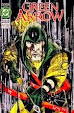
Oddly enough, the paragraph is accompanied by a coverscan of the 3rd volume's premiere issue from 1990, which was written by the disgraced Gerard Jones. Do they realize that could haunt the Rayner run for a long time, and only compounds why the 3rd volume is so otherwise obsolete?

Next, there's one of the spinoff series, GL Corps:
Running alongside the central flagship series, Peter J. Tomasi penned a critically acclaimed ensemble title focused on the wider Green Lantern Corps. The narrative centered on veteran Lanterns Guy Gardner and John Stewart as they led the cosmic police force through galaxy-wide conflicts. The series provided essential perspectives during major events like ‘Blackest Night’ while highlighting the camaraderie and sacrifices of alien ring-bearers. Artist Patrick Gleason provided distinctive, kinetic visuals that brought life to massive space battles and alien civilizations. Tomasi’s work added emotional depth to secondary characters and proved that the franchise thrived beyond Hal Jordan.
Oh, do tell us about it. I've long learned not to be fooled by such balderdash, and look where things have arrived today, with a TV show that practically throws Hal under the bus for the sake of DEI ideology. And why are we being lectured that a series with connections to company wide crossovers was "essential"? Yawn.

When stuff like this is all they can think of highlighting, and not the Golden/Silver/Bronze Age stories other than O'Neil's, something is definitely wrong. But I guess that's what to expect when the whole franchise plummeted into the abyss beginning with the Action Comics Weekly run, and nobody in the press is willing admit severe mistakes were made. That's how both DC and Marvel have been able to get away with their worst acts for decades now.

Labels: , , , , , , , , , , , , ,

Saturday, September 05, 2026

A former director of Marvel films tarnished her entries by celebrating murder

Warner Todd Huston at Breitbart reports a filmmaker named Lexi Alexander, who has some comics-related filmings to her credits, wrote obscene social media posts celebrating the murder of a deputy bank manager in NYC's Times Square:
Lexi Alexander, director of the 2008 Marvel film Punisher: War Zone, is taking heat for celebrating the stabbing murder of a Bank of America employee with an X post featuring Luigi Mangione’s face superimposed on a drawing of Batman’s bat signal.

Bank officer Erin Piacenti was fatally stabbed in Times Square, New York, shortly after celebrating her second wedding anniversary — and the day of her murder was her first day back to work from maternity leave. Piacenti, 32, was walking near West 42 Street and Seventh Avenue when 49-year-old Pamela Cisneros of Queens stabbed the young mother and another person in unprovoked attacks. Cisneros was later shot and killed by police after she threatened them with her two butcher knives.

After the murder, Alexander, who calls herself a “Palestinian filmmaker” (born in Germany to a Palestinian mother and father), jumped to her X account and posted a drawing of Batman looking up at the bat signal, but in the lighted image in the sky, there is instead an image of Luigi Mangione’s face. Mangione is now on trial for the 2024 assassination of UnitedHealthcare CEO Brian Thompson. [...] Her X post is still on her timeline, but it has been restricted from being embedded.

In a followup post, she accused everyone who criticized her post of being a “Hasbara bot,” meaning someone working for Israeli propaganda operations. [...]

After Punisher: War Zone bombed at the box office (a $10 million gross to its $35 million budget), Alexander has mostly directed episodes of TV shows such as Supergirl, S.W.A.T., and How to Get Away with Murder.
Well just look at that. More comics creations have been tarnished and desecrated through poor employment choices. As if it weren't bad enough the Supergirl TV show from the past decade was clogged with far-leftism. This is whom the studios that own Marvel and DC are hiring? What this makes clear is that Tinseltown is in serious need of reform, which they're tragically unlikely to work on. It's also got to be telling this repulsive "filmmaker" also worked on a TV show with a title that itself makes light of a serious issue. Alexander's career as a film and TV director will hopefully be over after this horrific case, which strongly hints she's as anti-American as she's anti-Israel. And no doubt, she also hates the Jewish creators and publishers of the comics the films and TV shows she worked on adapted.

Labels: , , , , , , , , , , ,

Friday, September 04, 2026

Gal Gadot on being dropped from WW movies

The Times of Israel told about actress Gal Gadot's exit from playing the role of Wonder Woman on the silver screen:
Gal Gadot revealed in an interview aired Monday that she was cut from the next Wonder Woman film, although the project was already in development.

Gadot told the “Happy Sad Confused” podcast that she was slated to star in a third installment in the franchise, under director Patty Jenkins, but the project changed when new management took over at DC Studios.

CEO James Gunn took over the ailing studio
in 2022, and at first assured Gadot that she would star in the next Wonder Woman film.

“No, they told me the opposite,”
said Gadot on the podcast when asked about the circumstances surrounding the cancellation. “They were like, ‘We’re going to develop it with you [Wonder Woman 3], but I saw the way everybody else was handled, right?”
Considering how everything collapsed artistically with the 2nd movie, what exactly are we missing? Some could also argue that, with Gadot now reaching her 40s, she may be past her prime for a character who's meant to look early to mid-20s.

Based on the woke politics that clogged the 2nd film, what's the loss? There've been at least 3 adaptations of comics owned by DC so far that were screwed up - WW, Shazam and Aquaman, to which we could add this year's Supergirl film as the sequel to Gunn's Superman - where the 2nd entry wound up a serious dud, and there have been other examples that were even worse, like Dwayne Johnson's Black Adam film and the Birds of Prey film, that got nowhere. So what have they truly got to show for it in the end? Also noted is that:
According to media reports, Ana Nogueira, who wrote the upcoming “Supergirl” script, is penning the script for the new film. A new director hasn’t yet been named.

Gunn’s own position as CEO is reportedly in question as DC Studios is part of Warner Bros. Discovery, the media company being acquired in the $110 billion merger between Paramount Skydance and Warner Bros. Discovery that is expected to close in late 2026.
If he leaves, he won't be missed. The Lanterns series he's producing is already woke, and if the same screenwriter who penned the Supergirl movie is assigned, we can't expect them to draw from worthy material for a story on the silver screen. And even the Superman film from the past year had some very distasteful metaphors shoehorned in, one more reason why it doesn't seem to be spoken about much now, any more than countless other films from the past decade that weren't worth the hype and dollars spent to make them. Oh, and the Peacemaker TV program also reeks of revulsion. So what are we missing?

All that aside, as I once said before, I don't think Gadot has much of a film legacy, and if she's worked on TV, probably not much of one there either. So it's not like, in the end, her role as WW was something to celebrate.

Labels: , , , , , , , , , ,

Thursday, September 03, 2026

Lanterns TV series is little more than a "white privilege" lecture

Warner Todd Huston at Breitbart says the James Gunn-produced TV show supposedly based on Green Lantern has unsurprisingly turned out to be quite an outmoded political lecture:
Director James Gunn’s executive produced DC comics streaming series Lanterns has become one long lecture on “white privilege” and racism in America and fans are lashing out.

The HBO series is based on DC’s Green Lantern universe of characters, which features the Green Lantern Corps, a multi-species policing organization that patrols the universe to keep the peace. The first human Corps member was Hal Jordan, a character introduced in 1959, who was given the Lantern Corp’s power ring, which allows him to manifest a green energy that can be used in many ways as a weapon to fight enemies. The Corps was created as an extension of the original Green Lantern stories introduced in 1940 with character Alan Scott wielding the power ring.

Lanterns, though, seems to be following the codes of Diversity, Equity, and Inclusion (DEI) and black victimology instead of the heroic Green Lantern Corps oath about fighting evil. And after only three episodes, fans are pushing back on the leftist political agenda interwoven throughout the third episode.
Why isn't it surprising that a character like Hal could eventually be subject to some of the worst PC possible, if he hadn't been before? But here we are, and the destruction of GL nobody's willing to admit occurred as far back as mid-1988 continues, this time in live action. The first 3 episodes feature the following:
Lindelof is apparently already indulging his penchant toward “revisionism” with this Green Lantern series, too. In the first episode of the new Lanterns series, we meet the once heroic Hal Jordan (Kyle Chandler), who has become a cynical, disheveled, drunk who no one likes and who is murdered at the end of the episode. Then in episode two we get a woman telling Jordan’s protege, black American John Stewart (Aaron Pierre), all about white privilege.

In the “white privilege” scene, viewers are told that white men have the “luxury” of being able to be “eccentric,” and “white men with money can do whatever the fuck they want.”
This may be cable TV, but wow, they went that far to fill it with expletives to boot? Ugh. I remember there was once a time when profanity on TV was kept mild, and even most cable programs I watched weren't that heavy-handed. What this additionally makes clear is that Gunn, as the overseer of the production, is quite fine with forcing vicious leftism down everyone's throats. If his Superman movie hadn't had subtle metaphors, this show would've. I don't see any need to tune for something that doesn't even put the word "green" alongside the Lanterns. It's also telling their contempt for Hal isn't all that different from what the writers of the Zero Hour crossover in 1994 expressed. If they don't respect Hal Jordan, there's no point in viewing any further.

Since we're on the subject, several weeks earlier, Tom King, who was one of the production staff, was interviewed by Inverse, and what he tells is quite laughable as it's predictable:
Talk to me about how the story of Lanterns became what we see in the show.

It started with me. I sort of had it first. And then we brought Damon [Lindelof] and Chris [Mundy] on. We threw out everything I had and started over — I mean, except for the theme. The three of us built a show. And then when we hit the ground with the three other writers, we were like, “Here’s what we have.” And they’re like, “Throw that all out, because we have ideas.” It was built organically that way, by listening to each other and to each person’s personal experience. We had these big ideas, and Vanessa [Baden Kelly] built that from her experience and made it sing. She gets all the flowers for that.
Some organism, I'll say. Even Denny O'Neil's run on GL was never as forced as appears to be the case here, and the difference is that back then, stories like O'Neil's reflected the times legitimately enough. Also, what's the point of their listening to each other if they're all left-wing? The "biggest" idea would have to be sending Hal once again to the afterlife, this time in live action.
Did you always know it’d be Hal training John to be his successor?

The central mystery we started with is, “Why does Guy Gardner have the ring? There’s these two other Lanterns. Why is he the one you only see in the Superman movie? How do we kind of explain that, where that starts, and where Hal is in the picture?” It was always, from the beginning, John Stewart and Hal Jordan, because those are the quintessential Green Lanterns. Due to two people, I think: Gil Kane, who created our ’60s Hal Jordan. That “Paul Newman” Hal Jordan — which is so embodied by Kyle — that’s very much [from] Gil Kane and John Broome, who invented him as kind of this ideal, ’60s masculine guy living on the edge.

And for John, Neal Adams. Neal was this total outsider; he was, like, a rebel. He’s like, “I’m not going anywhere where I’m not changing the game for the better.” He took hits for that in the comic industry. But he’s the one who got us paid and got us the first whiff of health insurance and got the old guard their art back… And that’s all in John Stewart. And then Dwayne McDuffie was the guy. Dwayne McDuffie had such control over his art. He’s the one who brought that Marine to [John] and brought that creativity to him — and brought that to children. A whole generation’s like, “Who’s Hal Jordan? John Stewart’s my Green Lantern.”
When exactly did McDuffie have anything to do with GL? I don't know of any involvement he could've had. I thought it was the overrated Geoff Johns who retconned John into a Marine, and when somebody as awful as Johns is the one doing the scripting, it's only bad news. But far more telling has to be the way King puts down Hal for the sake of John. Sounds like he doesn't want anybody reading the Silver Age archives and judging for themselves at all. One more reason not to be taken in by King's propaganda, which even goes so far as to hint he dislikes what Broome and Kane created Hal Jordan as.
Lanterns does take some big swings with that premise right out the gate. This series takes place after Sinestro breaks bad and is defeated by the Green Lanterns, which is a huge comic story that hasn’t really been adapted on-screen. Did that ever feel like a risk?

I was at the first architecture meeting [for the DCU], when we’re just sort of all these writers sitting around the room. James Gunn’s first — and it was so instinctual to him that he didn’t realize what a revolution it was… But he started that first meeting by pitching us what his universe is going to be. As he’s pitching us Superman, the thing that he was saying is, “This is not an origin story. We’re not starting with Day 1. This universe has started. We’re on Day 20 of this universe. We’re on Day 80. We’re on Year 80.” He’s like, “People are tired of origin stories. People are tired of seeing that stuff over and over again. Let’s give them quality over explaining. They don’t need to be lectured at. They need to be entertained.”

Starting in the middle was always James’ way of saying, “Get to the meat.” You’re in a universe that lives. It’s like picking up a random comic book. And the Sinestro stuff, I love that because what separates DC from Marvel a little bit — at least in the comics I’ve been doing so much — is the idea of legacy, the idea that what you do affects the next generation. Who your father is affects who you are as a son, affects who you are as a father. It’s the idea that Sinestro was Hal’s coach, and Hal is John’s coach. Both of them have passed on the good and the bad to each other. Watching that flow the way we watch both our trauma and our greatness flow from our grandparents down to us was a wonderful part of that show.
Oh, so they followed up on the shoddy premise that began in the 2 worthless Emerald Dawn miniseries that were both quite jumbled in their consistency with one another? Let's also recall the disgraced Gerard Jones was one of the writers of those awful stories, which forcibly reduced Hal to a drunkard who spends a few months in prison for causing an accident. Indeed, what was so special about those miniseries that DC had to reprint them in trades for some time? After Jones was found out, they've gone out of print, and deservedly so. And what's told about Gunn's statements are just so hilarious, since despite what's claimed, he did lecture, and Lanterns is now proof of that too.
You also get some of that in the way this tweaks John’s origins, examining this idea of legacy in his relationship to his parents, and the privilege of being considered for a ring.

John’s origin has been fudgeable a little bit. Different people have done different things with it. It’s not like Batman’s “My parents were killed.” It has changed. We tweaked his origin story to give him that thing that Batman has, that thing that Spider-Man has: a hook. They can be like, “Oh, I understand this character because he deserves that, because a hook makes a great superhero.” And John’s one of the greatest we’ve ever had.

We played with this idea in the room, the odd idea that, with the ring — and Vanessa wrote this so well — sometimes you have to raise your hand. I remember reading that the first time, and I was like, “Oh my God. That’s the show.” That the ring chose Hal and he doesn’t think of the privilege of that, like, “Yeah, of course I deserve all this.” But John’s like, “There’s a difference between him and me. I know it’s not fair. That’s the way the world is.” A lot of parents have that conversation with their kids, and it’s a hard conversation to have.
Let me guess. Their idea of a "hook" was that John lose a parental figure too? I recall that it was established his mother was still alive in the last few years of the 2nd GL volume, though she was incomprehensibly dropped from the proceedings when the unbearable Action Comics Weekly feature went to press, and Katma Tui was repulsively slain, forcing Carol Ferris into a role she shouldn't have been in. They also seem to have built on a premise with the ring coming from the writings of Geoff Johns, who IIRC depicted the rings as choosing their hosts, instead of the original wearer, which for the GL Corps was the late Abin Sur. One more reason we could do without this TV mess.
Just before Lanterns, DC released Supergirl, based on your Woman of Tomorrow series. Did you work with [screenwriter] Ana Nogueira on that adaptation at all?

I was very purposefully hands-off on that project because, number one, I was in Lanterns. So that was my focus, supporting Chris to make Lanterns. And number two, I was so close to that material. I love that book that I wrote that I wanted to give them the freedom to create something. Because if I’m in there, I’m going to be like, “Let me tell you how it’s done.” And that wouldn’t have helped anyone be creative. I hate when people are doing that to me, so I wouldn’t want to do it to somebody else. Instead, I was like, “Beautiful people make beautiful work. Go forth and do your thing. I’ll be over here.”
Oh, some "beautiful" people they are alright. Also notice how King predictably remains oblivious to the catastrophe the Supergirl movie became, and won't ask whether his work was really any good to begin with. Is he also claiming there'd be no freedom to create something drawing from Golden/Silver/Bronze Age material, and only if it's based on his work, there is? That is just so dumb.
Nogueira’s working on a Wonder Woman movie as well. Have you gone hands-off with that, too?

For a while I had a job where I was a consultant — like a nerd consultant — so I worked on a lot of different sort of [DC] projects. But between Lanterns and Mister Miracle… I’m not involved in Wonder Woman except to say I hope it’s going to be utterly brilliant. I hope the people who are building it stay true to who that character is, because she’s just one of the greatest heroines ever created.
With the same screenwriter assigned, I doubt it. And I don't think King means what he says when he claims he hopes they'll remain true to what WW was built upon, seeing what a mess he made already in the comics proper, all for the sake of leftist agendas.

Even if Gunn hadn't been the executive producer of Lanterns, King's involvement is enough to avoid it, and the woke politics it builds on are so revolting, they make even the most questionable moments from O'Neil's writings look tame by comparison. It would be best if TV viewers would just change the channel, and read the earlier comics of GL from up to mid-1988 instead. And it's a shame many pseudo-historians won't admit much of GL's potential collapsed after that period.

Labels: , , , , , , , ,

Saturday, August 29, 2026

Frank Miller tells more to the Wash. Post

One of Miller's interviewers said in one of the recent articles about him that he's got no intention of slowing down with his career, even as he's reaching 70, and as the following interview from the Washington Post makes clear, he's not done with his current promotional tour yet:
The pages of a Frank Miller work are filled with crooked cops, murderers, desperate men and unhinged dark knights. You might expect the creator behind all that darkness to be a bit gloomy himself. Maybe he would be a recluse, like his hero, “Calvin and Hobbes” creator Bill Watterson.

As it turns out, Miller seems to like people. I watched him sign hundreds of autographs at the Library of Congress’s National Book Festival in D.C. on Saturday. He was gentle, chatty and generous with his time despite the crowd overflowing past its designated space inside the Walter E. Washington Convention Center.
Unfortunately, Miller doesn't seem to like conservatives, and one in particular by the name of Donald Trump. You could reasonably wonder if any attendants are right-wing themselves, and if they let know this, what does Miller think of them?
Miller helped redefine the modern superhero with Daredevil and Batman before creating celebrated original works such as “Sin City” and “300.” Pop milestones like “Teenage Mutant Ninja Turtles” or Christopher Nolan’s Batman movies may not exist without Frank Miller.

His book isn’t a conventional autobiography but a collection of 16 lessons Miller learned while becoming one of the most influential artists of the 20th century. Those lessons include knowing your ending, getting your hero into trouble fast and pushing against whatever it is that’s keeping you from what you want to make.

The lessons also include making mistakes: Miller would sketch out many drawings for months before he finally made something that pleased the old master.
But those mistakes don't include apologizing for writing Holy Terror 7 years after its publishing, or blatant attacks on right-wingers, do they? If not, what's his point about trying to stand your ground on the subject of those who'd try to prevent you from developing what you want to make?
“It’s created new opportunities for me to speak more freely to new people who are coming up,” Miller said. “One of the real joys is for me to be looking at drawings and hearing story ideas that people are working on themselves, and to give them some advice on where to go with it.”
I wonder what he'd say to known conservatives? Or anybody who wants to tackle challenging issues? Again, that's not something dwelled upon here.
Miller writes about how his own lessons come from everywhere. He writes lovingly about Adams and his other mentor, Will Eisner, creator of “The Spirit,” but he reaches just as readily toward painters such as Francisco de Goya, Japanese manga writers like Kazuo Koike and music.
If memory serves, he wasn't so loving in his take on Eisner when he produced the American Genius documentary. After "cementing" a putdown in a recording, why now is he suddenly and seemingly talking positively about Eisner again? There was even another certain leftist who came from Israel working in video games at the convention Miller attended:
Onstage, I relayed a question to Miller from Neil Druckmann, co-creator of “The Last of Us” game series and HBO adaptation, who said his story wouldn’t exist without “Sin City.” He wanted to know how Miller selects collaborators, particularly when someone is adapting his work. How does he make sure they won’t abandon the spirit of his stories?

“Friendships,” Miller said. “Most of them come from getting to know somebody … and getting a kernel of an idea that I know would be something both of us could feed each other on.”
Wonder what that left-wing Israeli expatriate was doing there, recalling Druckmann exploited the Last of Us sequel for political propaganda? And to think, that he drew "inspiration" from a series of GNs like Miller's. It makes me think of how, not only does nobody like them seem to consider Superman inspirational material, they don't consider the Fantastic Four inspiration either. Miller may have done some illustrations for at least one story in both of the above, but as the bulk of his work since makes clear, he has a darkness problem, and so do some of the folks who say they're inspired by his work from the 1990s.
In the memoir, he describes learning to respect film and its differences from comics. His early comics success led to work as a Hollywood screenwriter. While he appreciated the medium, he would later write his biggest original book, “Sin City,” as a black-and-white novel, in the hope that it was unadaptable to film. He didn’t want it better known as a movie.
And yet, it was adapted in the mid-2000s, though the sequel was a failure, and it doesn't seem to have been revisited on celluloid since. I do think there's only so much from even standard literature that shouldn't have to be known far more cinematically, so some could wonder if Miller sadly failed to resist the tug of Hollywood influence. And then, a certain matter of defeatism comes up in the discussion again:
Before Miller’s memoir, his comics provided the clearest insight into his mind, but his book makes those thoughts explicit, including his regrets. He looks back on “Holy Terror,” a much-criticized story written out of Miller’s anger after the 9/11 attacks. He now describes it as a rant. Would he ever write another such story?

“I hope I’m never inspired to do so again,”
he writes.

Miller urges readers to push walls, especially the ones he helped build. He writes that it drives him “crazy” to see that his version of Batman is now enshrined as foundational.
Once again, Miller, in a way, continues talking out of both sides of his mouth - he urges wall-pushing, but he doesn't want to push it any longer with a GN that took on a challenging issue. But what's this, does he really think it's a shame DKR's vision wound up practically ruining the general take on Bruce Wayne in comics proper? Well he sure hasn't done enough to complain about it. Probably because, as I've guessed before, he doesn't seem to care much about most other takes on Batman save for his own. And to date, I can't even recall him ever chatting about Denny O'Neil and Steve Englehart's writings.
“For one thing, the title ‘Dark Knight’ started appearing in all kinds of comic books,” Miller said in our interview. “Beyond that, he became the unpleasant superhero for a long time. I essentially felt that I was in the business of knocking down walls, and I felt like people had used my work to construct new ones.”
Interesting he should tell this, because again, by the turn of the century, DC editors were practically forcing such a personality upon the Masked Manhunter, and only now, long after Batman's potential was ruined along with countless other mainstream creations, does he have the audacity to tell us this? It's too little, too late.

One more thing I thought of regarding Miller's early writings in Daredevil is the negative take he may have had on the Punisher, and the contrasting take he had when he drew an early Wolverine miniseries co-written with Chris Claremont in 1982. Which would make Miller another scribe with a bewildering double-standard on vigilante-style characters who kill, and it's something else he may not have addressed so far, and probably never will. For now, it's a shame that Miller continues to give signs he sticks with a defeatist position, and some could wonder if his recent positive comments on a movie or two drawing from his writings is another sign of the same. And his continued veering towards the darkness, save for certain challenging issues, is another problem he's got that makes much of his resume since the 1990s so unappealing.

Labels: , , , , , , , , , , , , , ,

Friday, August 28, 2026

Hair color style drawing from the comics

New Beauty tells of a hair stylist/colorist who took some inspiration from the dark haired color certain superheroes are known for:
Call it Blue-Black, “comic-book color” or the “Superman shade”—a rich, jewel-toned black with a cool, glossy blue undertone, emerging as one of the must-haves this fall in Los Angeles, according to celebrity colorist Chad Kenyon, who is fielding the fever.

“I thought about Superman and Wonder Woman’s comic book hair color and made them more editorial,”
says Kenyon of his unexpected source of creativity.

Kenyon began developing the look in 2025 and says it has since moved from concept to a look he’s asked to create across every type of client. “I'm doing it for celebrities such as Taylor Ortega, from her series with Dan Levy streaming now on Netflix, as well as content creators and civilians alike.”
The only thing that's a shame here is the citation of figures working on a channel as awful as Netflix happens to be. But wow, what potential there could be in drawing inspiration from hair colors, and regarding the color blue, I think I've sometimes noticed it somehow turning up on characters whose hair is black, perhaps an oddity in how some colorists accidentally make mistakes with certain colors in past decades. Batman's certainly been drawn at times with the color blue on his costume in past decades, though that was bound to be more deliberate. But it was okay, and a welcome contrast to the black shade some artists and writers in later years thought was such a big deal, in all their obsession with the darkness.

Anyway, I'll wish good luck to the stylist in his new goal of developing hairstyles and colors inspired by comicdom. It could have potential, though it's still no substitute for quality in the comics storytelling itself.

Labels: , , ,

Monday, August 24, 2026

An artist from North Carolina who may respect what the Punisher was created for

Queen City News spoke with artist David Vandyke, who created a comic titled Mercer. What's interesting for starters is that:
In an era of digital art, he works by hand.

“I like the tactility of it, like I like feeling the paper,”
Van Dyke said.
He's got a great idea there. While it's always possible to turn out good art with computers, old-fashioned techniques still matter, and can still result in something to appreciate.
He draws a comic book series called Mercer, which he co-created with Jason Seibel.

“It’s basically if the Punisher was a demon hunter type thing,” he says.
Whatever one thinks of the premise of Mercer, what Vandyke says here does seem to indicate he has respect for what the Punisher was created for, certainly far more than some of the leftists who messed up Frank Castle since the turn of the century, not the least being the late Gerry Conway himself.

Vandyke had a very terrible misfortune in the past 2 decades that influenced his decision to become an artist:
He has come far from the chilling conversation he had 21 years ago.

“The doctor literally came into the room and said, ‘Your life as you know it is over,’” he remembers vividly.

Vandyke broke his back in 2005 while working as a mechanic in Gastonia.

“I heard a pop, and something moved out of the corner of my eye, and I just turned and caught it,” he said of a devastating shop accident. “It was like a 400-pound transmission—and I caught it at a dead stop—and it annihilated the bottom two discs in my back.”

That crushed his dream of a drumming career.

At the same time, he was almost in denial.

“This is my identity; this is everything I’m supposed to be. Like, what do you mean [doctor]?” said Vandyke.

But one night, he picked up a pencil and reinvented himself.

“Like before music, what did you want to be?” he asked himself.

The answer is a comic book artist.

Instead of dwelling on depression and anger, he practiced drawing as his body healed.

“You determine your story,”
he says.
I'm terribly sorry he suffered back injuries, and hope he's recovered as best as possible since. Taking up an artist's career is certainly a great way to make a comeback, and I wish him well in his new career.

Labels: , , , , , ,

Sunday, August 23, 2026

Roger McKenzie passes away at 75

That Eric Alper announced the veteran comics writer Roger McKenzie, who was active mainly during the late 1970s to late 1980s, died at 75 years of age:
Roger McKenzie, the comic book writer best known for helping shape the modern era of Marvel’s Daredevil alongside artist Frank Miller, died on the morning of August 21, 2026, at the age of 75, following months of dealing with heart failure and kidney disease while in hospice care.

McKenzie broke into comics in 1976 with a seven-page short story in Warren Publishing’s Vampirella, going on to write extensively for the company’s black-and-white horror anthologies Creepy, Eerie, and Vampirella through 1982. He also worked for DC Comics during this period, creating the western character Cinnamon and contributing to several of the company’s horror titles.

McKenzie’s most significant professional relationship began in 1978, when he and a young Frank Miller collaborated on a two-page story for DC’s Weird War Tales. That same year, McKenzie took over as writer on Marvel’s Daredevil with issue #151, giving the series a darker tone drawn from his horror writing background. Miller joined him as artist on the title starting with issue #158 in 1979, and the two worked together through issue #166, laying the creative groundwork for the run that would soon make Miller one of the most influential figures in American comics. Their collaborative issues were later collected in the ‘Daredevil by Frank Miller & Klaus Janson Omnibus.’
Here's the annoucement on his Facebook page, and here's what veteran writer Paul Kupperberg's telling about him. I'd read at least a few stories he wrote, and he did have talent for his time, though it's a shame he got his start through the horror genre. But when he wrote issues for a several series from Marvel, I'd say that's where he began to show promise, including on several issues of Captain America, and several issues from Marvel Fanfare. I hope Miller's thankful to McKenzie for providing him with the platform that gave his career its most serious start. McKenzie overall did some good work in his time, and IMO, his work for Marvel is what's really appreciated.

Labels: , , , , ,

Saturday, August 22, 2026

Frank Miller's relations with Jim Shooter

Here's a recent Hollywood Reporter interview with veteran artist Miller, where he continues his otherwise uninspired relay of what his relations with past comics veterans were like, and he even had the audacity to praise a certain overrated movie that unfortunately took plenty at the box office:
Miller has also been catching up on his moviegoing, and had seen Christopher Nolan’s The Odyssey, which he calls “extravagant.” The creator behind Spartan story 300 knows his way around an ancient Greek myth or two (he can easily slip into expounding on Corinthian style helmets and their influence on Sparta) and says the movie “really did an awful lot right.”
Well this is a shame, but not all that surprising Miller would ignore some of the wokest workings in Nolan's new movie, which again, regrettably grossed plenty of dough, even if it did eventually go down in sales after 3 weeks. I have no idea if it'll turn the profits the studio's doubtlessly hoping it will, or whether it'll make waves in the USA in the end, but what Nolan's brewed up sounds so unappealing based on its eyebrow raising lack of sex, though I will say I'm relieved if it's not overly gory, although this article seems to indicate it may still have something disturbing. Which is reason enough for me to be discouraged. Maybe the problem is that no distinctions are made between sex that's in good or bad taste. Miller certainly doesn't seem interested in addressing all that. And it actually makes his superficial take on the film almost hilarious.
Your book is part memoir and part lessons in creativity. Why do it this way?

I got my career started by calling up Neal Adams’ office and getting a meeting with him. Neal Adams was the premier artist in comics at the time, and his art had a great effect on me as a child. And he was listed in the phone book. And I got to meet him that day, an hour after I called. And he looked over my drawings and told me they were terrible and sent me off. I redid them and I saw him again and again and again. And he was always a harsh critic, but every time he taught me more and more, sometimes doing drawings over them. And, and as the months went by, he got me my first job and he continued to be a sensei and an advisor to me on things professional and on how to deal with being an artist in the world and many other things. Years passed and I became successful. And one time, Neal and I were at a comic book convention and I just took him aside and I just said, “Neal, how do I thank you for what you’ve done for me? You’ve never asked me for anything.” And he said, “Oh, there’s only one thing you can do. Do the same thing for the next guy.” Well, this book really is my attempt to do the same thing for the next guy. And to commit to paper my experiences, my observations and, and the lessons learned in making comic books.
If that next guy were Will Eisner, he sure hasn't done much to thank him, recalling he spoke about him negatively in the American Genius documentary. Also, what lessons learned? That he should never ever have developed the Holy Terror GN over 15 years ago? Now here's what he says about working with the late Jim Shooter at Marvel:
Speaking of mentors, Jim Shooter (the wonderkid who became Marvel’s polarizing editor-in-chief through the 1980s) was also one. Do you remember the first time you met him?

My first memorable encounter with Jim was at the Marvel offices. I basically came in and was sort of selling my services. I’d gotten some little job, doing some little three-pager of something like Doc Sampson and that had gotten his attention enough to want to keep me around. And, he gave me his lecture on storytelling. Everything was always storytelling with Jim because he felt comics had really lost track of their basic mission, which was to enchant and compel young readers with gripping stories.

He came in on a fairly loose pack of people who were all over the map creatively. And he worked to pull it all together into a more cohesive unit.

There were a lot of writer-editors and little fiefdoms at the time.

Right. He focused more than ever on the concept of a Marvel universe.

How did you guys work together?

He was eager to change things and I was eager to learn. And we both had strong opinions. I think one of the reasons we got along was we were both up for a good argument. Arguments can be a very creative thing and a very good thing.
Be that as it may, Shooter's focus on the concept of the MCU included pushing the whole concept of line-wide crossovers, something that's sugarcoated quite a bit these days without any objectivity, and no questions as to whether it helped Marvel and DC artistically to go galaxies out of their way to turn out repeated crossovers every year, and increasingly, more than one every year, effectively making it increasingly difficult to find any creative autonomy at either company. That's something Miller doesn't dwell upon, even as he tells why he left Marvel, for DC and later Dark Horse:
You left Marvel in a pretty high profile fashion twice. And I say high profile because your profile was very high and you were creatively cresting, twice with Daredevil. What caused you to leave that first time?

Well, I didn’t leave anybody. I chose to take a project to another publisher who was more amenable to kind of freedom I wanted to do it with. The message underneath all this was that it was important to demonstrate that talent is portable. Let me say that. When a publisher is releasing your work, that does not mean you’re saying an oath of allegiance to a military operation. It’s not a marriage.
But again, no in depth mention of but one of the ways creative freedom was turned into a thing of the past at the Big Two. Nor of how horrific it's become ever since figures like Joe Quesada and Dan DiDio originally took over as EICs, and has never recovered even after they left. Why doesn't Miller have the courage to get into any of that? Perhaps because he never had much respect for Marvel and DC's creations to begin with? After all, he only seems to care about his own stories, and few others. He does address something I can't recall hearing about before at Marvel:
Uh, speaking of stories that never happened, what happened with the Doctor Strange run you were supposed to have with writer Roger Stern?

On that one, I really had come to realize that I was just dying to write my own material. And, I couldn’t wait anymore. I had to start writing and drawing my own comics and, you know, start being a cartoonist rather than just an illustrator.
Even back then, I think it's better Miller didn't take part. He may have at least a few science-fantasy themed stories in his resume, but it seems like the stuff less emphasizing of that genre is what he's most known for, and maybe for the best. Somehow, his artwork doesn't seem like a good fit for even the Sorceror Supreme, though I realize he must've been considered based on the dark themed stories he's most known for. As for Stern, he was a talented writer back in the day, but he regrettably has appalling viewpoints too, like his positions on Mary Jane Watson, where he acted like she was a real person, and look what good it did for comics in general ever since. All because people like Stern, much like Joe Quesada, had to be so petty and pointless.
The time of Dark Knight Returns and Watchmen and Maus is looked at like a revolutionary era at this point where comics were reinvented. How healthy is the comic art form now? Is the wall still being pushed?

Sure it is
. I mean, it’s easy to look back on that time and say, “Wow, what a sunburst. That changed everything.” But in fact, that was a pretty small amount of work that we’re talking about that caused a big splash and that’s what people remember at the time. Because people tend to remember the stuff that really made a splash when they think back on a given period. We certainly have a pretty wildly diverse amount of stuff coming out now.
Well if there's anywhere the form isn't being pushed, it's at the Big Two. And if Miller meant what he said, why did he all but disown Holy Terror 8 years ago in a defeatist interview with the UK Guardian? It didn't even help prevent him from being shunned by a UK convention. Something he's never seemed to address either.
This year, there was upheaval at Dark Horse Entertainment, the home of your Sin City books. But you announced a new book that you’re writing, Invasive Species, with them. How did you decide to stay at Dark Horse for the new book and not take it elsewhere?

Well, the relationship was a good and strong one, and it served us all very well. I met with the people there. The philosophies of the company seemed to be close enough to what I’d always known them to be, and they certainly had the infrastructure to do a good job at it.

Going back to Sin City, the only thing happening now is the Western that is being drawn by Milo Manara, right?

Right now, yeah, but I’ve got a dozen ideas for new ones. Sin City is my life’s work, more than anything. Milo is well along. I just gotta teach him how to draw girls. (Laughs.)
Gee, I wonder how that'll turn out, and what Miller means? I remember when Manara got censored or cancelled at Marvel over an absurd illustration he did of Spider-Woman's butt, for a series that didn't get much fanfare, and was cancelled and forgotten pretty quickly. What if Miller's gone so woke, he'll want Manara to dumb down his art styles for the wrong reasons? Based on Miller's positive comment about Nolan's Odyssey adaptation, it wouldn't be too shocking if that were the case.

Here's also an extra interview Popverse did with one of Miller's business partners, Silenn Thomas, who oversaw the American Genius documentary, and what he's got to say about working with Miller:
You are CEO of Frank Miller Ink, COO of Frank Miller Presents. What does that entail besides… well… everything?

Thomas: Well, you said it. It entails everything, and as you know well, “with great power comes great responsibility.”

You've been working with Frank for a number of years, even before becoming CEO of his shingle. What have you learned about him as a creator?

Thomas: I met him on the movie 300, and one consistent thing with [Frank Miller] is that he is one of the hardest-working people I have ever met. His dedication to excellence is absolute.
Yeah, and look how that turned out for the adaptation of the Spirit comic strip, and also the Robocop sequels and the sequel to the Sin City movie. Certainly if we take his cinematic ventures into consideration. But if the comics matter, his artwork's long become mediocre, and it's hard to say he's dedicated to excellence based on that.
You directed the recent documentary Frank Miller: American Genius. What did you learn from doing it, and taking it on the road for screenings?

Thomas: I have gained a deeper understanding of comics and its culture. The project gave me an all-access pass. I saw the universe of comics in every corner of the world. Taking it on the road now at festivals, conventions, and schools has been exhilarating. It was a joy to make, and it is a joy to show.
And I guess Miller's regression to a left-wing advocate's also quite exhilarating and overjoying, huh? Such signs turned up in the documentary, and that makes it less appealing.
My editor Chris has told me of how much of a champion and protector you are of Frank in the worlds of comics, movies, TV, and even cons. Where did you learn to be such a carer while also managing the business side of things and standing up for people?

Thomas: At the rebel camp on Tatooine in Star Wars. All jokes aside, what else is there? I believe we are in a creator-driven era. At least, that is the side I’m on.
Trouble is, what if Mr. Thomas is only willing to champion and protect anybody who's as left-wing as Miller sadly remains? Some creator driven era it'll be then. These are yet more examples of why I'm just not impressed with Miller by today's standards, and would rather not work with him if I were in the business myself. And maybe a most prominent reason why, other than his troubling politics is that he's too obsessed with the darkness, and not enough with the lightness. Which has become a very sad staple of modern entertainment as we know it.

Labels: , , , , , , , ,

Friday, August 21, 2026

Animation can be a great spot for superheroes, but only if they aren't subject to PC

Indiewire says there's animated series based on superhero fare that's more interesting than the live action film adaptations, but unshockingly, they sugarcoat the presentations, beginning with what the Supergirl movie was adapted from:
“Supergirl,” the second film in James Gunn’s developing DCU and one of the biggest box office bombs of an otherwise strong year for movie theaters, isn’t the worse movie I watched in 2026. But it’s probably the most disappointing. An adaptation of an acclaimed standalone series called “Woman of Tomorrow,” “Supergirl” has a great lead in Milly Alcock and nothing else worth remembering. Whereas the comic it is based on is stunningly bright and beautiful to look at, “Supergirl” is a murky, brown-tinted eyesore. Its generic plot strands the character in a sci-fi universe that feels microscopically small, populated by third-rate archetypes the “Guardians of the Galaxy” movies would barely have time for. There are interesting threads to unravel regarding Kara’s grief and anger, but the story she’s stranded in doesn’t have time to do that in any meaningful way.
I just don't understand why we keep getting lectured about why the overrated Tom King's tale is a modern "classic". The artwork I've seen is certainly overrated. And King's stories about "trauma" are forced and contrived. And we're not told anything in regards to that.
Even more galling: as “Supergirl” was tarnishing the character’s reputation in movie theaters, a great adaptation of the character was airing on Adult Swim. “My Adventures With Superman,” an animated series reimagining the early career of the most famous superhero on the planet. Ostensibly, Clark Kent is the main character, but Season 2 introduced Kara (voiced in the show by Kiana Madeira), and the currently airing Season 3 — which airs its season finale this Sunday — sees her take center stage. And she rules: reimagined as a former brainwashed intergalactic conquerer attempting to atone for her misdeeds, the show’s Kara is charming, funny, badass, with a meaty arc about atoning for her misdeeds and a super cute romance with Jimmy Olsen (Ishmel Sahid) that slots right in with the show’s bright, optimistic tone and focus on these character’s day-to-day struggles contrasted with the sci-fi operatics. If “Supergirl” the movie only scratched the surface of the character’s potential, “My Adventures With Superman” takes the time to really examine what makes her tick.

“My Adventures With Superman” is one of three animated shows adapting popular comic book superheroes that ran over the course of this summer, along with “X-Men ’97” on Disney+, which concluded its second season earlier this week, and “Batman: Caped Crusader” on Amazon Prime, which premiered its second season in late July. Pitched to a slightly older audience than usual for an animated comic book series, teenage up as opposed to for children, these shows aren’t flawless. But as comic book film studios continues to struggle to adjust to a world where they are no longer the center of the entertainment landscape (give or take “Spider-Man”), these shows demonstrate that these characters are better suited for serialized storytelling in the first place.
Would this be the cartoon where Jimmy was changed from white to black? And where Lois Lane's turned into a short-cropped tomboy? In that case, I regret to say, but this puff piece amounts to little more than misleading the audience by obscuring how the production is allegedly optimistic with strings attached. It's also worth considering that, if Kara Zor-El was changed from an innocent girl to a former conqueror, brainwashed or not, that too, unfortunately, is tasteless. It's also symbolic of the modern era's inability to appreciate a simpler concept of a character who could be written with flaws and mistakes, but doesn't have to be written as that guilty of wrongdoing as Kara sounds characterized here.
One of the major criticisms of superhero cinema for the past decade has been its resolute sameness: while certain MCU movies may have loose genre window-dressing, they’re fundamentally tonally similar in their quippy characters and excess spectacle. But all three of these series have strong art direction and visions for these characters that feels spiritually true to the source material but also provides something fresh and new that fans haven’t seen before, and are all radically different from one another.

Heavily inspired by early 2000s anime, “My Adventures With Superman” is the bright, zippy, lighthearted offering. The show takes the characters and their battles seriously, but it provides a wonderfully comforting take on Superman that also heavily foregrounds the love story between Clark and Lois; it’s a rom-com as much as it is a series about fighting invading aliens. It works because of how well-drawn these versions of the characters are, and because his relationship with Lois was always what made the seemingly invulnerable Clark feel most human. If the 2025 James Gunn “Superman” film sometimes strained to reinvent the character’s optimism for modern audiences, “My Adventures With Superman” makes that challenge look effortless.
But again, we're not being told about the character design, and that's being dishonest with the readership, for the sake of virtue-signaling. They may not have done to Kara's hair what they did Lois', but that's still no excuse, and that Lois' ethnicity may have also been changed only further (she looks darker complected in the cartoon) confirms the disrespect the producers actually have for Siegel and Shuster's creations. The writer also made sure to take a biased look at the aforementioned Marvel cartoon:
“X-Men ’97” is another successor of a ’90s kids’ cartoon, albeit a direct sequel. The 1992 “X-Men” animated series that aired on Fox during the decade was a foundational series for fans of the Marvel superhero team, providing definitive versions of the mutant protectors in all their messy, soapy excess. “’97” picks up where the series left off, but again ages up the content for adults who grew up with the series for a much darker tone. The animation emphasizes fidelity to the original show and the time period’s garish aesthetic in general, for a show that, more than almost any film, truly feels like picking up and reading five random issues of a comic run from 30 years ago.

Not all of these series are of equal quality. “My Adventures with Superman” has been the most consistent of the three, a nice good time throughout all three seasons without ever being exceptional. “Caped Crusader” Season 1 was a promising start, but Season 2 ramped up the stakes and serialized storytelling for a much improved follow-up. “X-Men ’97,” meanwhile, had a near flawless debut season, but a divisive Season 2 that struggled with unfocused storytelling and weaker stakes, albeit with a standout fourth episode that ranks among the best of the series (the show’s production was likely marred by the firing of head writer Beau DeMayo during work on Season 2 for allegations of sexual harrasment).
No surprise they'd sugarcoat X-Men 97 as well. They made Rogue otherwise sexless, drew Storm with a mohawk forcibly, and even the treatment of Morph was reprehensible. The part about the darkness predictably goes by without objectivity, and seriously, what "fidelity" is there truly here? And why does the writer talk about being "unexceptional" when Jimmy's ethnicity was changed, while Lois was made to look unattractive, and Supergirl gets a questionable premise shoehorned onto her? Such dishonesty indeed.

I'd spoken before about why brightness and optimism can't come with strings attached, yet that's exactly what the producers of My Adventures With Superman did, and it's disgraceful how Indiewire's writer doesn't have the courage to admit it's ludicrous, divisive, and conflicts with entertainment value. Animation can certainly be a great venue for superheroics, but not if woke changes are forced onto established creations. There was once a saying that change must be consistent with what came before, and the Hollywood phonies who turned out these items certainly aren't proving much different from the live action moviemakers who race-swapped and sex-swapped any of the characters in specific adaptations.

Labels: , , , , , , , , , , ,

Saturday, August 15, 2026

Digital comics are allegedly still a big deal

Publisher's Weekly wrote about the market of digital comics, and says it's ostensibly improving after a slump:
Less than three years ago, the lights on digital comics seemed to be getting dim. In November of 2023, Amazon announced the impending shutdown of the Comixology app—the platform that had accounted for the large majority of digital comics sales from every major U.S. publisher for the past 10 years.

But a new digital landscape was quietly developing, as both longstanding comics publishers and upstart digital retailers carved out new approaches to producing, selling, and reaching an audience for online comics. Could 2026 be the year that the comics industry fully comes into its digital era? We talked with publishers and retailers to find out.
The problem is that no sales figures, even digitally based, seem to turn up in this item, and that's the common modern weakness in such puff pieces. Though it does say here that:
Meanwhile, at Sweet Shop, another new retail platform that launched in beta in late 2025, Kenny Meyers has a different approach. In contrast to Neon Ichiban’s suite of features, Meyers believes that the key to digital success is to keep the app and market as simple as possible.

“There’s a lot more to [digital comics] than gimmicks,”
Meyers says. “People just want, in my opinion, very simple, elegant ways to discover comic books.”
If the digital market avoids gimmicks like multiple variant covers, that's a good thing, but do people want entertainment value? That's what seems to be missing here. And then, once again, they sugarcoat DC/Marvel sales:
DC Comics has hardly been a late bloomer when it comes to digital comics. The company sold its first single-issue digital comic more than 15 years ago, and was among the first publishers to embrace day-and-date digital sales. In 2007, they even (briefly) attempted to launch a digital-first slate of all-original titles—the short-lived Zuda imprint.

Today, DC is coming off a heady year of growth, fueled by sales of its new Absolute Universe imprint and the surprising success of its digest-sized DC Compact Comics. By the end of 2025, the publisher even overtook Marvel in comics shop market share for the first time in years.

And as new readers came to DC, new digital sales followed. “We're finding an almost equal number of new readers coming in through physical and digital at the same time,” general manager Anne DePies says. “And once the digital readers come in, we've had meaningful success in seeing that they are purchasing across our ecosystem.”

Like other comic companies, DC doesn’t provide public figures for its total volume or revenue on digital sales, but DePies says that digital’s relative share of DC sales has remained remarkably stable over the past decade. That’s true of most other major publishers as well: at Dark Horse, VP of publishing sales Mark Bernardi says that digital readership leveled out to around 5% of sales many years ago, and has stayed in place ever since. At IDW, the share is a stable 10%. Image is a bit of an outlier; publisher and chief creative officer Eric Stephenson says digital sales have never recovered from a slide that started when Amazon bought Comixology.
I'm sorry, but failure to provide any public sales figures, which has been the norm for several years now, does nothing to convince. The ICV2 page they point at doesn't give sales figures either, and 5-10 percent is nothing to marvel at. Mainly because again, no sales figures are offered, yet they clearly hope everybody will take their word at face value. Any sales figures provided for the Absolute line were also laughable, as I recall. None of which matters to a puff publisher like Publisher's Weekly, unfortunately.

I'm sure the digital market has potential for the independent market, however. Perhaps provided, of course, that it's not a company like IDW turning out the products, seeing how far they've fallen in quality over the past decade. Yet there's suggestions the digital market, in the end, is doing no better than the print market, certainly if there's no genuine quality to accompany it.

Labels: , , , , , ,

Flag Counter


track people
webpage logs
Flag Counter