Brand new Green Lantern stories are considered the "best"
Comic Basics listed several runs of Green Lantern from the past decades, only one of which is worth considering (Denny O'Neil's early 70s run), while some of the others are predictably fluff-coated takes on modern runs. For example, there's Geoff Johns' run:
Writer Geoff Johns revitalized the franchise by returning Hal Jordan to the spotlight in the miniseries ‘Green Lantern: Rebirth’. The overarching narrative expanded the lore by introducing the Emotional Spectrum and creating diverse new Lantern corps across the cosmos. Major comic crossover events such as ‘Sinestro Corps War’ and ‘Blackest Night’ elevated the title into a cornerstone of the DC Universe. Johns collaborated with prominent artists like Ethan Van Sciver and Ivan Reis to deliver high-stakes cosmic action and deep character development. This nine-year run transformed the mythology and established the modern foundation of the Green Lantern mythos.Some "revitalization" alright. There were several jarringly violent moments in the run, and most particularly telling was when Johns exploited the title for forcing Islamic propaganda into it, in the decade following September 11, 2001. The story introducing Simon Baz even resorted to the cliche of a white supremacist being the actual culprit. This is what Johns cares about, not actual victims? What he did was definitely telling.
Also note how conservative-leaning artist van Sciver was part of the GL project at the time, and a case can be made that some would-be right-wingers have blame to shoulder for bringing comicdom down to such an awful level. Plus, when there's the totally uncritical take on company wide crossovers, you know something's wrong. Another reason this run can be considered worthless is that it hinged on Identity Crisis, and thus came at a time that was simply too late for bringing back Hal. Another example listed here is the 1994-2004 run:
Ron Marz drastically altered the franchise by penning the controversial ‘Emerald Twilight’ arc, which saw Hal Jordan fall from grace and become the villain Parallax. Following the destruction of the Green Lantern Corps, Marz introduced artist Kyle Rayner as the torchbearer of the final functional power ring. The decade-long run focused on Kyle learning to become a superhero while maintaining a relatable civilian life in New York City. Notable storylines introduced supporting characters such as Jade and examined the legacy of previous ring-wielders. This era redefined the mantle for a new generation of readers and established Kyle Rayner as an essential DC hero.Gee, a run starring a character who came off little different in the end from how Hal's characterization was perceived - as a cipher lacking in genuine personality. Also note how the writer doesn't acknowledge the heavy editorial mandates that defined this run, coming as they did before Spider-Man was subjected to much of the same the following decade. These mandates included that Rayner could not have a "civilian" girlfriend at the time, only an established superheroine like Donna Troy for starters, and Jade afterwards.
Interesting how no objective view is provided for whether it was in good taste to turn Hal into a murderous villain, nor any mention of the notorious fridging scene for Alexandra deWitt, the girlfriend who was introduced only to be murdered by Major Force about 6 issues in. These kind of steps are exactly what ensured sales would otherwise plummet in the long run, and I'd seen legitimate arguments made over the years that the Rayner stories weren't the big deal some wanted all to think they were. If the fridging of deWitt was retconned away of recent, that in itself is miraculous.
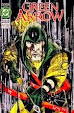
Oddly enough, the paragraph is accompanied by a coverscan of the 3rd volume's premiere issue from 1990, which was written by the disgraced Gerard Jones. Do they realize that could haunt the Rayner run for a long time, and only compounds why the 3rd volume is so otherwise obsolete?
Next, there's one of the spinoff series, GL Corps:
Running alongside the central flagship series, Peter J. Tomasi penned a critically acclaimed ensemble title focused on the wider Green Lantern Corps. The narrative centered on veteran Lanterns Guy Gardner and John Stewart as they led the cosmic police force through galaxy-wide conflicts. The series provided essential perspectives during major events like ‘Blackest Night’ while highlighting the camaraderie and sacrifices of alien ring-bearers. Artist Patrick Gleason provided distinctive, kinetic visuals that brought life to massive space battles and alien civilizations. Tomasi’s work added emotional depth to secondary characters and proved that the franchise thrived beyond Hal Jordan.Oh, do tell us about it. I've long learned not to be fooled by such balderdash, and look where things have arrived today, with a TV show that practically throws Hal under the bus for the sake of DEI ideology. And why are we being lectured that a series with connections to company wide crossovers was "essential"? Yawn.
When stuff like this is all they can think of highlighting, and not the Golden/Silver/Bronze Age stories other than O'Neil's, something is definitely wrong. But I guess that's what to expect when the whole franchise plummeted into the abyss beginning with the Action Comics Weekly run, and nobody in the press is willing admit severe mistakes were made. That's how both DC and Marvel have been able to get away with their worst acts for decades now.
Labels: bad editors, crossoverloading, dc comics, dreadful writers, golden calf of death, golden calf of villainy, Green Lantern, history, misogyny and racism, moonbat writers, msm propaganda, politics, violence, women of dc
posted by Avi Green @ 9:46 AM
0 comments








0 Comments:
Post a Comment
<< Home